
The Indian Machine Tool Manufacturers’ Association (IMTMA) has sought a ₹3,000-crore government-backed fund to acquire 25-30 advanced manufacturing technologies from Europe and the United States, aiming to reduce the country’s dependence on imported machine tools by ₹8,000-10,000 crore.
The proposal is part of the industry’s recommendations for the Union Budget 2027-28, which the association plans to raise with the Secretary of the Ministry of Heavy Industries on Saturday.
The proposed Machine Tool Technology Acquisition Fund would comprise ₹1,000 crore in grants, ₹1,000 crore in soft loans and another ₹1,000 crore for equity co-investment by the government in strategic transactions, according to the association’s detailed note on Budget demands.
The association said India continues to import 60 per cent of its metalworking machine tools by value, with high-end technologies concentrated in Europe and the US. It argued that high interest rates in India make overseas technology acquisitions prohibitively expensive for domestic manufacturers.
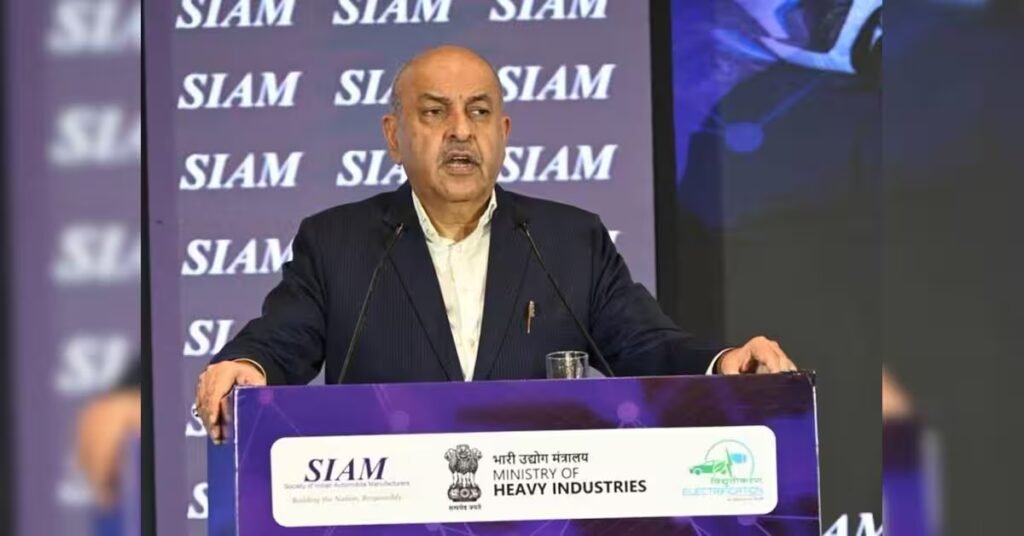
The industry demands come at a time when domestic consumption of machine tools has outpaced domestic production. This “widening gap between demand and supply is being filled by rising imports,” said Mohini Kelkar, president of IMTMA. According to the association, the value of machine tool production increased by 19 per cent year-on-year to ₹17,387 crore in FY26, against a 15 per cent rise in domestic consumption to ₹36,419 crore. Imports, meanwhile, grew 16 per cent year-on-year to ₹21,628 crore during the same period. “China accounts for almost 25 per cent of such imports,” Kelkar said, adding that a lack of technology is the biggest impediment to domestic production.
The association has also sought a separate ₹1,000-crore technology upgradation fund to help micro, small and medium enterprises (MSMEs). It has proposed an interest subsidy of 5-6 per cent, with assistance capped at ₹200 crore per enterprise, a loan tenure of seven to 10 years and a two-year moratorium.
IMTMA said Indian machine tool MSMEs currently pay interest rates of around 7-10 per cent on loans for technology upgradation, compared with subsidised rates of 1-4 per cent in China, 2-4 per cent in South Korea and 1-3 per cent in Taiwan.
Separately, the association has called for a dedicated production-linked incentive (PLI)-like scheme to promote the indigenisation of core machine tool technologies. The industry has sought a requirement for companies benefiting from PLI schemes to source at least 60 per cent of their overall capital goods procurement from domestic manufacturers.
IMTMA has also proposed setting up a National Mission for Core Technologies, jointly anchored by a national research and development institution, academia and the machine tool industry.
On the trade policy front, the association has sought an additional 2 per cent basic customs duty on imports under the broad ‘Others’ classification of machinery and mechanical appliances under HS Code 84798999. It said imports under this category stood at $2.19 billion in 2025-26, arguing that the classification could be used to import machinery without adequate product-specific identification. The proposed duty would apply even to imports under free and preferential trade agreements.
The industry has also sought access to granular, machine-wise import data to identify the types, specifications and sources of imported machinery, including a distinction between new and second-hand equipment. It has urged the government to reconsider Section 135AA of the Customs Act, which it says has restricted access to such information, or alternatively allow relevant ministries to access the data for policy planning and import substitution.
The association has further sought discontinuation of the Export Promotion Capital Goods (EPCG) scheme, or its restriction to machinery that is not manufactured domestically. It argued that zero-duty imports under the scheme create a cost disadvantage for Indian capital goods manufacturers, which pay duties on imported components and taxes on domestic procurement.