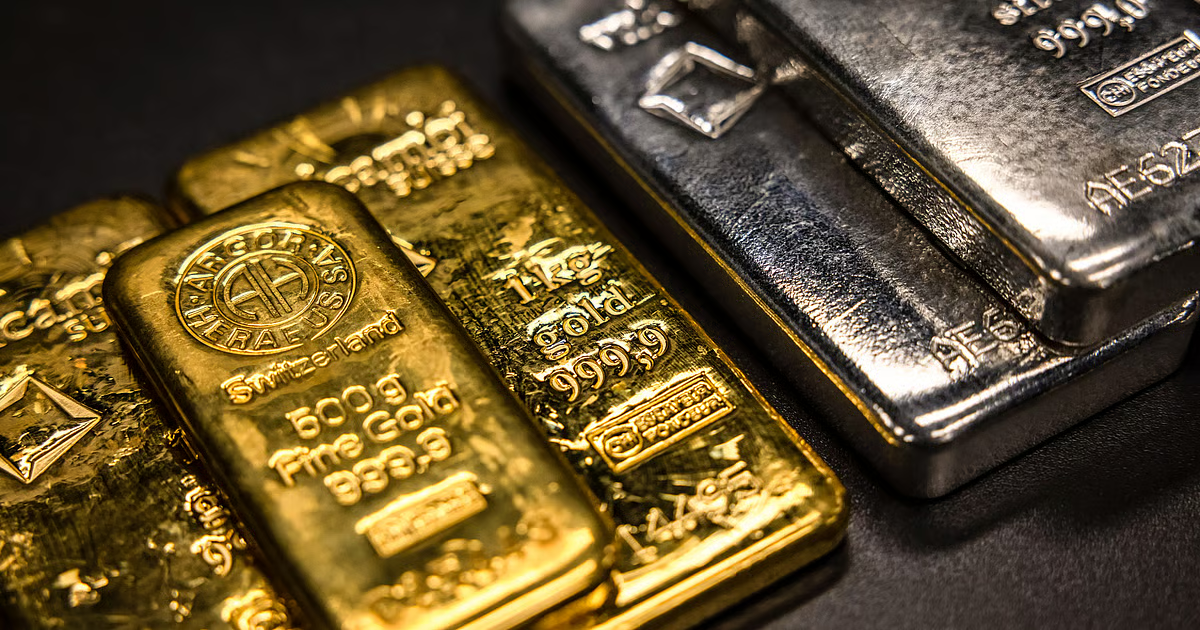

Gold and silver prices plunged to their lowest levels of 2026 on Friday, November 20, as a strengthening US dollar, expectations of another interest rate increase by the US Federal Reserve and widespread selling across global financial markets triggered a sharp correction in precious metals.
Gold declined nearly 4 per cent to ₹1,22,435 per 10 grams for 24-karat purity, while silver fell approximately 6 per cent to ₹1,48,034 per kilogram. The steep decline extended a volatile week for bullion markets, with silver recording significantly larger losses than gold.
The latest correction comes after both metals experienced extraordinary price increases earlier this year. Gold had touched a record ₹1,83,000 per 10 grams on January 29, while silver had climbed to an all-time high of ₹4,04,500 per kilogram.
The reversal has been driven by changing expectations surrounding American monetary policy, increased demand for the US dollar and investors reducing their exposure to commodities and other financial assets.
Despite the sharp fall, market participants expect volatility to continue as investors assess inflation trends, interest rate decisions and developments across international financial markets.
𝐆𝐨𝐥𝐝 𝐚𝐧𝐝 𝐬𝐢𝐥𝐯𝐞𝐫 𝐡𝐢𝐭 𝐲𝐞𝐚𝐫𝐥𝐲 𝐥𝐨𝐰𝐬
The decline in domestic bullion prices mirrored weakness in international markets, where gold fell to its lowest level since September 2025.
International spot gold slipped below $3,600 per ounce during Friday’s trading, while silver approached $42 per ounce as selling pressure intensified.
On the Multi Commodity Exchange (MCX), December gold futures opened sharply lower at approximately ₹1,23,629 per 10 grams, compared with the previous closing level of ₹1,27,452.
The contract subsequently weakened further, trading near ₹1,23,079 per 10 grams during the session.
Silver futures also witnessed substantial losses, with the December contract opening at ₹1,51,183 per kilogram against its previous close of ₹1,57,482.
Prices later declined towards ₹1,49,602 per kilogram, reflecting sustained selling pressure across precious metals.
The correction has been particularly pronounced in silver, which generally experiences larger price fluctuations because of its smaller market size and sensitivity to industrial demand.
𝐔𝐒 𝐅𝐞𝐝 𝐫𝐚𝐭𝐞 𝐡𝐢𝐤𝐞 𝐟𝐞𝐚𝐫𝐬 𝐠𝐫𝐨𝐰
Expectations that the US Federal Reserve could raise interest rates at its December policy meeting have emerged as a major factor behind the decline.
Recent comments from Federal Reserve officials have reinforced concerns that inflation remains sufficiently elevated to warrant additional monetary tightening.
Market expectations have shifted towards a 25-basis-point increase in December, with traders assigning a probability of more than 99 per cent to such a move during Friday’s session.
Higher interest rates generally reduce the attractiveness of gold and silver because neither metal generates interest income.
When government bonds and other interest-bearing financial instruments offer higher returns, investors may shift funds away from bullion.
The prospect of tighter monetary policy has also supported the US dollar, increasing pressure on internationally traded commodities.
The Federal Reserve’s forthcoming policy decision and its assessment of inflation will therefore remain important influences on precious metal prices.
𝐒𝐭𝐫𝐨𝐧𝐠𝐞𝐫 𝐝𝐨𝐥𝐥𝐚𝐫 𝐚𝐝𝐝𝐬 𝐩𝐫𝐞𝐬𝐬𝐮𝐫𝐞
The US dollar index climbed close to 104, approaching its highest level in approximately 19 months as investors sought liquidity amid uncertainty in global markets.
A stronger dollar typically makes gold and silver more expensive for buyers using other currencies, potentially reducing international demand.
The relationship has become particularly significant during the latest market correction, with investors moving towards dollar-denominated assets as concerns about interest rates and financial market stability increase.
Gold, traditionally considered a safe-haven asset, has also experienced selling pressure despite weakness in equity markets.
This reflects a broader shift towards cash holdings, as some investors liquidate profitable positions or sell assets to meet financial obligations elsewhere.
The decline in bullion prices has coincided with losses across equities, industrial metals and cryptocurrencies, suggesting that the selling is not confined to precious metals.
𝐆𝐥𝐨𝐛𝐚𝐥 𝐬𝐞𝐥𝐥-𝐨𝐟𝐟 𝐢𝐧𝐭𝐞𝐧𝐬𝐢𝐟𝐢𝐞𝐬
The downturn in precious metals forms part of a wider correction across international financial markets.
Asian equities declined sharply on Friday, while concerns surrounding technology valuations and the outlook for artificial intelligence-related investments added to market uncertainty.
The selling pressure has affected several asset classes simultaneously, including copper, other base metals and digital currencies.
Anindya Banerjee, Head of Commodity and Currency Research at Kotak NEO, identified the increased demand for dollar liquidity as a central factor behind the market’s decline.
Speculative investors have been reducing their exposure to precious metals, while some holders of physical inventories may be selling to raise cash.
Producers may also increase hedging activity to protect themselves against further price declines, adding to pressure in futures markets.
These developments can reinforce one another, creating conditions in which prices fall rapidly even after reaching levels that might ordinarily attract buyers.
The sharp reversal also illustrates how speculative positioning can amplify movements in both directions. Earlier in the year, strong investment demand and pressure on short sellers had helped drive bullion prices to record highs.
𝐒𝐢𝐥𝐯𝐞𝐫 𝐬𝐮𝐟𝐟𝐞𝐫𝐬 𝐬𝐡𝐚𝐫𝐩𝐞𝐫 𝐥𝐨𝐬𝐬𝐞𝐬
Silver has experienced a steeper correction than gold, reflecting its dual role as an investment asset and an industrial commodity.
Apart from jewellery and investment demand, silver is widely used in electronics, solar panels, electrical equipment and several manufacturing applications.
Consequently, concerns about slowing industrial activity can affect silver prices more severely than gold.
The metal is also more sensitive to speculative trading and changes in investor sentiment, often recording larger percentage movements during periods of market instability.
The gold-to-silver price ratio climbed to approximately 85.5 on Friday, indicating that silver had weakened more sharply relative to gold.
Other precious metals, including platinum and palladium, also declined as expectations of tighter monetary policy and concerns about global economic growth weighed on commodity markets.
The simultaneous fall across multiple metals reflects the broader influence of financial conditions rather than developments affecting any single commodity.
𝐋𝐨𝐰𝐞𝐫 𝐩𝐫𝐢𝐜𝐞𝐬 𝐚𝐭𝐭𝐫𝐚𝐜𝐭 𝐛𝐮𝐲𝐞𝐫𝐬
The correction has generated renewed interest among some retail consumers who had postponed purchases during the earlier surge in gold and silver prices.
However, buying activity remains cautious, with consumers generally favouring smaller purchases rather than committing large amounts while prices continue to fluctuate.
Darshan Desai, CEO of Aspect Bullion & Refinery, indicated that the recent decline had encouraged some buyers to return to the market, although uncertainty over future price movements continued to influence purchasing decisions.
Physical gold demand has also shown signs of improvement in India and China as lower international prices attract bargain hunters.
For Indian consumers, bullion prices are influenced not only by international market movements but also by the rupee-dollar exchange rate, import duties, local demand and other domestic factors.
Consequently, a decline in international gold prices may not translate into an identical percentage reduction in Indian retail prices.
Jewellery buyers must also account for making charges and applicable taxes, which affect the final purchase cost.
𝐆𝐨𝐥𝐝 𝐚𝐧𝐝 𝐬𝐢𝐥𝐯𝐞𝐫 𝐄𝐓𝐅𝐬 𝐝𝐞𝐜𝐥𝐢𝐧𝐞
The weakness in bullion markets has extended to exchange-traded funds linked to gold and silver.
Several gold ETFs declined by approximately 5 to 6 per cent during Friday’s trading, while silver ETFs registered losses of up to 9 per cent.
The sharper decline in silver-linked funds reflected the underlying metal’s heightened volatility and the rapid deterioration in market sentiment.
Gold and silver ETFs provide investors with exposure to precious metal prices without requiring physical storage, but their market values remain vulnerable to fluctuations in international and domestic bullion markets.
The latest correction has therefore affected both physical commodity prices and financial instruments tracking their performance.
𝐕𝐨𝐥𝐚𝐭𝐢𝐥𝐢𝐭𝐲 𝐥𝐢𝐤𝐞𝐥𝐲 𝐭𝐨 𝐜𝐨𝐧𝐭𝐢𝐧𝐮𝐞
The direction of gold and silver prices in the coming weeks will depend heavily on developments in the United States, particularly inflation data, Federal Reserve policy signals and movements in the dollar.
The December monetary policy meeting will be closely watched for indications of whether American interest rates are likely to rise further and how long restrictive financial conditions could persist.
Changes in US Treasury yields, global equity markets and investor demand for liquidity will also influence precious metal prices.
Although lower prices have begun attracting some physical buyers, the possibility of additional selling remains as long as investors expect tighter monetary policy and continued dollar strength.
The sharp decline from record highs earlier this year highlights the extent of volatility in bullion markets, where shifts in interest rate expectations and speculative positioning can produce substantial price movements within relatively short periods.
For now, gold and silver remain under pressure, with investors and consumers awaiting greater clarity on global monetary policy before making larger commitments.