
Over the years, India has taken several steps to restrict Pakistani entertainment content. These include cancelling concerts, calls to boycott films, stopping television shows and streaming content, and blocking social media accounts.
On Thursday, the Ministry of Information and Broadcasting asked Netflix to ensure that content originating in Pakistan is not streamed in India. The ministry’s move followed complaints about the possible release in India of the Pakistani series Jo Bachay Hain Sang Samait Lo, which is scheduled to premiere globally on December 4.
This action is the latest in a series of measures the government has taken over the years to restrict Pakistani entertainment content. Here is a look at the major developments over the years.
2016: Uri attack leads to calls to ban Pakistani artistes
The September 18, 2016, terror attack on an Army camp in Uri, Jammu and Kashmir, in which 19 soldiers were killed, led to demands to stop Pakistani artistes from working in India.
The Maharashtra Navnirman Sena (MNS) asked Pakistani actors, including Fawad Khan and Mahira Khan, to leave the country within 48 hours. It also warned that film shoots involving Pakistani artistes would be disrupted.
The controversy also affected television. Zee’s Zindagi channel stopped airing Pakistani shows after the Uri attack and replaced them with other content.
One of the films caught in the debate was Karan Johar’s Ae Dil Hai Mushkil, which featured Fawad Khan. The film faced calls for a boycott, but was eventually released in October 2016 after discussions and assurances from the filmmaker.
2019: Pulwama attack triggers fresh boycott calls
The February 14, 2019, Pulwama terror attack, in which 40 Central Reserve Police Force (CRPF) personnel were killed, led to renewed demands for a ban on Pakistani artistes.
The MNS asked Indian music companies, including T-Series, Sony Music, Venus and Tips, to stop working with Pakistani singers. T-Series removed songs by Atif Aslam and Rahat Fateh Ali Khan from its YouTube channels and stopped promoting them on radio and television.
The All Indian Cine Workers Association (AICWA) also announced a blanket ban on Pakistani actors and artistes working in the Indian film industry. It warned that action would be taken against production houses that continued to work with them.
The controversy extended to films as well. Salman Khan’s Bharat, which had songs recorded by Pakistani singers, faced demands to remove their contributions. The songs were subsequently re-recorded with Indian voices.
2023: Courts reject calls for a blanket ban
In October 2023, the Bombay High Court rejected a petition seeking a ban on Pakistani artistes working in India. The petitioner had asked the court to direct the Centre to prevent Indian citizens and companies from engaging Pakistani actors, singers, musicians and other film workers.
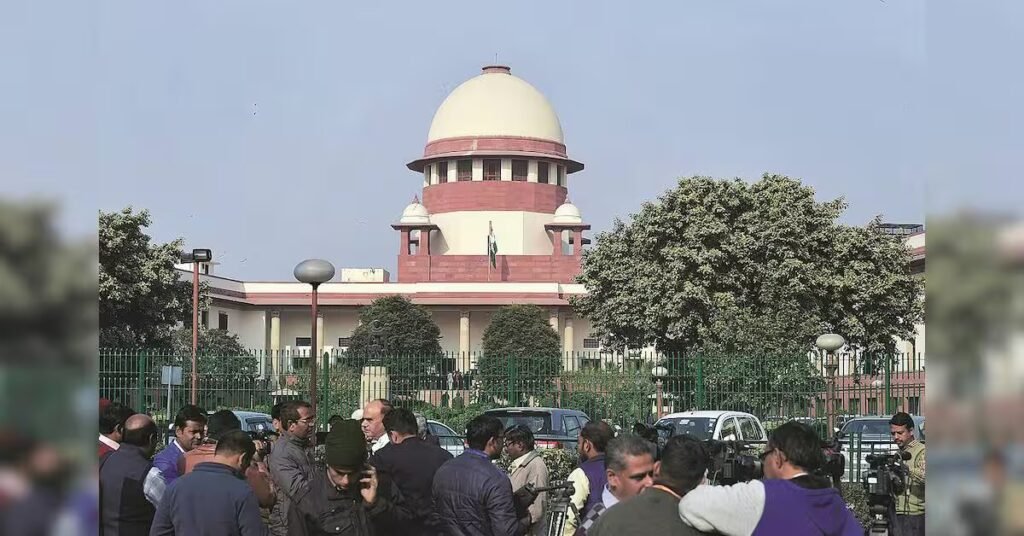
The matter reached the Supreme Court, which dismissed the appeal in November 2023. The court advised the petitioner against taking a narrow view of cultural exchanges.
The ruling did not amount to a government policy allowing all Pakistani artistes to work in India. However, it rejected the demand for a blanket legal ban through the court.
2025: Pahalgam attack leads to restrictions on social media accounts
The April 22, 2025, attack in Pahalgam, Jammu and Kashmir, in which 26 people were killed, led to another round of restrictions on Pakistani entertainment and media content in India.
On April 30 and May 1 last year, Instagram accounts of several Pakistani actors and celebrities became inaccessible to users in India. These included Hania Aamir, Mahira Khan, Ali Zafar, Sanam Saeed, Bilal Abbas, Iqra Aziz, Imran Abbas and Sajal Aly.
Users trying to access the accounts saw a message stating: “Account not available in India. This is because we complied with a legal request to restrict this content”.
The restrictions applied to access from India. Other Pakistani artistes, including singers and actors, were also affected.
Some Pakistani social media accounts briefly became accessible again in July. However, officials said this was due to a technical error, and several accounts were blocked once more.
Restrictions were also reported on X, formerly Twitter, against some Pakistani public figures. These included accounts of political leaders and other personalities.
April-May 2025: Pakistani YouTube channels blocked
The government also blocked 16 Pakistani YouTube channels in April 2025 following the Pahalgam attack. The channels included those run by Dawn News, Samaa TV, ARY News and Geo News.
The government said the channels were spreading provocative and communally sensitive content, as well as false and misleading information about India, its Army and security agencies.
On May 2, Pakistan Prime Minister Shehbaz Sharif’s YouTube channel was also blocked in India.
May 2025: Govt asks OTT platforms to stop streaming Pakistani content
On May 8, 2025, the Ministry of Information and Broadcasting issued an advisory to online curated content publishers, OTT platforms, media streaming services and intermediaries. It asked them to discontinue access to web series, films, songs, podcasts and other streaming content originating in Pakistan.
The ministry referred to the Information Technology (Intermediary Guidelines and Digital Media Ethics Code) Rules, 2021. These rules require platforms to exercise caution while carrying content that could affect India’s sovereignty and integrity, national security, relations with foreign countries or public order.
The advisory came after the Pahalgam attack and referred to concerns over cross-border links to terror activities.
June 2025: Netflix tells govt it has no Pakistani shows in India
In June 2025, Netflix informed the government that it had not made any film or series originating in Pakistan available to subscribers in India.
The assurance became relevant again in November 2026, when the proposed India release of a Pakistani series on the platform led to fresh complaints.
November 2026: Centre asks Netflix to keep Pakistani content off its India platform
On November 26, 2026, the Ministry of Information and Broadcasting asked Netflix to adhere to its May 8, 2025, advisory and ensure that Pakistani-origin content was not streamed in India.
The move followed complaints about the possible release of Jo Bachay Hain Sang Samait Lo. The series is based on a novel by Pakistani author Farhat Ishtiaq and features Fawad Khan, Mahira Khan, Hania Aamir, Sanam Saeed and Ahad Raza Mir, among others. Its trailer was released on November 24, and it is scheduled to premiere globally on December 4.
The AICWA and the Federation of Western India Cine Employees (FWICE) had also urged Prime Minister Narendra Modi to intervene and stop the series from being streamed in India. AICWA sought a permanent ban on Pakistani content across television, cinema and OTT platforms.
The ministry reminded Netflix of the commitment it had given in June 2025 that it was not making Pakistani films or series available to Indian subscribers. It asked the platform to maintain that position.