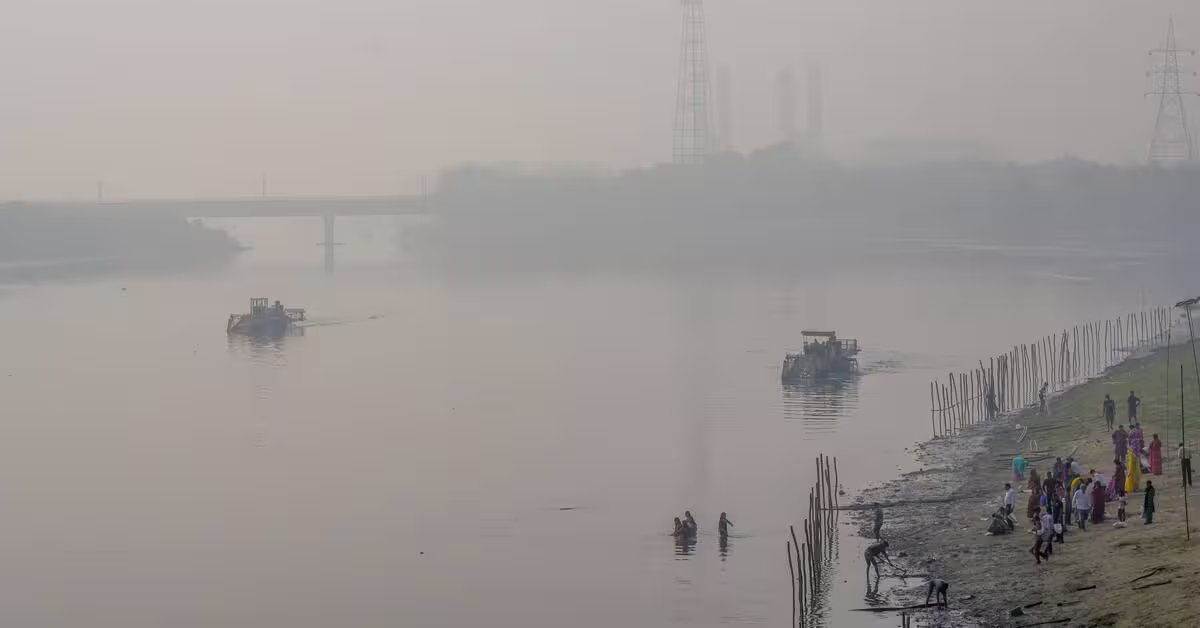

According to CPCB data, of the 57 monitoring stations in the capital with valid readings, 46 recorded AQI levels above 200, placing them in the ‘poor’ category, while 10 reported readings above 300, in the ‘very poor’ category.
Sirifort recorded the highest AQI at 336, followed by Ignou, Maidan Garhi, at 333 and North Campus, Delhi University, at 322. Talkatora Garden recorded 321, while NSUT Jaffarpur reported 314. CRRI Mathura Road registered 313, Burari Crossing 307 and ITO 306. Commonwealth Sports Complex and IIT Delhi recorded 304 and 302, respectively.
At the other end, IMD Lodhi Road recorded the lowest AQI at 163, followed by Ghoga at 166, Jharoda Kalan at 175 and NSIT Dwarka at 178. These locations were in the ‘moderate’ category.
NCR cities report mixed air quality
Bahadurgarh reported an AQI of 249, while Delhi stood at 242. Bhiwadi in Rajasthan recorded 223, while Meerut and Ghaziabad reported 214 each. Noida and Greater Noida both registered 211, followed by Bulandshahr at 205.
Sonipat recorded an AQI of 199, while Baghpat reported 182. Faridabad was at 166 and Bharatpur at 156. Among the better-performing NCR cities, Rohtak recorded 125, Hapur 123, Panipat 121 and Palwal 90.
Panchgaon records highest AQI nationally
Among the 282 cities with valid readings in the CPCB’s 7 am dataset, Panchgaon in Haryana recorded the highest AQI at 310. Ballabgarh, also in Haryana, followed at 304, while Sikar in Rajasthan reported 283.
Dharuhera recorded an AQI of 282, followed by Gurugram and Khairthal at 277 each. Khanna in Punjab reported 268, while Kiul in Bihar recorded 255. Mandi Gobindgarh in Punjab and Bikaner in Rajasthan registered 254 each.
Delhi’s AQI of 242 placed it among the more polluted cities in the national list, alongside Baddi in Himachal Pradesh, which also recorded 242.
At the other end, Aizawl in Mizoram recorded the lowest AQI at 17, followed by Cuddalore in Tamil Nadu at 26 and Sivasagar in Assam at 27. Eloor in Kerala and Gangtok in Sikkim reported 30 each, while Puducherry recorded 31.
Under the CPCB’s National Air Quality Index classification, readings between 0 and 50 are categorised as ‘good’, 51 and 100 as ‘satisfactory’, 101 and 200 as ‘moderate’, 201 and 300 as ‘poor’, 301 and 400 as ‘very poor’, and 401 and 500 as ‘severe’.
Transport dominates Delhi’s PM2.5 mix, with biomass burning also contributing
Biomass burning has featured in discussions around Delhi’s PM2.5 pollution, but the latest source-apportionment estimates on the Indian Institute of Tropical Meteorology’s (IITM) Air Quality Early Warning System show a more nuanced picture.
The system’s source-apportionment display for November 23 puts stubble burning’s contribution at 0.8 per cent of Delhi’s daily mean PM2.5. The largest category was ‘Others’ at 32 per cent, followed by Delhi transport at 21.5 per cent. The estimates also attribute contributions to sources in neighbouring districts, including Jhajjar at 10.2 per cent and Rohtak at 6.1 per cent.
CAQM retains Grap Stage II curbs
The Commission for Air Quality Management (CAQM) continues to list Stage II of the Graded Response Action Plan (Grap) as active across Delhi-NCR. Measures under this stage include enhanced mechanised road sweeping, dust suppression and water sprinkling, stricter enforcement of dust-control norms at construction sites, and steps to discourage the use of private vehicles.
In a separate move, CAQM has asked Delhi and NCR states to prepare district-level action plans for 2027, with measures aimed at reducing air pollution by 15–20 per cent.