
Ukraine has claimed responsibility for sinking Russia’s advanced warship Merkury in a sea drone attack at Libya’s Benghazi port, nearly 1,800 km from the Ukrainian coastline, demonstrating how relatively inexpensive unmanned weapons can threaten heavily armed naval vessels far beyond conventional battle zones.
Ukrainian President Volodymyr Zelenskyy said on Monday that his country’s forces had deployed seven domestically manufactured maritime drones in an operation targeting the Russian Navy’s Merkury corvette, which was commissioned in 2023.
The attack, carried out on Sunday, also reportedly destroyed a Russian Ka-27 naval helicopter and damaged a cargo vessel used by Moscow to transport military equipment.
The operation has attracted attention among naval analysts because of its implications for maritime warfare, particularly for countries such as India that are investing heavily in aircraft carriers, destroyers, frigates and other major surface combatants.
𝐑𝐮𝐬𝐬𝐢𝐚𝐧 𝐰𝐚𝐫𝐬𝐡𝐢𝐩 𝐬𝐭𝐫𝐮𝐜𝐤 𝐢𝐧 𝐁𝐞𝐧𝐠𝐡𝐚𝐳𝐢
According to Ukrainian authorities, the operation was conducted by the Security Service of Ukraine (SBU) and other defence units using explosive-laden unmanned surface vessels.
Zelenskyy said the drones successfully penetrated Russian defences and sank the Merkury, a Steregushchiy-class corvette designed for coastal defence, anti-submarine operations and the protection of naval convoys.
The vessel, which entered Russian service in 2023, was equipped with missile systems, naval guns, air-defence capabilities and sophisticated surveillance equipment.
Despite these capabilities, Ukrainian drones reportedly reached the ship while it was docked at the Benghazi naval base.
Libyan military officials said at least four attacking drones were intercepted, while two struck the Russian vessel, triggering explosions and a major fire.
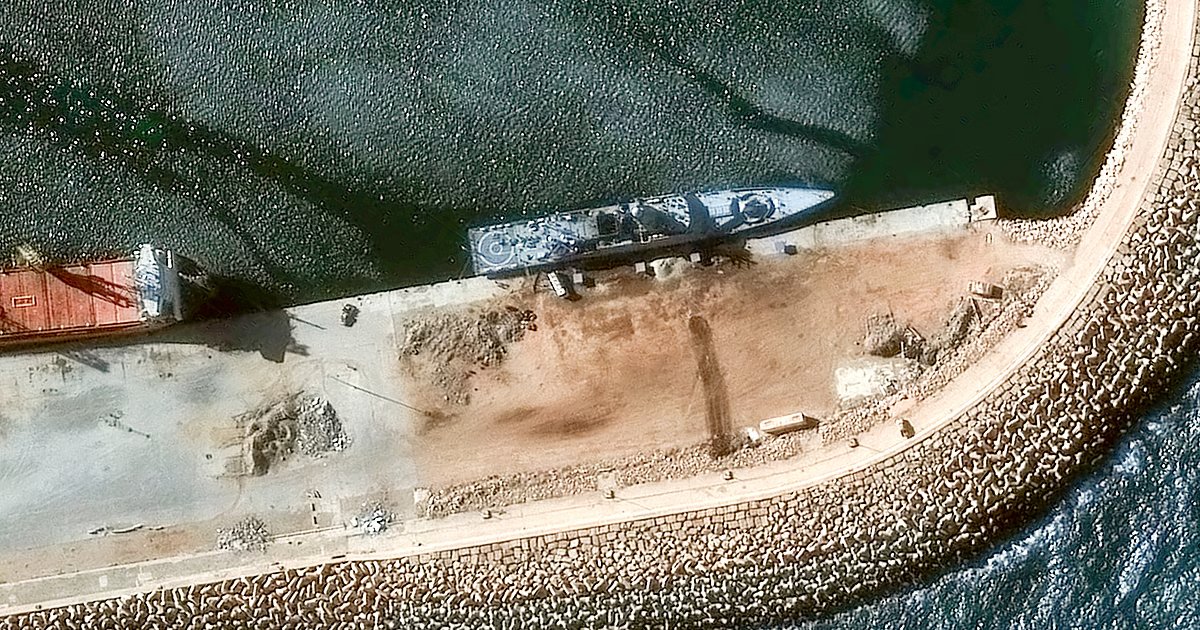
Satellite imagery subsequently showed the warship partially submerged at the port.
Ukrainian officials also claimed that a Ka-27 helicopter aboard the vessel was destroyed.
A separate strike targeted the Russian cargo ship MV Angara, which Kyiv alleged was being used to transport military supplies.
Russia had not independently confirmed the reported losses at the time of the Ukrainian announcement.
𝐇𝐨𝐰 𝐭𝐡𝐞 𝐬𝐞𝐚 𝐝𝐫𝐨𝐧𝐞𝐬 𝐨𝐩𝐞𝐫𝐚𝐭𝐞𝐝
The SBU said the drones were transported towards the target area aboard a larger vessel, commonly described as a mothership, before being launched for the final attack.
This approach allowed Ukraine to extend the operational reach of its unmanned boats without requiring them to travel the entire distance from Ukrainian waters under their own power.
The drones reportedly approached the Russian vessels despite attempts to intercept them using air, sea and land-based defences.
Footage released by Ukrainian authorities showed explosions and fires aboard the targeted ships. Reuters verified the location of the footage, although the full extent of the reported losses could not be independently established.
The operation demonstrated the potential of unmanned surface vessels to conduct attacks at considerable distances from their operators, particularly when supported by intelligence, communications and suitable launch platforms.
𝐖𝐡𝐲 𝐭𝐡𝐞 𝐚𝐭𝐭𝐚𝐜𝐤 𝐦𝐚𝐭𝐭𝐞𝐫𝐬 𝐟𝐨𝐫 𝐈𝐧𝐝𝐢𝐚
The reported sinking has renewed attention on the vulnerability of conventional warships to relatively inexpensive unmanned systems.
India operates a diverse fleet of major surface combatants, including aircraft carriers, guided-missile destroyers, frigates and corvettes, designed to protect maritime interests across the Indian Ocean.
Modern warships are equipped with radar, electronic warfare systems, missiles and close-in defensive weapons. However, small unmanned boats can present a different challenge because of their low profiles, manoeuvrability and ability to approach from multiple directions.
A coordinated attack involving several drones can force a defending vessel to detect, identify and engage multiple targets within a limited period.
The threat is particularly significant when warships are anchored, refuelling or operating close to ports, where manoeuvring space may be restricted.
The Benghazi incident does not establish that conventional naval platforms have become obsolete. It does, however, illustrate the importance of integrating counter-drone capabilities into maritime defence planning.
𝐈𝐧𝐝𝐢𝐚𝐧 𝐍𝐚𝐯𝐲’𝐬 𝐜𝐨𝐮𝐧𝐭𝐞𝐫-𝐝𝐫𝐨𝐧𝐞 𝐜𝐡𝐚𝐥𝐥𝐞𝐧𝐠𝐞
For the Indian Navy, the emerging challenge involves detecting and neutralising small unmanned vessels before they reach high-value ships or strategically important installations.
Potential defensive measures include improved maritime surveillance, electronic warfare, rapid-response weapons, unmanned patrol platforms and layered protection around naval bases.
Unlike traditional naval threats, sea drones can be produced in significant numbers without requiring the industrial resources needed to construct large warships.
Their effectiveness depends on several factors, including navigation, targeting intelligence, communications, payload capacity and the ability to overcome defensive systems.
India’s extensive coastline, major commercial ports and naval installations make maritime security an important component of national defence planning.
The development of indigenous unmanned systems and countermeasures is therefore increasingly relevant to the Navy’s modernisation efforts.
𝐋𝐢𝐛𝐲𝐚 𝐞𝐦𝐞𝐫𝐠𝐞𝐬 𝐚𝐬 𝐧𝐞𝐰 𝐛𝐚𝐭𝐭𝐥𝐞𝐠𝐫𝐨𝐮𝐧𝐝
The strike also represents a geographical expansion of the Russia-Ukraine conflict into the Mediterranean.
Benghazi is controlled by forces aligned with eastern Libyan military commander Khalifa Haftar, whose administration maintains close relations with Moscow.
Russian naval and logistics vessels have used facilities in eastern Libya for refuelling, supplies and operations linked to Moscow’s wider presence in the Mediterranean and Africa.
Authorities in eastern Libya condemned the attack and called for an international investigation into the suspected use of western Libyan territory to prepare or launch the operation.
The United Nations mission in Libya also expressed concern about the attacks and urged an independent investigation.
Meanwhile, the Kremlin warned of consequences following the strikes on Russian shipping in Libya and the Baltic Sea.
𝐂𝐡𝐚𝐧𝐠𝐢𝐧𝐠 𝐧𝐚𝐭𝐮𝐫𝐞 𝐨𝐟 𝐧𝐚𝐯𝐚𝐥 𝐰𝐚𝐫𝐟𝐚𝐫𝐞
Ukraine has increasingly relied on unmanned maritime platforms to challenge Russia’s naval superiority since the full-scale invasion began in February 2022.
Despite lacking a conventional surface fleet comparable to Russia’s, Kyiv has used sea drones and missiles to damage or destroy Russian naval assets, particularly in the Black Sea.
The latest operation suggests that these tactics can be adapted for attacks far beyond Ukraine’s immediate maritime neighbourhood.
For India and other major naval powers, the lesson extends beyond the fate of a single Russian warship. Large naval platforms remain essential for sustained maritime operations, but their protection increasingly depends on the ability to counter smaller, cheaper and potentially numerous unmanned threats.
The Benghazi attack has consequently reinforced the need for navies to reassess how they defend ships and ports in an era when relatively low-cost weapons can inflict substantial damage on expensive military assets.