

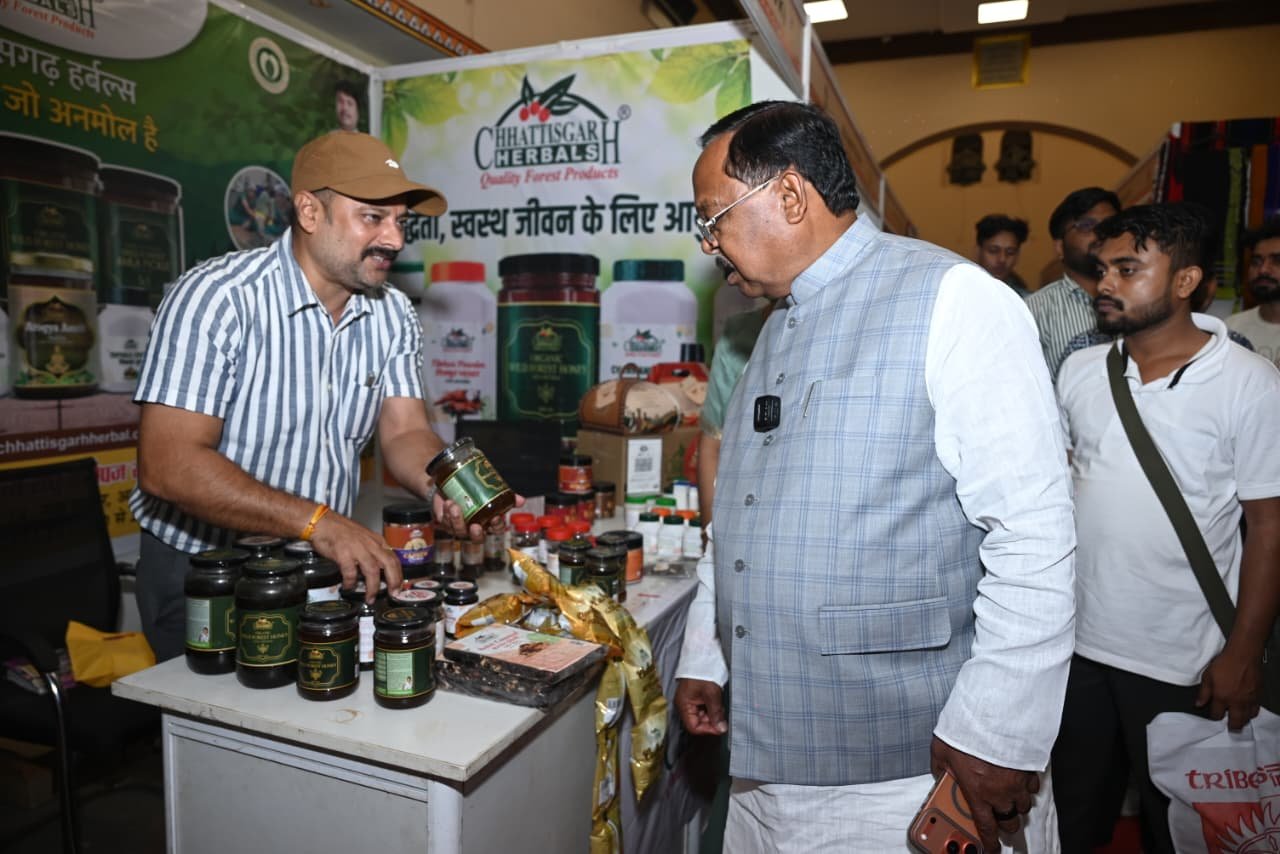

Raipur : The National Tribal Festival ‘Aadi Bazaar 2026’ was inaugurated on Saturday by Chhattisgarh’s Minister for Agriculture and Tribal Development, Ramvichar Netam, at the Town Hall near Ghadi Chowk in the Collectorate premises. Organised by the Raipur Regional Office of the Tribal Cooperative Marketing Development Federation of India Limited (TRIFED), the ten-day event aims to promote tribal art, culture and traditional crafts while providing wider market access to artisans from across the country. It will continue until November 2.
Smt. Sanjeeta Gupta (IFS), Managing Director of the Chhattisgarh State Minor Forest Produce Cooperative Federation and Additional Principal Chief Conservator of Forests, attended as the special guest.
Addressing the gathering, Minister Netam welcomed tribal artists, craftspeople and officials from various states. He highlighted the rich heritage of art, distinctive crafts and generational skills preserved by tribal communities, noting that these products reflect their culture, traditions, lifestyle and local identity. “The need of the hour is to provide these products with wider markets and ensure that artisans receive fair value for their hard work,” he said.
Netam observed that demand for traditional and tribal products is rising in major cities, where handmade items, jewellery and craftworks are increasingly valued as decorative and collectible pieces. Platforms such as Aadi Bazaar, he added, allow artisans to display and sell their creations directly, boosting visibility and market reach. Interaction among artisans from different states also fosters mutual learning, innovation and skill enhancement.
Appreciating TRIFED’s efforts, the minister suggested setting up a TRIFED stall at the Chhattisgarh Rajyotsav to introduce more people to tribal products. He further recommended organising periodic competitions among registered societies and artisans affiliated with TRIFED to encourage healthy competition, refine skills and improve product quality. Netam also stressed the importance of linking traditional forest-based, herbal and minor forest produce items with markets through TRIFED, creating new opportunities for tribal entrepreneurs and craftspeople.
Around 30 stalls at the festival showcase the work of nearly 80 tribal artisans from different parts of India. Visitors can purchase traditional handicrafts, handloom textiles, jewellery, paintings, and natural and organic products. Highlights include Chhattisgarh’s kosa silk and Dhokra craft; Odisha’s Sambalpuri sarees and Saura paintings; Madhya Pradesh’s Bagh prints, Maheshwari sarees and Gond paintings; West Bengal’s Kantha-embroidered sarees and jewellery; Rajasthan’s traditional textiles and jewellery; jute products and tribal jewellery from Jharkhand; cane and bamboo crafts from the Northeast; bamboo products from Uttar Pradesh and Uttarakhand; and Araku coffee among other distinctive items.
Minister Netam extended his best wishes to TRIFED and the organisers, expressing confidence that such events would help preserve tribal art and culture while strengthening the economic self-reliance of artisans.
TRIFED has invited the public to visit the Town Hall, Collectorate premises, Raipur, by November 2, explore the exhibition, purchase products made by tribal artisans, and support the preservation and promotion of India’s rich tribal heritage.