

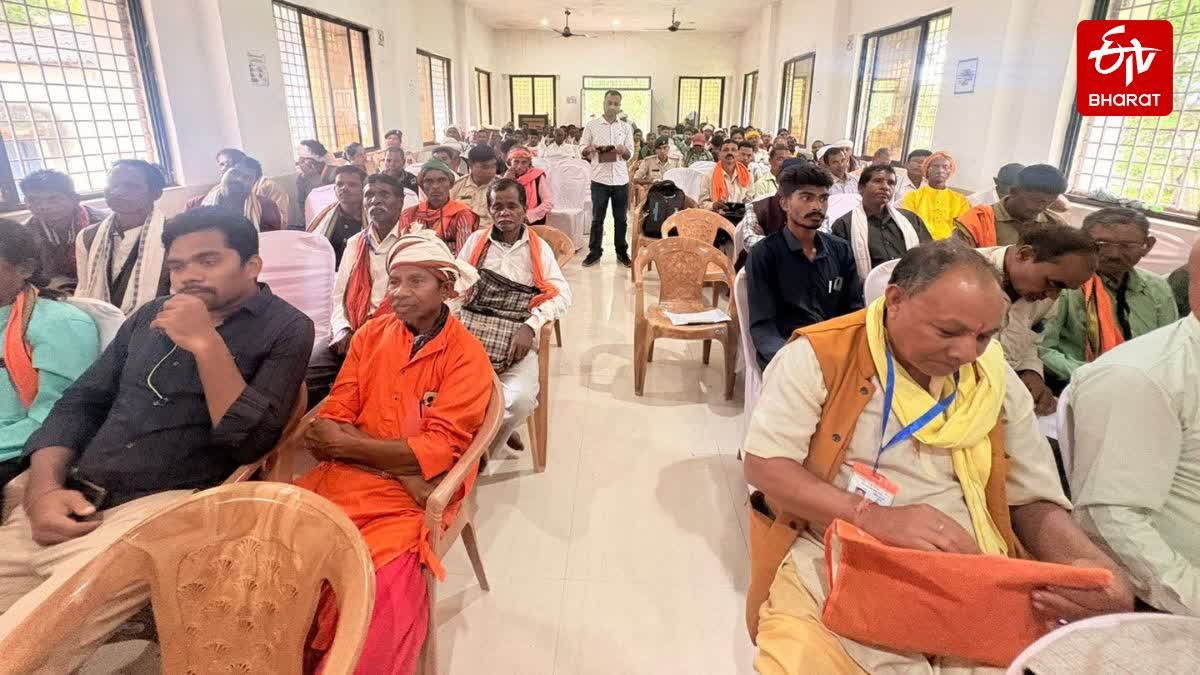

KANKER, Chhattisgarh: The growing scarcity of medicinal plants in forests and the unchecked activities of middlemen have emerged as major concerns for traditional healers in Chhattisgarh. These issues were extensively discussed during a District-Level Vaidya (Traditional Healers) Conference organized at the Timber Depot Auction Hall in Singarbhat, Kanker, under the guidance of the Chhattisgarh Tribal Local Health Tradition and Medicinal Plants Board.
The conference brought together a large number of traditional healers (Vaidyas) from all seven development blocks under the district’s three forest divisions. Participants exchanged valuable knowledge on traditional healing practices, the identification, collection, conservation, and therapeutic use of medicinal herbs passed down through generations.
One of the strongest concerns raised during the event was the rapid disappearance of medicinal herbs from forests. Dashrath Netam, a traditional healer from Dhamtari, said it has become increasingly difficult to locate many valuable plants that were once easily identifiable by their natural fragrance.
“Earlier, we could identify medicinal plants simply by their aroma while walking through the forests. Today, many of those plants are no longer found because middlemen harvest them prematurely before they mature. Once uprooted, these plants are extremely difficult to regenerate naturally,” Netam explained.
According to the healers, the unsustainable and illegal harvesting of medicinal plants is threatening both the region’s biodiversity and the traditional healthcare system that has served tribal communities for centuries.
Addressing the gathering, Vikas Markam, Chairman of the Chhattisgarh Tribal Local Health Tradition and Medicinal Plants Board, praised the contribution of traditional healers in preserving indigenous healthcare knowledge and conserving medicinal plant species.
He emphasized that Chhattisgarh’s recognition as a “Herbal State” is largely due to the dedicated efforts of its traditional healers, who not only provide affordable healthcare but also protect valuable forest resources.
Markam encouraged more healers to register with the Board, adopt medicinal plant cultivation as an additional source of income, and take advantage of various government welfare schemes.
He also stressed the importance of establishing Herbal Gardens in schools, developing medicinal plant nurseries, and protecting rare and endangered medicinal species. According to him, nearly 1,300 traditional healers have already been officially registered across the state.
During his address, Markam also acknowledged Padma Shri awardee traditional healer Hemchand Manjhi, urging participants to preserve their ancestral knowledge and continue serving society through traditional medicine.
The conference also highlighted upcoming government initiatives aimed at strengthening the traditional healthcare sector.
J.A.C.S. Rao, Chief Executive Officer of the Board, announced that registered traditional healers would receive access to herb grinding machines, powder-processing units, and liquid medicine preparation equipment. Interested practitioners will be able to install these facilities within their own communities, enabling them to prepare herbal medicines more efficiently.
Rao further stated that the government will provide financial assistance and institutional support for establishing School Herbal Gardens, conserving rare medicinal plants, and promoting the cultivation of medicinal species across the state.
The conference concluded with a collective call to protect forest biodiversity, preserve indigenous medicinal knowledge, and ensure the sustainable conservation of medicinal plants for future generations. Traditional healers emphasized that safeguarding these natural resources is essential not only for environmental protection but also for maintaining the rich tribal healthcare heritage of Chhattisgarh.