

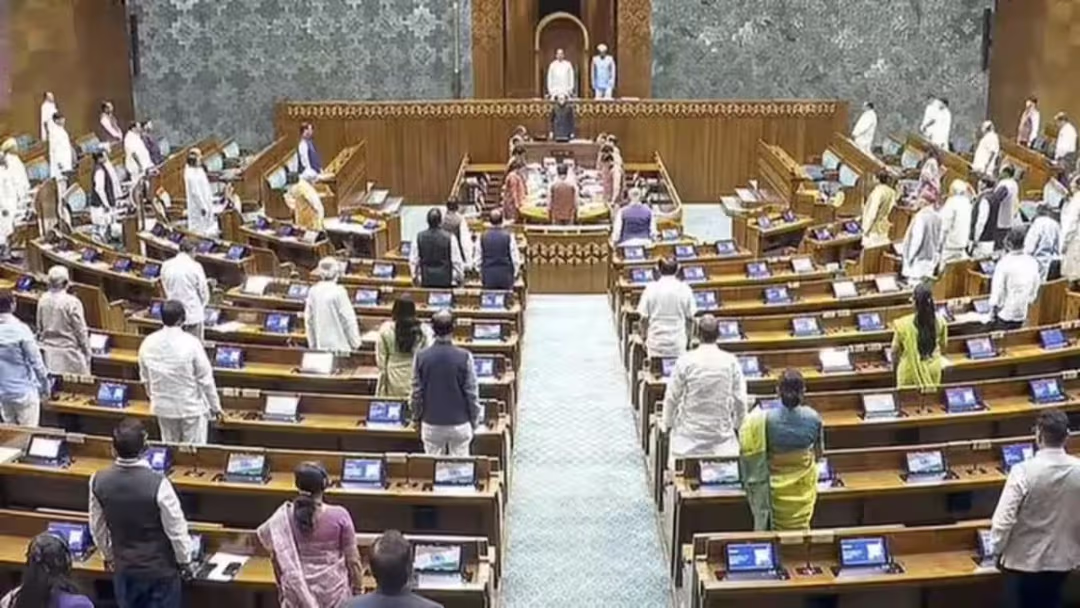

New Delhi | In a significant move to strengthen the integrity of India’s public examination system, the Lok Sabha on Wednesday, July 29, 2026, passed the Public Examinations (Prevention of Unfair Means) Amendment Bill, 2026. The legislation introduces stricter penalties, faster investigations, and time-bound trials to combat paper leaks and examination fraud across the country.
The amendment bill was introduced in the Lok Sabha by Union Minister Dr. Jitendra Singh on July 27, 2026, following widespread public concern and nationwide student protests over repeated examination paper leaks. The proposed amendments build upon the Public Examinations (Prevention of Unfair Means) Act, 2024, India’s first dedicated law aimed at tackling organized examination malpractice.
Major Changes Introduced in the Amendment Bill
The amendment significantly enhances punishment for individuals and organized groups involved in unfair examination practices.
Stricter Punishment for Individuals
For persons found guilty of engaging in paper leaks, cheating, or other unfair means, the bill proposes:
- Imprisonment increased from 3–5 years to 5–10 years.
- Fine enhanced from ₹10 lakh to up to ₹50 lakh.
The government believes tougher penalties will serve as a strong deterrent against examination-related crimes.
Harsh Action Against Organized Paper Leak Syndicates
Recognizing the role of organized criminal networks in examination fraud, the amendment prescribes even stricter punishment for syndicates involved in paper leaks.
Key provisions include:
- Minimum imprisonment of 7 years.
- Fine of up to ₹10 crore.
The legislation seeks to dismantle organized networks responsible for compromising the fairness and credibility of public examinations.
Strict Penalties for Service Providers
The bill also targets institutions and service providers that facilitate or fail to prevent examination fraud.
Under the proposed amendments:
- Service providers may face fines of up to ₹5 crore.
- Their disqualification from conducting or assisting public examinations has been extended from 4 years to 8 years.
These measures aim to ensure greater accountability among agencies involved in examination management.
Time-Bound Investigation and Fast-Track Justice
To ensure swift legal action, the amendment introduces strict timelines for investigation and judicial proceedings.
The bill mandates that:
- Investigations must be completed within two months.
- States and Union Territories will establish Special Fast Track Courts for examination fraud cases.
- Trials must conclude within three months from the filing of the charge sheet.
- Appeals will be heard by a two-judge bench of the High Court, which must decide the matter within three months.
- Special Public Prosecutors will be appointed to conduct these cases.
The government stated that expedited legal proceedings would enhance deterrence while ensuring timely justice.
Wide Range of Offences Covered
The amendment expands enforcement against multiple forms of examination malpractice.
Offences covered under the legislation include:
- Question paper leaks
- Tampering with OMR answer sheets
- Creation and operation of fake examination websites
- Issuance of fake admit cards
- Other organized methods of cheating in public examinations
Authorities believe these provisions address the evolving nature of examination fraud driven by technology and organized criminal activities.
Background to the Amendment
The Public Examinations (Prevention of Unfair Means) Act, 2024, was enacted as India’s first comprehensive law specifically targeting organized examination fraud.
However, several high-profile paper leak incidents in recent months triggered widespread student protests, with candidates demanding stricter laws, faster investigations, and greater accountability from authorities. The protests intensified public pressure on the government to introduce stronger legal safeguards to protect the credibility of competitive examinations.
Against this backdrop, the government introduced the amendment to strengthen the existing legal framework and restore public confidence in the examination process.
Legislative Process
The amendment bill was passed in the Lok Sabha amid vocal exchanges and slogans from members of the Opposition.
The legislation will now be considered by the Rajya Sabha. If approved by the Upper House and subsequently receives Presidential Assent, it will become law and the amended provisions will come into force.
Government’s Objective
The Central Government stated that the amendment is designed to:
- Protect honest students from the consequences of examination fraud.
- Deter organized paper leak networks through tougher penalties.
- Ensure speedy investigation and disposal of cases.
- Strengthen transparency and accountability in public examinations.
- Restore public trust in India’s competitive examination system.
Conclusion
The passage of the Public Examinations (Prevention of Unfair Means) Amendment Bill, 2026 by the Lok Sabha marks a major step toward strengthening India’s legal framework against examination malpractice. With enhanced prison terms, substantially higher fines, special fast-track courts, and strict timelines for investigations and appeals, the government aims to eliminate organized paper leaks and safeguard the future of millions of students appearing for public examinations.
The bill now awaits consideration in the Rajya Sabha, after which it will require Presidential assent before becoming law. If enacted, the legislation is expected to significantly reinforce the integrity, transparency, and credibility of India’s public examination system.