

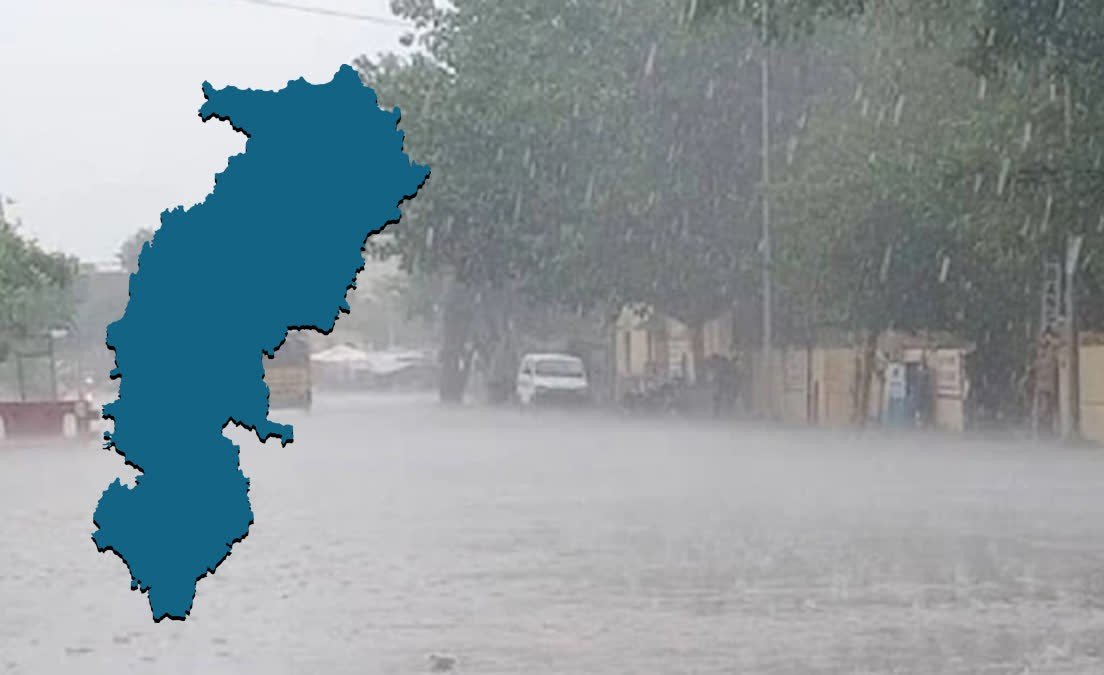

Chhattisgarh has received more rainfall than its long-term average this monsoon, but significant variations across districts have created a mixed picture for farmers.
RAIPUR, CHHATTISGARH: Chhattisgarh is witnessing an active monsoon season, with the state recording above-average rainfall so far this year. However, district-wise data shows a significant variation in rainfall distribution. While some areas have received abundant rainfall, filling fields, ponds and reservoirs, farmers in several other districts are still waiting for adequate showers.
Rainfall Above the State Average
According to the Revenue and Disaster Management Department’s report through August 9, 2026, Chhattisgarh recorded an average rainfall of 647.3 mm between June 1 and August 9.
The figure is slightly higher than the 10-year average of 641.3 mm, meaning the state has received 100.9% of its normal cumulative rainfall so far.
On August 9 alone, the state recorded an average of 27.9 mm of rainfall.
Sarangarh-Bilaigarh Records the Highest Rainfall
Sarangarh-Bilaigarh has recorded the highest rainfall in the state so far, receiving 943.7 mm, which is 193.9% of its normal rainfall.
Several other districts have also received substantially above-normal rainfall:
- Mahasamund: 144%
- Narayanpur: 130%
- Raipur: 129.7%
- Baloda Bazar: 128.5%
- Balrampur: 126.7%
- Janjgir-Champa: 123.8%
- Gariaband: 122.8%
- Sakti: 121.4%
- Balod: 118.5%
- Mungeli: 118.2%
- Durg: 111.7%
- Bilaspur: 111.5%
- Dhamtari: 109.4%
The higher rainfall in these districts has improved water availability in agricultural fields, ponds and other water sources, providing relief to farmers.
Several Districts Near Normal Rainfall
A number of districts are experiencing relatively balanced monsoon conditions, with rainfall close to their normal levels.
Rajnandgaon has received 103.1% of its normal rainfall, while Gaurela-Pendra-Marwahi has recorded 100.9%.
Other districts include Khairagarh-Chhuikhadan-Gandai (99.1%), Korea (96.9%), Korba (96.1%), Manendragarh-Chirmiri-Bharatpur (96%), Raigarh (95.9%), Dantewada (93.2%) and Surajpur (91.7%).
Rainfall Deficit Persists in Several Districts
Despite the state’s overall above-average rainfall, several districts continue to face a significant rainfall deficit.
Kabirdham has received 86.1% of normal rainfall, followed by Kondagaon (85.2%), Bemetara (80.9%) and Jashpur (75.1%).
The deficit is more pronounced in several districts of the Bastar and Surguja regions:
- Bastar: 74.8%
- Mohla-Manpur-Ambagarh Chowki: 72.5%
- Bijapur: 71.4%
- Surguja: 69.5%
- Kanker: 69.4%
- Sukma: 67.7%
Sukma has recorded 602.3 mm of rainfall, the lowest proportion of normal rainfall among the state’s districts listed in the report.
Mixed Impact on Farmers
Although the state’s overall rainfall figure is encouraging, the uneven distribution of rainfall has created contrasting situations across Chhattisgarh.
Farmers in several central and plain areas are benefiting from substantial rainfall, with adequate water available for crops and local water bodies. In contrast, parts of the Surguja and Bastar divisions continue to await stronger monsoon activity.
The difference in rainfall distribution means that while some farmers are concerned about excess water and waterlogging, others remain dependent on further rainfall for their crops.
Administration on Alert Over Flood Risk
With heavy rainfall reported in several parts of the state, the administration is also monitoring the possibility of flooding and waterlogging.
The State Flood Control Room and weather authorities are keeping track of sensitive districts, reservoirs and river systems. Flood control rooms have also been established at district offices to ensure that relief and rescue operations can be launched promptly if required.
Overall Monsoon Picture
Overall, Chhattisgarh’s 100.9% cumulative rainfall compared with the normal average presents a relatively positive monsoon picture. However, the district-wise variation highlights the importance of continued monitoring.
For farmers, the coming weeks will remain crucial. Additional rainfall in deficit districts and effective management of excess water in high-rainfall areas will be important for protecting crops and maintaining agricultural stability across the state.