

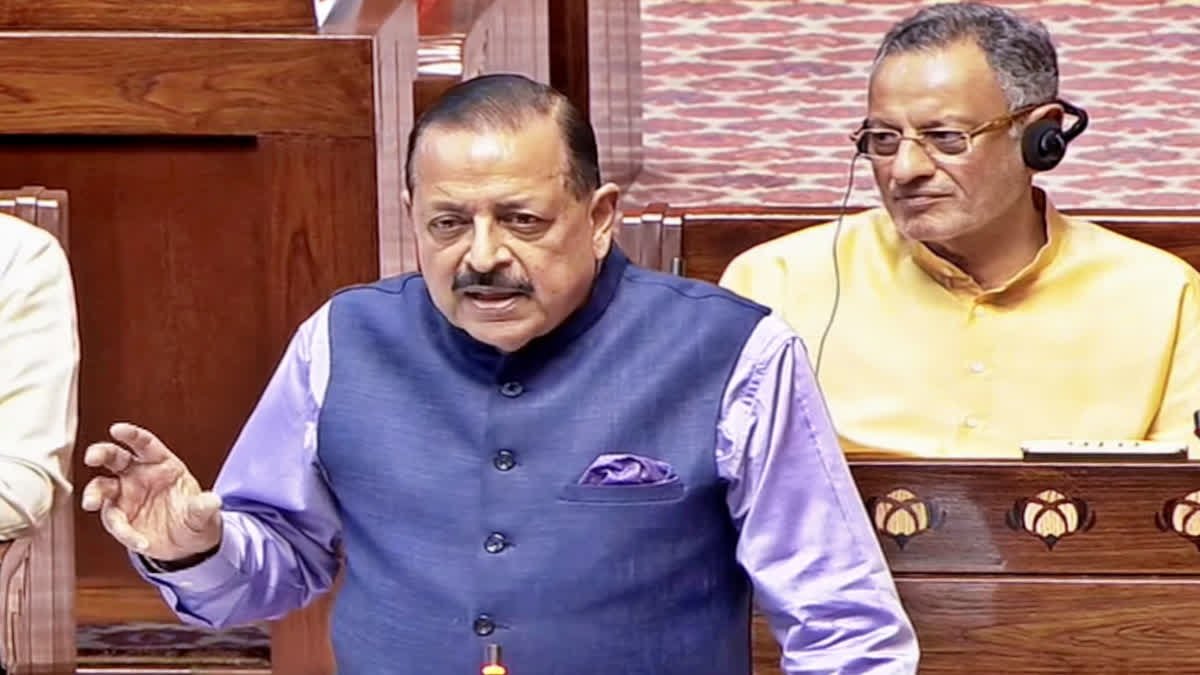

New Delhi : The Government of India has clarified that there is no officially recognised category called “Super El Nino”, putting to rest widespread speculation surrounding the term. The clarification was made in the Rajya Sabha by Dr. Jitendra Singh, Minister of State (Independent Charge) for the Ministry of Earth Sciences, in response to a written parliamentary query.
While dismissing the existence of an official “Super El Nino” classification, the government acknowledged that the India Meteorological Department (IMD) expects the ongoing El Nino event to intensify further and potentially reach the “very strong” category by the end of 2026.
No Official Recognition for ‘Super El Niño’
In his written reply, Dr. Jitendra Singh stated that neither the World Meteorological Organization (WMO) nor the India Meteorological Department (IMD) officially defines or recognises a category known as “Super El Niño.”
Instead, El Niño events are scientifically classified based on Sea Surface Temperature (SST) anomalies in the equatorial central Pacific Ocean.
According to internationally accepted meteorological practices, El Niño episodes are generally categorised as:
- Weak
- Moderate
- Strong
- Very Strong
The government clarified that the term “Super El Niño” is not part of the official classification system used by meteorological agencies.
IMD Expects El Niño to Become Very Strong
According to the India Meteorological Department (IMD), El Niño conditions developed during the 2026 Southwest Monsoon season.
The progression has been as follows:
- June 2026: El Niño remained in the weak stage.
- July 2026: The phenomenon strengthened to a moderate stage.
- October–December 2026 (Forecast): IMD expects El Niño to intensify further and potentially reach the very strong category.
The department noted that current climate models indicate increasing sea surface temperatures over the equatorial Pacific, which may strengthen the phenomenon during the latter part of the year.
Impact on India Depends on Multiple Climate Factors
While El Niño is an important global climate phenomenon, the government cautioned against assuming a direct or uniform impact on India’s weather.
According to the Ministry, the eventual intensity of the event and its influence on India’s climate will depend on the evolving interaction between the ocean and the atmosphere, as well as several other climatic factors.
Officials emphasized that El Niño is only one of many drivers that influence India’s weather systems, including:
- Indian Ocean conditions
- Atmospheric circulation patterns
- Monsoon dynamics
- Other global climate oscillations
Therefore, the actual impact on rainfall, temperatures, agriculture, and water resources cannot be predicted solely on the basis of El Niño intensity.
IMD Closely Monitoring the Situation
The India Meteorological Department continues to closely monitor developments related to El Niño and other climate drivers.
The department regularly issues:
- Seasonal forecasts
- Monthly climate outlooks
- Extended-range weather forecasts
- Weather advisories
- Special climate updates
These forecasts are shared with the Central Government, State Governments, disaster management agencies, and other stakeholders to support preparedness and planning.
Daily Impact-Based Forecasts and Early Warnings
The government also highlighted that IMD provides daily Impact-Based Forecasts (IBFs) and risk-based weather warnings with a validity of up to seven days.
These forecasts are disseminated through multiple communication channels and help authorities prepare for adverse weather events.
The advisories are extensively used by:
- National and State Disaster Management Authorities
- State Governments
- District Administrations
- Agricultural agencies
- Emergency response organisations
- Other public authorities
The early warning system plays a crucial role in reducing the impact of extreme weather events by enabling timely preparedness and response measures.
Understanding El Niño
El Niño is a naturally occurring climate phenomenon characterised by the warming of sea surface temperatures in the central and eastern equatorial Pacific Ocean.
It can influence weather patterns across the globe, including:
- Changes in monsoon rainfall
- Higher temperatures
- Drought conditions in some regions
- Heavy rainfall or flooding in others
- Agricultural productivity
- Water availability
However, meteorologists stress that the impact of each El Niño event varies depending on interactions with other climate systems.
Government Calls for Scientific Understanding
By clarifying that “Super El Niño” is not an officially recognised scientific category, the government has sought to prevent unnecessary confusion and encourage reliance on scientifically established terminology.
Authorities have assured that the IMD will continue to provide timely weather forecasts and climate updates as the situation evolves, enabling governments, industries, farmers, and citizens to make informed decisions.
Key Highlights
- The Government of India has clarified that “Super El Niño” is not an officially recognised meteorological category.
- Dr. Jitendra Singh, Minister of State (Independent Charge), Ministry of Earth Sciences, made the clarification in a written reply in the Rajya Sabha.
- Neither the World Meteorological Organization (WMO) nor the India Meteorological Department (IMD) officially recognises the term “Super El Niño.”
- El Niño events are scientifically classified as Weak, Moderate, Strong, or Very Strong based on Sea Surface Temperature anomalies.
- According to IMD, the ongoing El Niño developed during the 2026 Southwest Monsoon, progressed from weak in June to moderate in July, and could become very strong during October–December 2026.
- The government stated that the actual impact on India will depend on multiple ocean-atmosphere interactions and other climatic factors.
- IMD continues to monitor El Niño and issues seasonal forecasts, monthly outlooks, extended-range forecasts, and daily Impact-Based Forecasts (IBFs) to support disaster preparedness and weather-related decision-making.
Source: Written reply by Dr. Jitendra Singh, Minister of State (Independent Charge), Ministry of Earth Sciences, in the Rajya Sabha, along with information from the India Meteorological Department (IMD), released on July 30, 2026.