


New Delhi : India’s decision to assign official names to 27 locations and geographical features in Arunachal Pradesh carries significant strategic and diplomatic importance, particularly in the context of India-China border relations.
The announcement came just a day after the 36th meeting of the Working Mechanism for Consultation and Coordination (WMCC) on India-China Border Affairs, highlighting a dual approach by New Delhi—continuing dialogue with Beijing on border management while simultaneously reinforcing its position on territorial sovereignty.
The timing also underlines the limits of the recent easing in India-China relations, with territorial issues continuing to remain a sensitive point between the two countries.
India Reaffirms Arunachal Pradesh as Integral Part of Country
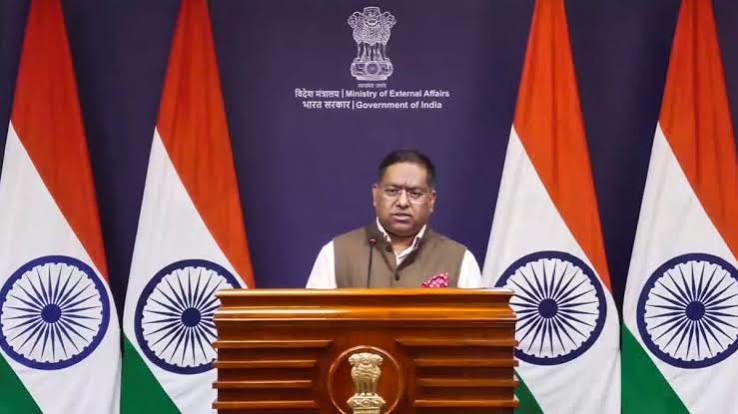
Responding to China’s criticism over India’s naming exercise, Ministry of External Affairs spokesperson Randhir Jaiswal reiterated India’s position that Arunachal Pradesh is an integral part of the country.
During a regular media briefing, Jaiswal said that Arunachal Pradesh is an integral and inalienable part of India, stressing that this is an established and self-evident fact.
He further emphasised that nothing can alter this undisputed reality, reaffirming New Delhi’s firm position on the northeastern state.
27 Locations Identified on Official Maps
On August 7, the Ministry of Home Affairs announced that, in consultation with the Arunachal Pradesh government, it had identified 27 locations and geographical features in the state for standardised official naming.
The names are being formally incorporated into Survey of India maps, India’s official mapping system.
According to the government, the objective is to facilitate the correct identification of these places and increase public awareness about their official names and locations.
The identified features include settlements, localities, mountain passes, a lake and a military memorial spread across various border areas of Arunachal Pradesh.
List of 27 Locations
The locations and areas identified by the government include:
- Longju
- Maja
- Bisa
- Bada Kundun
- Chhota Kundun
- Dhan Bari
- Preetnagar
- Buddh Mandir
- Jairampur
- Territory Nagar
- Ramnagar
- Jaswant Garh
- Sagar
- Padma
- Jyoti Nagar
- Baisakhi
- Chhota Ropuk
- Bada Ropuk
- Shivaji Nagar
- Sunpura
- Kamlang Nagar
The government has also identified additional geographical features in the region as part of the broader exercise.
Timing of Announcement Holds Strategic Significance
The decision comes at a time when India and China have been attempting to stabilise bilateral relations following tensions along the Line of Actual Control (LAC).
The 36th WMCC meeting focused on consultations and coordination regarding India-China border affairs. The subsequent announcement regarding official names in Arunachal Pradesh demonstrates that dialogue on border management is continuing alongside measures aimed at reinforcing India’s territorial position.
The development therefore reflects a broader Indian approach: engagement with China through established diplomatic mechanisms while maintaining a firm position on territorial sovereignty.
China Has Objected to Naming of Arunachal Pradesh Locations
China has repeatedly objected to India’s actions relating to the naming and official recognition of locations in Arunachal Pradesh, which Beijing refers to as part of its claimed territory.
India has consistently rejected these claims.
New Delhi maintains that Arunachal Pradesh has always been and remains an integral part of India, and that China’s attempts to rename places in the state or challenge India’s administrative authority have no bearing on the ground reality.
The latest naming exercise is therefore being viewed as both an administrative and strategic assertion of India’s position.
Official Naming Intended to Improve Identification
The Ministry of Home Affairs has said the formal identification of the locations on Survey of India maps is aimed at ensuring consistent and accurate geographical identification.
The move is also expected to improve awareness among the public regarding the locations and their official names.
For India, the exercise reinforces the importance of maintaining accurate official records and maps of areas along the country’s sensitive northeastern frontier.
India-China Relations Remain Sensitive
Although India-China relations have shown signs of improvement compared with the heightened tensions of previous years, the border dispute remains one of the most significant challenges in bilateral ties.
The latest development illustrates that diplomatic engagement and efforts to reduce tensions do not necessarily mean that either side has softened its fundamental position on territorial claims.
India’s latest action, coupled with the statement from the Ministry of External Affairs, makes clear that New Delhi intends to continue diplomatic dialogue while firmly asserting its sovereignty over Arunachal Pradesh.