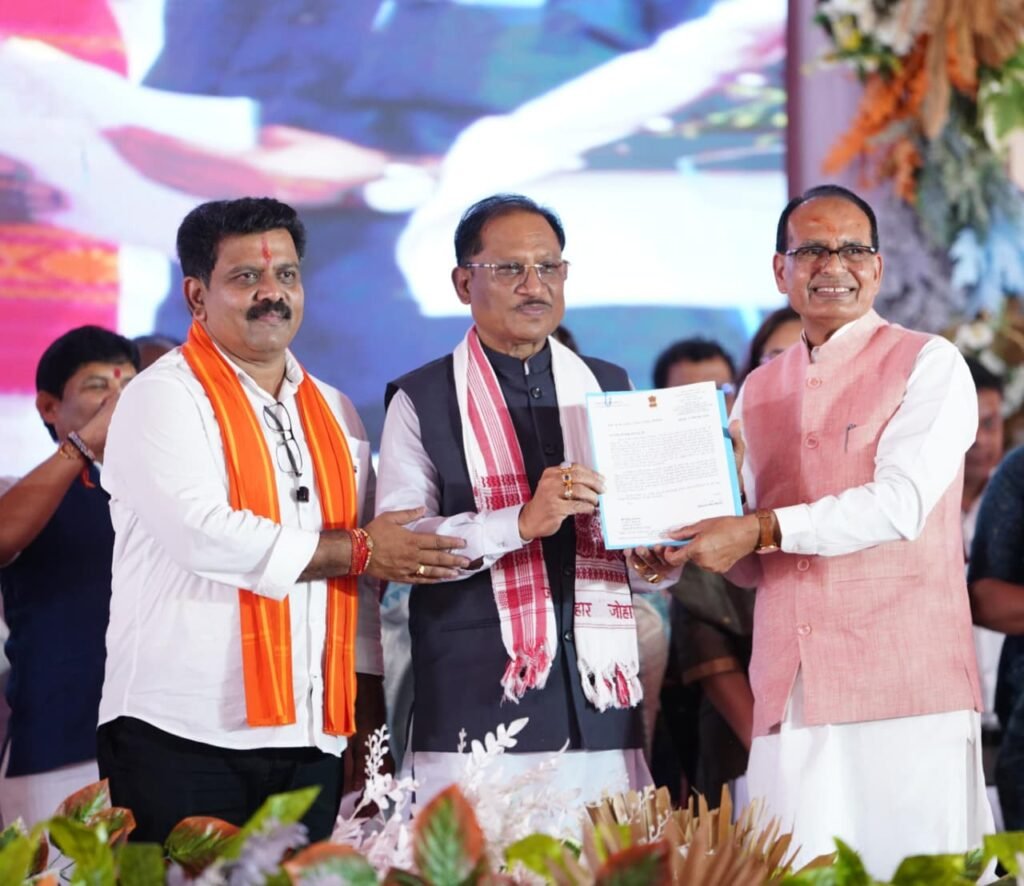


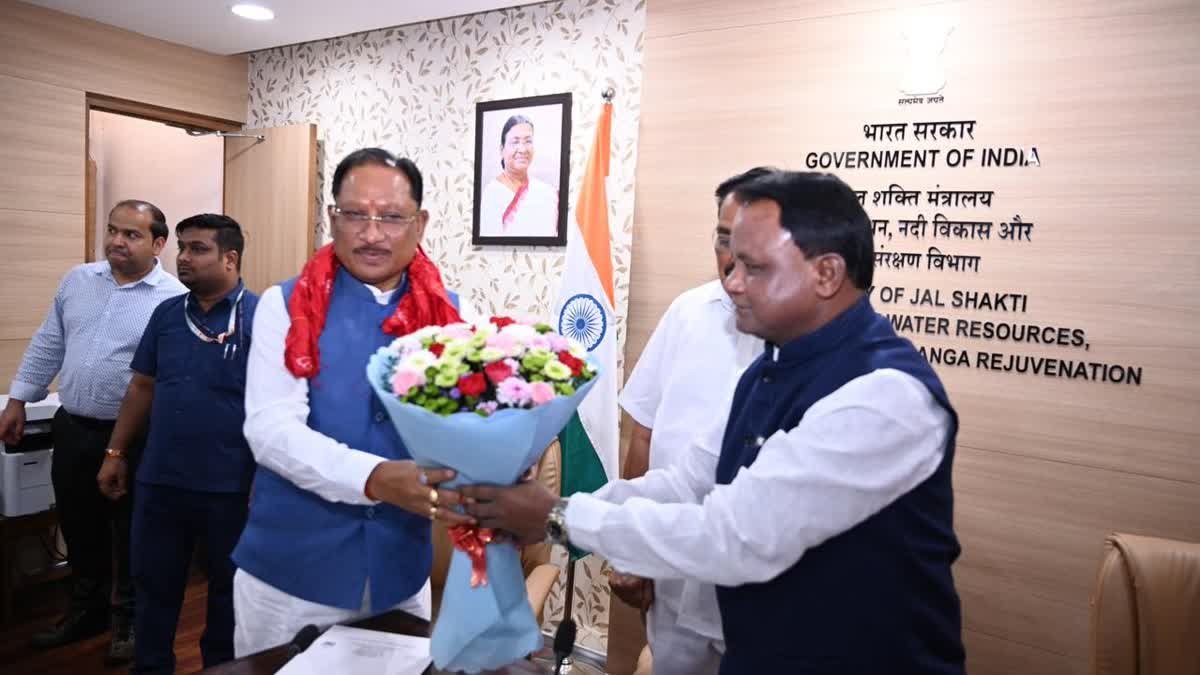

New Delhi : In a significant step toward resolving the long-standing Mahanadi water-sharing dispute, the governments of Chhattisgarh and Odisha held a high-level meeting in New Delhi under the chairmanship of Union Jal Shakti Minister C.R. Patil. The meeting aimed to strengthen dialogue between the two states and explore a mutually acceptable, long-term solution for the equitable management and distribution of the Mahanadi River’s waters.
The discussions took place at Shram Shakti Bhawan and were attended by Chhattisgarh Chief Minister Vishnu Deo Sai, Odisha Chief Minister Mohan Charan Majhi, Union Minister of State for Housing and Urban Affairs Tokhan Sahu, along with senior administrative and technical officials from both states.
Focus on Cooperation Rather Than Conflict
During the meeting, Chief Minister Vishnu Deo Sai emphasized that the Mahanadi River is a shared lifeline for both Chhattisgarh and Odisha, supporting millions of people through agriculture, drinking water supply, industrial development, and environmental sustainability.
He stated that the Chhattisgarh Government views the meeting not as a continuation of a dispute, but as the beginning of a constructive solution based on dialogue and cooperation.
According to Sai, the positive atmosphere created through discussions between the two states can serve as a strong foundation for developing a practical and sustainable water-sharing mechanism in the future.
Balancing the Interests of Both States
The Chief Minister reiterated that Chhattisgarh fully respects Odisha’s requirements related to:
- Irrigation
- Drinking water supply
- The Hirakud Dam Project
At the same time, he stressed that the needs of Chhattisgarh’s farmers, tribal communities, drought-prone regions, and the state’s future developmental requirements should receive equal consideration.
He noted that the interests of both states are complementary rather than conflicting, and any final agreement should ensure that neither state’s legitimate concerns are adversely affected.
Proposal for a Common Water Management System
A key point of discussion during the meeting was the development of a joint water management framework.
Chief Minister Sai said that experts from both states have already conducted scientific assessments regarding:
- Available water resources
- Hydrological conditions
- Various technical aspects related to river management
He suggested that these scientific findings should now form the basis for a future-oriented and practical water management system.
The proposed framework would include:
- A shared water management mechanism for years of low rainfall.
- Scientific planning to minimize water shortages in either state.
- Development of a permanent institutional mechanism to regularly monitor:
- Water availability
- Water utilization
- Future water requirements
Such a system, he said, would help both states respond more effectively to changing climatic conditions and increasing water demand.
Greater Role for Technical Committees
The Chief Minister also proposed that administrative and technical-level committees should resolve as many issues as possible through mutual coordination.
Only matters involving major policy decisions, he suggested, should be referred to the ministerial level.
According to him, this approach would make the decision-making process:
- More efficient
- More transparent
- Time-bound
- Technically sound
Appeal for Central Government Support
During the discussions, Chief Minister Vishnu Deo Sai requested Union Jal Shakti Minister C.R. Patil and the Central Water Commission (CWC) to play an active role in facilitating the resolution process.
He urged the Centre to provide:
- Neutral technical assistance
- A time-bound action plan
- Support in drafting a long-term consensus-based agreement between the two states
Sai said that proactive involvement by the Central Government would strengthen mutual trust and accelerate efforts toward an amicable settlement.
Acknowledgement of Cooperative Federalism
The Chief Minister expressed gratitude to Prime Minister Narendra Modi and Union Home and Cooperation Minister Amit Shah, stating that their emphasis on cooperative federalism has created a positive environment for resolving long-pending inter-state issues through dialogue rather than confrontation.
He expressed confidence that, under the guidance of the Central Government, both Chhattisgarh and Odisha would be able to develop a balanced and sustainable solution that safeguards the interests of:
- Farmers
- Citizens
- Industries
- Environmental conservation
- Future generations
Importance of the Mahanadi Water Issue
The Mahanadi River is one of eastern India’s most important river systems and serves as a crucial source of water for agriculture, domestic consumption, hydroelectric power generation, and industrial activities in both Chhattisgarh and Odisha.
Over the years, differences regarding water allocation and infrastructure development have led to disputes between the two states. The latest meeting signals a renewed effort to address these concerns through cooperation, scientific assessment, and institutional dialogue.
Key Highlights
- Chhattisgarh and Odisha held a high-level meeting in New Delhi to discuss the Mahanadi water-sharing dispute.
- The meeting was chaired by Union Jal Shakti Minister C.R. Patil at Shram Shakti Bhawan.
- Participants included Chief Minister Vishnu Deo Sai, Chief Minister Mohan Charan Majhi, Union Minister Tokhan Sahu, and senior officials from both states.
- Chhattisgarh described the meeting as the beginning of a solution-oriented dialogue rather than a continuation of the dispute.
- Both states discussed developing a common water management system for low-rainfall years.
- A proposal was made to establish a permanent institutional mechanism to monitor water availability and future requirements.
- The Chief Minister requested the Central Water Commission and the Union Government to provide technical support and facilitate a long-term agreement.
- The discussions emphasized cooperative federalism, scientific planning, and equitable sharing of water resources for sustainable regional development.
Source: Statements made during the high-level meeting on the Mahanadi water-sharing issue chaired by Union Jal Shakti Minister C.R. Patil in New Delhi, attended by the Chief Ministers of Chhattisgarh and Odisha, along with senior government officials.