


New Delhi : In a significant step toward advancing green aviation and reducing the aviation sector’s carbon footprint, the Ministry of Civil Aviation convened a high-level stakeholder meeting to assess India’s preparedness for the adoption of Sustainable Aviation Fuel (SAF) and compliance with the Carbon Offsetting and Reduction Scheme for International Aviation (CORSIA).
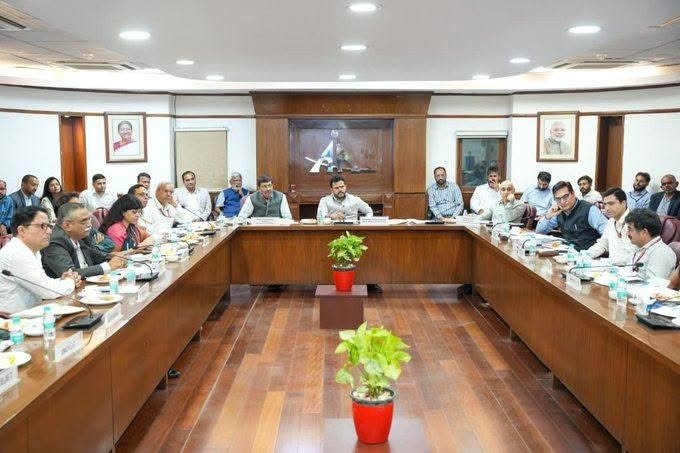
The meeting was chaired by Union Minister for Civil Aviation Ram Mohan Naidu and brought together senior officials from the aviation, petroleum, and energy sectors, along with representatives from Oil Marketing Companies (OMCs) and other key stakeholders involved in the development of India’s sustainable aviation ecosystem.
During the meeting, participants reviewed the country’s preparedness for the large-scale adoption of Sustainable Aviation Fuel (SAF), which is considered one of the most effective solutions for reducing greenhouse gas emissions from the aviation industry. SAF is produced from renewable and sustainable feedstocks, including agricultural waste, used cooking oil, municipal waste, and other non-fossil resources, and can significantly reduce lifecycle carbon emissions compared to conventional jet fuel.
A major focus of the discussion was India’s commitment to complying with the Carbon Offsetting and Reduction Scheme for International Aviation (CORSIA), the global carbon reduction framework developed by the International Civil Aviation Organization (ICAO). CORSIA is designed to stabilize carbon emissions from international aviation by requiring airlines to offset emissions that exceed established baseline levels while encouraging the adoption of cleaner aviation technologies and fuels.
Officials also reviewed the progress of various Sustainable Aviation Fuel production projects currently being implemented by Oil Marketing Companies across the country. The meeting assessed the status of these projects, their implementation timelines, and the expected commissioning schedules to ensure adequate domestic production capacity in the coming years.
Stakeholders emphasized the importance of developing a reliable SAF supply chain to support India’s rapidly growing aviation sector. Discussions focused on strategies to ensure the timely availability of Sustainable Aviation Fuel so that airlines can meet the expected increase in demand beginning in 2027, when global sustainability requirements are anticipated to become more stringent.
The meeting also highlighted the need for close coordination among government ministries, fuel producers, airlines, airport operators, and regulatory agencies to accelerate the commercialization of SAF, strengthen production infrastructure, and create a supportive policy environment for investment in sustainable aviation technologies.
According to officials, expanding the use of Sustainable Aviation Fuel will not only help India achieve its climate commitments but also enhance the global competitiveness of its aviation sector by ensuring compliance with evolving international environmental standards.
The review reflects the Government of India’s broader commitment to promoting clean energy, decarbonizing the aviation industry, and positioning the country as a leader in the transition toward sustainable air transport. With demand for air travel expected to grow significantly over the coming decade, ensuring an adequate supply of Sustainable Aviation Fuel will be essential for balancing economic growth with environmental responsibility while meeting international obligations under ICAO’s CORSIA framework.