


Bhilai, Chhattisgarh | July 29, 2026: In a significant step toward integrating human rights, environmental sustainability, and emerging technologies into higher education, the Indian Institute of Technology (IIT) Bhilai and the National Human Rights Commission (NHRC), Government of India, have explored opportunities for strategic collaboration through academic partnerships, innovation, and institutional initiatives.
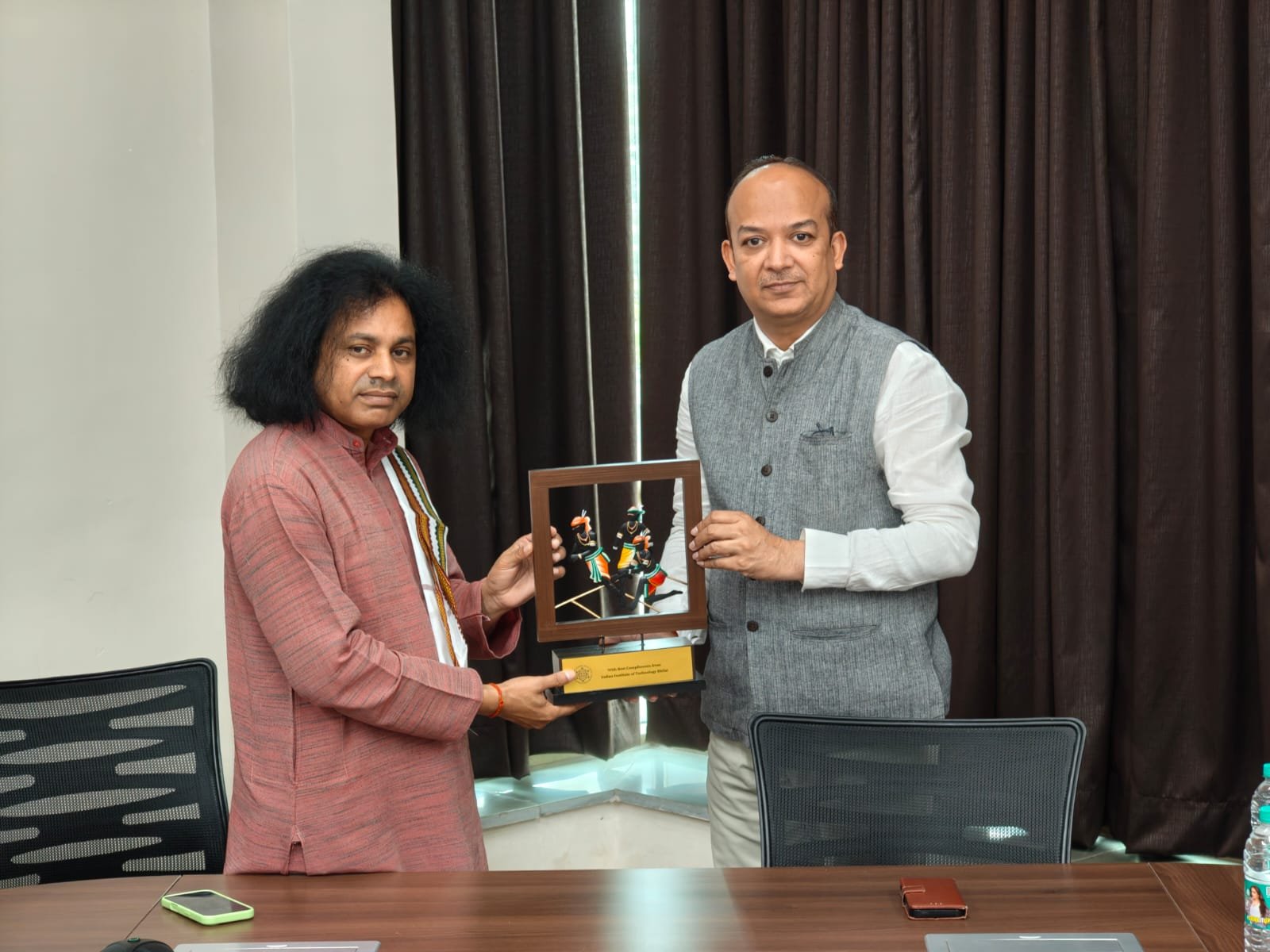
The discussions took place during the visit of Prof. Kanhaiya Tripathi, Special Monitor, National Human Rights Commission (NHRC), to IIT Bhilai, where he interacted with the institute’s leadership, faculty members, officials, and students.
Human Rights and Environmental Studies Should Be Part of Core Engineering Education
Addressing the gathering, Prof. Kanhaiya Tripathi emphasized that Human Rights and Environmental Studies should become an integral part of the core curriculum in Engineering and Science education. According to him, future engineers and scientists must possess not only technical expertise but also a deep understanding of social responsibility, environmental protection, and ethical decision-making to effectively address future societal challenges.
He stressed that greater attention should be given to gender equality, human rights awareness, and the overall well-being of students, stating that such an approach would contribute to building a progressive, inclusive society and support India’s vision of Viksit Bharat 2047.
Interaction with Students and Campus Visit
During his visit, Prof. Tripathi toured the Shivnath Hostel, where he met newly admitted students and encouraged them to actively participate in initiatives that promote social awareness, human values, and community engagement alongside academic excellence.
IIT Bhilai Showcases Institutional Initiatives
IIT Bhilai Director Prof. Rajeev Prakash, along with members of the institute’s Dean’s Council, welcomed Prof. Tripathi and briefed him about the institution’s ongoing academic, research, and outreach initiatives.
Prof. Tripathi appreciated IIT Bhilai’s efforts in tribal development, student welfare, and inclusive education. He also encouraged the institute to document its Best Practices related to gender equality, human rights protection, and student welfare, enabling them to serve as models for other educational institutions.
Proposal for Institutional Collaboration Through MoUs
During the discussions, Prof. Tripathi proposed strengthening institutional cooperation between IIT Bhilai, the National Human Rights Commission, and other academic institutions through Memorandums of Understanding (MoUs). Such collaborations would facilitate joint academic programs, research projects, awareness campaigns, and capacity-building initiatives focused on human rights and environmental sustainability.
He further suggested renaming the institute’s existing Happiness Club as the Human Rights and Happiness Club to promote broader awareness about human rights, mental well-being, and social responsibility among students.
AI-Based Human Rights Solutions and National Innovation Fair
Highlighting the growing importance of technology in governance and public welfare, Prof. Tripathi proposed the development of Artificial Intelligence (AI)-based applications to strengthen the protection and promotion of human rights in Chhattisgarh.
He also recommended organizing a National-Level Innovation Fair involving students from various IITs and National Institutes of Technology (NITs). The proposed event would encourage young innovators to develop technology-driven solutions addressing challenges related to human rights, environmental conservation, and social development.
IIT Bhilai Expresses Interest in New Academic Course
After reviewing the institute’s ongoing activities, Prof. Tripathi expressed satisfaction with the progress achieved under the leadership of Prof. Rajeev Prakash.
Responding positively to the proposals, IIT Bhilai expressed strong interest in launching a special academic course on Human Rights and Environment with the guidance and support of the National Human Rights Commission. The proposed course aims to equip students with interdisciplinary knowledge that combines technology, ethics, human rights, and environmental responsibility, preparing them to become socially conscious professionals.
The proposed collaboration between IIT Bhilai and the NHRC is expected to create new opportunities for research, innovation, policy development, and student engagement, reinforcing the role of higher education institutions in building a more equitable, sustainable, and human-centric future.