


Raipur/Ahmedabad: A five-day study tour to Gujarat, organized by the Press Information Bureau (PIB), Raipur, offered a delegation of journalists from Chhattisgarh a comprehensive view of a state where history, innovation, industry, and global finance converge to shape the vision of Developed India (Viksit Bharat).
The delegation explored some of Gujarat’s most iconic landmarks and development hubs, including the Sabarmati Ashram, Kochrab Ashram, Amul Dairy in Anand, Lothal National Maritime Heritage Complex, the Mumbai-Ahmedabad High-Speed Rail Project, Sanand Semiconductor Manufacturing Hub, GIFT City, the International Financial Services Centres Authority (IFSCA), and the Statue of Unity at Ekta Nagar.
The tour highlighted how Gujarat has successfully connected its rich historical legacy with modern economic transformation, making it one of India’s leading examples of integrated development.
Sabarmati Ashram: The Birthplace of Gandhian Values
The journey began at the Sabarmati Ashram, where journalists reflected on the life and philosophy of Mahatma Gandhi. The peaceful surroundings reminded visitors that India’s freedom movement was built not only through political struggle but also through truth, non-violence, self-reliance, and social reform.
At the nearby Kochrab Ashram, the delegation learned about Gandhi’s early experiments in community living and nation-building, offering valuable insight into the ideals that continue to inspire modern India.
Amul: A Global Cooperative Success Story
In Anand, the delegation visited Amul, India’s most successful dairy cooperative, where officials explained how millions of dairy farmers have been connected through a sustainable cooperative model.
During an interaction with Dr. Preeti Shukla, the journalists learned how Amul transformed rural livelihoods by empowering farmers, strengthening supply chains, and creating one of India’s most recognized global brands. The visit demonstrated that inclusive economic growth begins at the grassroots level.
Lothal: Reviving India’s 4,500-Year Maritime Heritage
At Lothal, one of the world’s oldest known dockyard cities of the Indus Valley Civilization, the delegation witnessed India’s efforts to preserve and showcase its ancient maritime legacy.
The upcoming National Maritime Heritage Complex aims to become an international center for history, education, research, tourism, and maritime awareness, reflecting India’s ambition to reconnect with its historic role as a global maritime power.
The visit reinforced the idea that India’s future development is deeply rooted in its civilizational heritage.
Mumbai-Ahmedabad High-Speed Rail: Engineering India’s Future
The delegation also reviewed progress on the Mumbai-Ahmedabad High-Speed Rail (Bullet Train) Project, India’s first high-speed rail corridor.
Officials explained the massive engineering work involving viaducts, bridges, tunnels, advanced rail technology, and modern construction techniques. The project represents one of India’s most ambitious infrastructure initiatives and is expected to transform intercity transportation while generating employment and technological advancement.
Sanand: India’s Emerging Semiconductor Destination
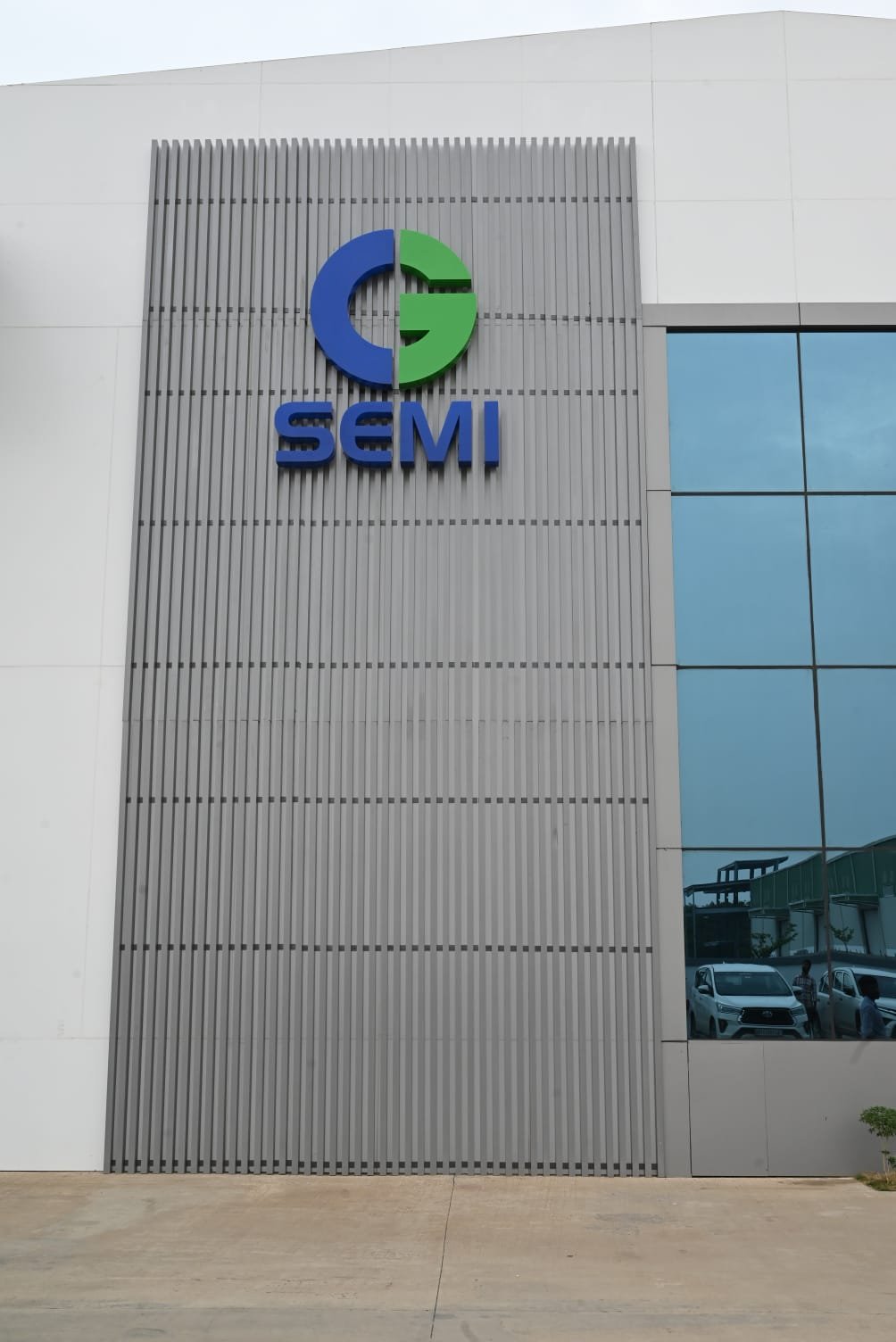
A visit to Sanand provided journalists with an understanding of India’s growing semiconductor manufacturing ecosystem.
Semiconductors are essential components in smartphones, electric vehicles, artificial intelligence, defense systems, communication technologies, and advanced electronics.
Officials highlighted that India is no longer aiming to remain merely a consumer of advanced technology but is actively building domestic manufacturing capabilities to become part of the global semiconductor supply chain.
GIFT City: India’s Global Financial Gateway
One of the most significant stops during the study tour was GIFT (Gujarat International Finance Tec-City), India’s first operational International Financial Services Centre (IFSC).
During an interaction with GIFT City Chief Executive Officer Avichal Khera and General Manager Jaya Chaturvedi, the delegation learned about India’s efforts to bring international financial services back to Indian soil.
The discussions covered sectors such as international banking, fund management, insurance, capital markets, treasury operations, aircraft leasing, ship leasing, trade finance, and sustainable finance.
Officials explained that businesses which earlier relied on global financial centers like Singapore, Dubai, and Mauritius can now access many international financial services within India through GIFT City.
IFSCA: Building a Unified Global Financial Ecosystem
The delegation also interacted with Dr. Dipesh Shah, Executive Director (Development), International Financial Services Centres Authority (IFSCA).
The discussion focused on the role of IFSCA as India’s unified regulator for international financial services.
Officials described GIFT IFSC as an “inbound and outbound gateway” for global capital, enabling international financial transactions in notified foreign currencies under a single regulatory framework.
The interaction also emphasized the importance of creating high-skilled employment, retaining Indian talent, and positioning India as a competitive destination for global finance and innovation.
Statue of Unity: A Symbol of National Unity
The study tour concluded at the Statue of Unity in Ekta Nagar, dedicated to Sardar Vallabhbhai Patel, the architect of India’s political integration.
Standing before the world’s tallest statue, the delegation reflected on the journey that connected Gandhian ideals, cooperative development, ancient maritime history, modern infrastructure, advanced manufacturing, and global financial ambition into one unified national narrative.
A Journey Beyond Tourism
The Gujarat study tour demonstrated that the state’s development model extends far beyond industrial growth. It presents a balanced vision where heritage, innovation, technology, cooperative economics, and global competitiveness coexist.
From the peaceful banks of the Sabarmati River to the towering skyline of GIFT City, Gujarat showcased how India’s past continues to shape its future.
The visit also raised important questions about India’s evolving development journey:
- Can India’s ancient maritime legacy inspire a modern Blue Economy?
- Can the success of cooperative models like Amul be replicated across the country?
- Will GIFT City emerge as a leading global financial hub?
- Can India preserve its cultural heritage while accelerating technological and industrial progress?
While these questions await answers in the years ahead, one message became clear throughout the five-day tour: India’s future is not a distant dream—it is already under construction.