

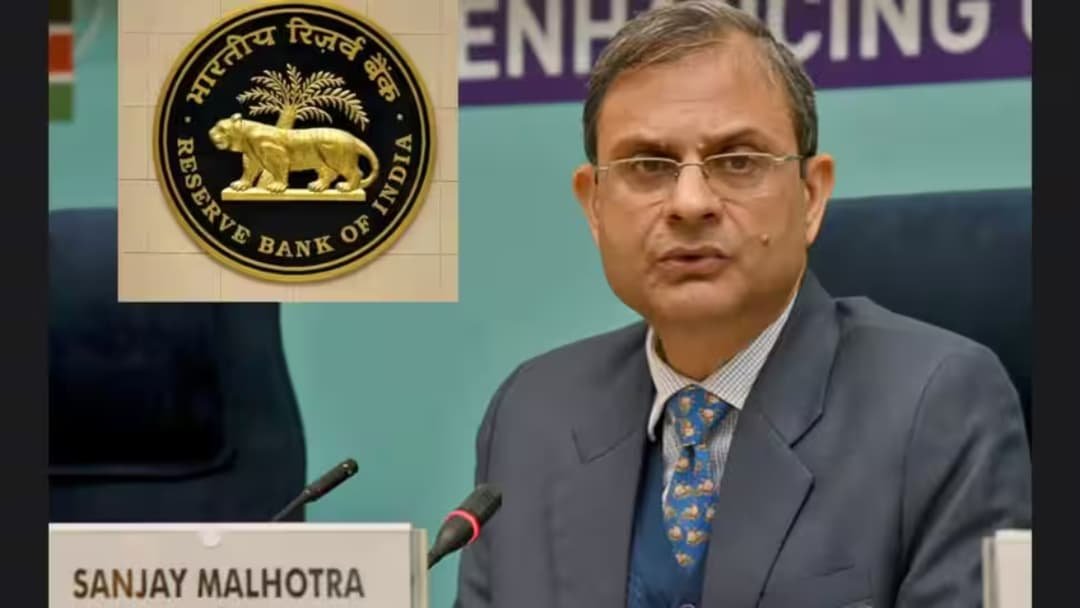
Amsterdam — : Sanjay Malhotra, Governor of the Reserve Bank of India, underscored the strength and adaptability of India’s economy and financial system during a keynote address at the 25th FIMMDA–PDAI Annual Conference in Amsterdam. His speech, titled “Indian Financial Markets – Resilience and Resurgence,” outlined India’s economic performance amid global uncertainty and detailed ongoing reforms aimed at deepening and modernizing financial markets.
Global Economy Under Pressure
Malhotra began by acknowledging that the global financial system is navigating a period of heightened uncertainty. He pointed to several structural and cyclical challenges shaping the outlook:
- Increasing geo-economic fragmentation and trade restrictions
- Rising sovereign debt levels and higher defense expenditures
- Elevated valuations in select asset classes
- Rapid growth of private credit markets
- Structural shifts driven by artificial intelligence
- Geopolitical tensions impacting energy prices
According to the Governor, these factors are contributing to volatility in global markets and complicating inflation management for central banks worldwide.
India Emerges as a Growth Leader
Against this backdrop, India continues to stand out as one of the fastest-growing major economies.
Key economic indicators highlighted in the address include:
- Average GDP growth (2021–2025): 8.2%
- Estimated growth (FY 2025–26): 7.6%
- Projected growth (FY 2026–27): 6.9%
- Projected inflation (FY27): 4.6%
Malhotra attributed this performance to strong domestic consumption, sustained public investment, and a series of structural reforms implemented over the past decade. He also noted that India’s banking and corporate sectors have significantly improved their balance sheets, capital buffers, and profitability.
Strong External Position Supports Stability
The Governor emphasized that India’s external sector remains robust, reinforcing overall macroeconomic stability:
- Foreign exchange reserves sufficient to cover 11 months of imports
- A manageable current account deficit
- Gross foreign direct investment (FDI) projected at approximately $90 billion in FY 2025–26
These factors, he said, continue to bolster investor confidence and shield the economy from external shocks.
Reforms to Deepen Financial Markets
The RBI is actively pursuing a broad set of reforms to enhance market depth, efficiency, and global integration.
Money and Government Securities Markets
- Adoption of a more agile liquidity management framework
- Expansion of benchmark issuance to include State Development Loans starting FY27
- Initiatives to increase participation from retail and non-resident investors
Derivatives and Market Infrastructure
- Introduction of total return swaps on corporate bonds
- Launch of forward contracts on government securities
- Expansion of central clearing for foreign exchange forwards up to 36 months
- Development of electronic trading platforms for new derivative products
Facilitating Foreign Investment
- Relaxation of macroprudential norms for foreign portfolio investors in corporate bonds
- Enhanced flexibility under the Voluntary Retention Route
- Allowing investments of Special Rupee Vostro Account balances into debt instruments
- Integration of India’s NDS-OM platform with global bond trading systems
Key Areas for Further Development
Despite strong progress, Malhotra identified five priority areas requiring continued focus:
- Improving liquidity across different maturities of government securities
- Expanding the interest rate derivatives market
- Strengthening Indian banks’ presence in global market-making
- Increasing adoption of retail foreign exchange platforms
- Accelerating the development of credit derivatives
He stressed that as markets evolve, maintaining transparency, fair access, and regulatory integrity will be critical.
A Balanced Path Forward
Malhotra concluded by reaffirming the RBI’s commitment to fostering a resilient and inclusive financial ecosystem. While global risks remain elevated, India’s strong macroeconomic fundamentals and proactive policy measures position it well for sustained growth.
The address reinforced a broader message: India is not only weathering global uncertainty but is also actively reshaping its financial architecture to support long-term economic expansion and deeper integration with global markets.