


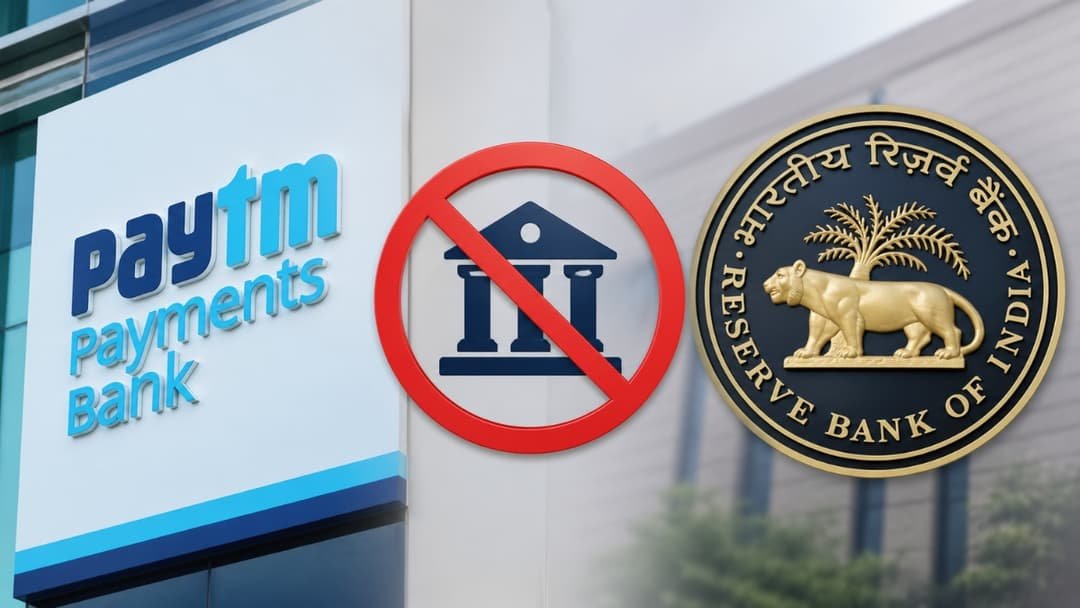

New Delhi — In one of the most decisive regulatory actions in India’s financial sector, the Reserve Bank of India (RBI) has cancelled the banking license of Paytm Payments Bank Limited with immediate effect, effectively shutting down its operations and initiating a formal winding-up process.
The move underscores the central bank’s increasingly strict stance on governance, compliance, and depositor protection in the rapidly evolving fintech ecosystem.
Why RBI Took Action
The RBI said it revoked the license under Section 22(4) of the Banking Regulation Act, 1949 after identifying persistent regulatory violations and serious governance lapses.
According to the regulator, four major concerns drove the decision:
- Threat to Depositors: The bank’s operations were deemed detrimental to customer interests, raising concerns about financial safety and regulatory compliance.
- Governance Failures: RBI flagged the overall management structure and conduct as being harmful to public interest.
- No Public Interest in Continuation: The regulator concluded that allowing the bank to continue operations would not serve the broader financial system.
- Violation of License Conditions: Multiple breaches of licensing terms ultimately led to the cancellation.
Shutdown Process Begins
The RBI confirmed it will approach the appropriate High Court to formally wind up the bank. This legal step begins the structured closure of the institution.
To prevent panic, the central bank emphasized that:
The bank has sufficient liquidity to repay all depositors in full.
This assurance is critical for millions of users who relied on the payments bank for wallets, savings accounts, and digital transactions.
Years of Regulatory Pressure
The cancellation follows a series of escalating restrictions imposed over several years:
- March 2022: The bank was barred from onboarding new customers.
- Early 2024: RBI imposed strict limits on deposits, wallet top-ups, and prepaid instruments.
The April 2026 decision represents the culmination of prolonged scrutiny and repeated compliance failures.
Impact on Paytm and India’s Fintech Sector
While the payments bank operates separately from its parent company Paytm, the fallout is expected to ripple across the broader ecosystem.
Key implications include:
- Disruption to wallet and prepaid payment services
- Increased dependence on partner banks for financial operations
- Heightened regulatory oversight across fintech companies
- Pressure on business models built around payments banks
Industry experts say this action could reshape how fintech firms structure banking partnerships in India.
What Customers Should Do
Although deposits are considered safe, customers are advised to stay proactive:
- Transfer or withdraw funds once official instructions are issued
- Track updates from RBI and Paytm
- Avoid future reliance on the payments bank for financial services
Further guidance is expected as the legal winding-up process progresses.
Bottom Line
The RBI’s cancellation of Paytm Payments Bank’s license marks a defining moment for India’s digital finance landscape. It sends a strong signal that rapid innovation must be matched with strict compliance and sound governance.
For customers, the immediate risk appears contained—but for the fintech industry, the message is clear: regulatory tolerance for lapses is rapidly shrinking.