

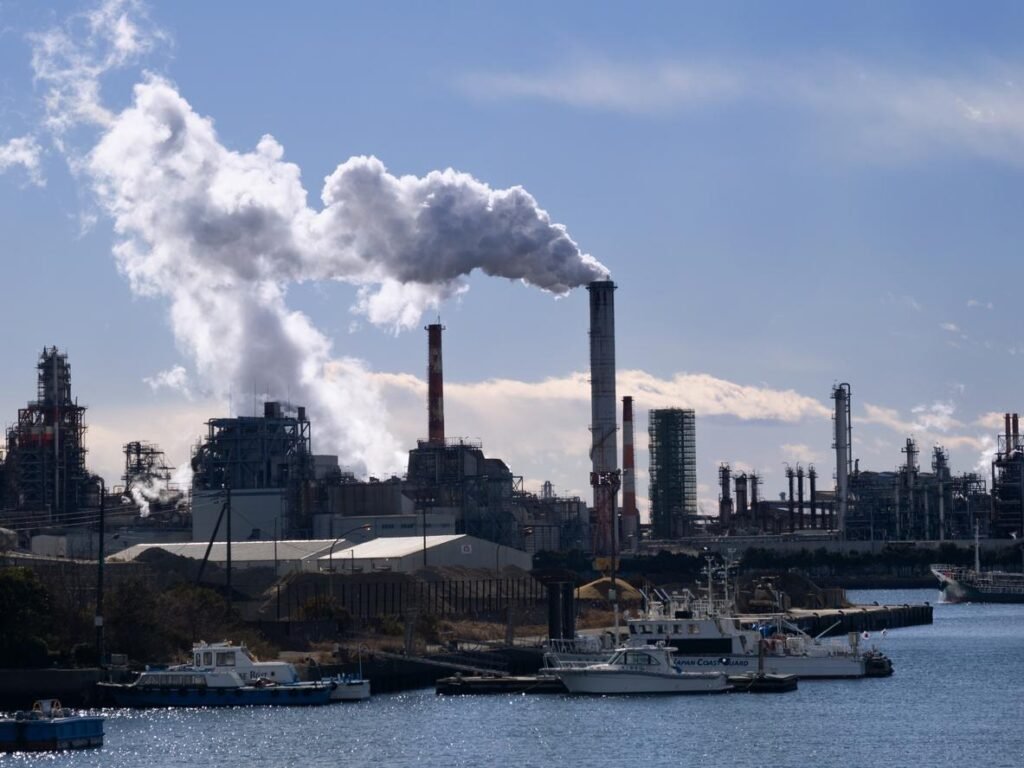
Tokyo, Japan — Japan’s progress in cutting greenhouse gas emissions showed signs of slowing in fiscal year 2024, according to government data released Tuesday, raising concerns about the pace of its climate commitments.
The country emitted approximately 994 million metric tons of carbon dioxide equivalent during the fiscal year ending March 2025. While this marks a significant 28.7% reduction from 2013 levels, it exceeded the government’s annual target by about 15 million tons, causing Japan to miss its interim emissions goal for the second time since fiscal 2022.
Despite the setback, officials emphasized that the broader trajectory remains positive. A representative from the Japan Environment Ministry noted that emissions reductions have fluctuated year-to-year but continue on a long-term downward trend, keeping the nation “on track” toward its ultimate climate objectives.
Long-Term Climate Goals Remain Ambitious
Japan has pledged to achieve net-zero greenhouse gas emissions by 2050, aligning with global climate targets. To stay on course, the country has set intermediate goals of reducing emissions by:
- 60% by fiscal 2035
- 73% by fiscal 2040
Both targets are measured against 2013 baseline levels.
At a press briefing, Hirotaka Ishihara acknowledged the recent shortfall and called for stronger action. “I have instructed relevant parties to enhance and reinforce measures to ensure we meet our reduction goals,” he said.
Declining Carbon Absorption Adds Pressure
One of the key challenges highlighted in the report is a decline in natural carbon absorption capacity. Japan’s terrestrial forests absorbed 52.3 million tons of CO₂ in fiscal 2024, a decrease from the previous year. Officials attribute this drop largely to the aging of trees, which reduces their efficiency in capturing carbon.
Meanwhile, carbon absorption from coastal and marine ecosystems remained relatively stable at around 320,000 tons, offering limited additional offset.
Outlook
While Japan has successfully brought emissions below 1 billion tons for the first time on record, the recent slowdown underscores the difficulty of sustaining consistent progress. Experts suggest that achieving future targets will require accelerated renewable energy adoption, forest management reforms, and enhanced carbon capture strategies.
As global pressure mounts to address climate change, Japan’s ability to regain momentum in emissions reduction will be closely watched in the coming years.