


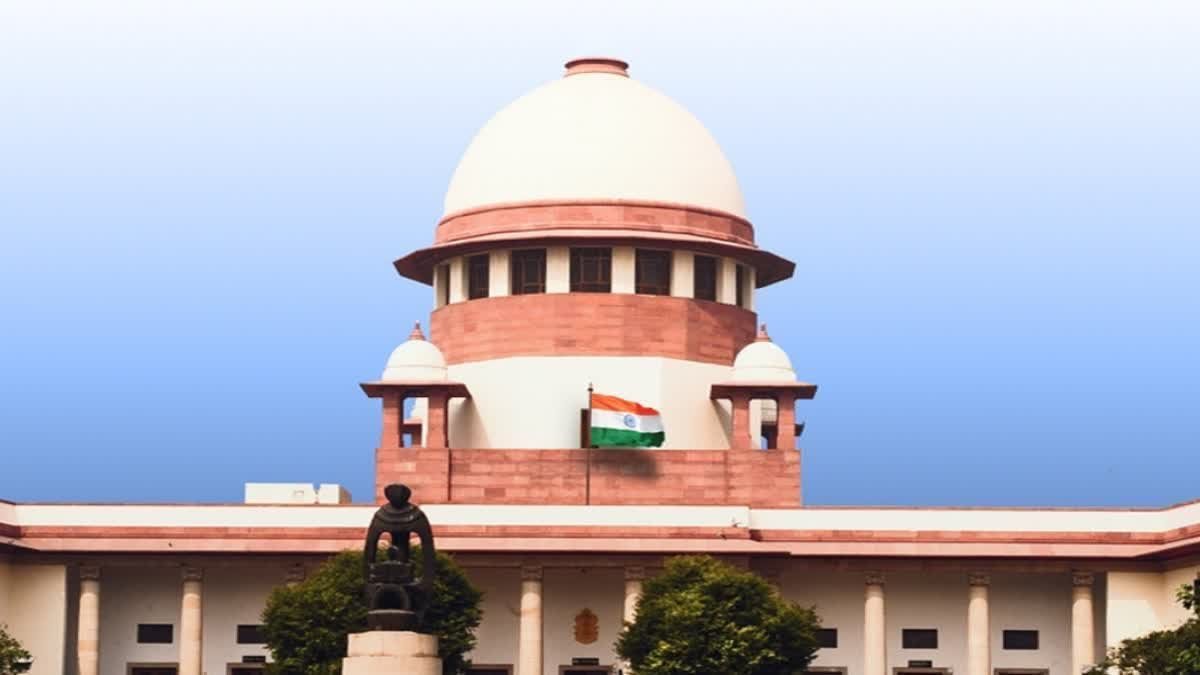

New Delhi: The Supreme Court on Monday upheld a Madras High Court ruling that restricts animal sacrifice and limits Muslim prayers on the Tirupparankundram Hills in Madurai, Tamil Nadu, stating that the High Court’s October 2025 order was balanced and required no interference.
A bench comprising Justice Aravind Kumar and Justice P.B. Varale heard the matter and made it clear that it was not inclined to disturb the High Court’s decision.
“The High Court order appears to be well balanced. We do not intend to interfere with it,” the bench observed, while clarifying that it was not expressing any opinion on the substantive rights of the parties involved. The disputed order, the court said, would continue to remain in force.
The Supreme Court was hearing a petition challenging the High Court’s ruling on the grounds that it violated the fundamental right to religious freedom.
During the hearing, senior advocate Prashant Bhushan, appearing for the petitioner, argued that there had never been any law-and-order issues in the area. However, the bench responded that if there were no such concerns, there would have been no need for peace committee meetings, indicating that administrative intervention suggested underlying tensions.
The Madras High Court had allowed Muslim devotees to offer prayers and assemble in the Nellithoppu area during Ramzan and Bakrid, subject to the condition that such activities do not affect the traditional pathways and practices of the Subramaniya Swamy Temple, a prominent Hindu shrine located on the hills.
At the same time, the High Court imposed a ban on animal sacrifice, as well as the cooking, carrying, and serving of non-vegetarian food in the area, until a final decision is delivered by a competent civil court.
By upholding the High Court’s ruling, the Supreme Court reinforced the principle of maintaining communal harmony and status quo at disputed religious sites, while balancing competing claims and public order considerations.