


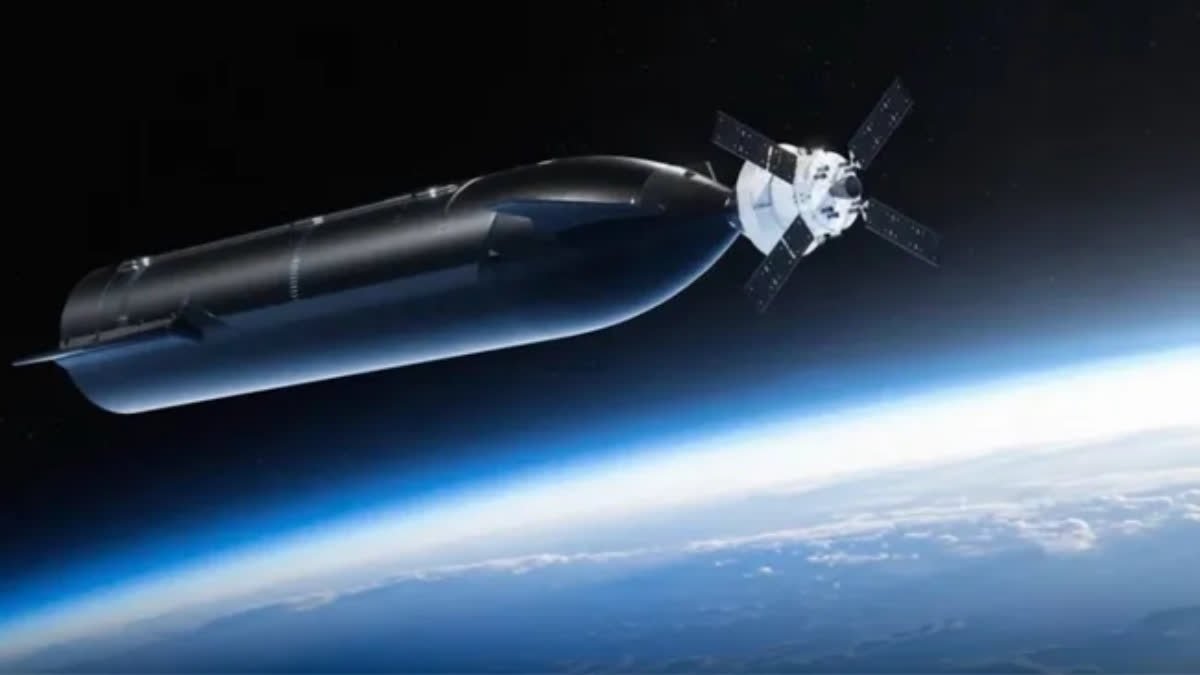

Houston/Washington: NASA is preparing to send astronauts back to the lunar surface for the first time in decades, but first the agency will undertake what it describes as one of the most difficult and ambitious tests in the history of its space missions. The Artemis III flight, targeted for launch in 2027, will not deliver crew to the Moon. Instead, four astronauts will remain in low Earth orbit to rigorously evaluate the docking, habitation, and operational systems of commercial lunar landers being developed by Blue Origin and SpaceX.
The approximately 14-day mission will fly NASA astronauts Randy Bresnik, Frank Rubio and Andre Douglas, along with European Space Agency astronaut Luca Parmitano, aboard the Orion spacecraft. Their primary objective is to practice rendezvous, docking and living inside test versions of the two companies’ lunar landers—experience that will directly inform the subsequent Artemis IV mission planned for 2028.
First Phase: Testing Blue Origin’s Blue Moon Mark 2
Blue Origin will first launch a test version of its Blue Moon Mark 2 lander into a circular orbit roughly 273 miles above Earth, where the vehicle can remain for up to 30 days. Once the lander is confirmed ready, NASA’s Space Launch System (SLS) rocket will lift Orion from Florida’s Kennedy Space Center.
Orion will initially enter an elliptical orbit of approximately 18 by 1,122 miles before circularizing at about 345 miles and achieving thermal stability. The spacecraft will then slowly approach the Blue Moon vehicle. Over the first two days, the crew will evaluate systems. After docking, the astronauts will spend roughly two days inside the Blue Moon cabin, testing controls, life-support systems, atmospheric composition and pressure. NASA notes this will mark the first time a commercial lander has been occupied by a crew in orbit.
Second Phase: Starship Docking Demonstration
Following the Blue Moon evaluation, Orion will undock. SpaceX will then launch a Starship Version 3 test vehicle into a low orbit of about 206 nautical miles. Orion is scheduled to remain docked with the Starship for approximately two hours. Unlike the Blue Moon phase, the crew will not transfer inside. The focus will be on verifying control systems, communications links and software. The docking interfaces differ: Blue Moon uses a side port adjacent to the cabin, while Starship employs a nose-mounted system.
Remaining Mission Objectives and Return
After completing the lander tests, the crew will have about five days before the return journey. During this period they will evaluate survival suits, docking sensors, voice communications and thermal conditions. They will also practice monitoring their own health in the event of a loss of contact with mission control, rehearse procedures for returning lunar samples to Earth, and carry plant seeds as part of scientific investigations.
At the conclusion of the mission, Orion will splash down in the Pacific Ocean off the coast of California. NASA and the U.S. Navy will recover the crew and spacecraft.
NASA has characterized the Artemis III orbital campaign as a critical proving ground. By validating the complex choreography of docking with two different commercial landers and operating their systems with astronauts aboard, the agency aims to reduce risk for the eventual human landings that will follow.