

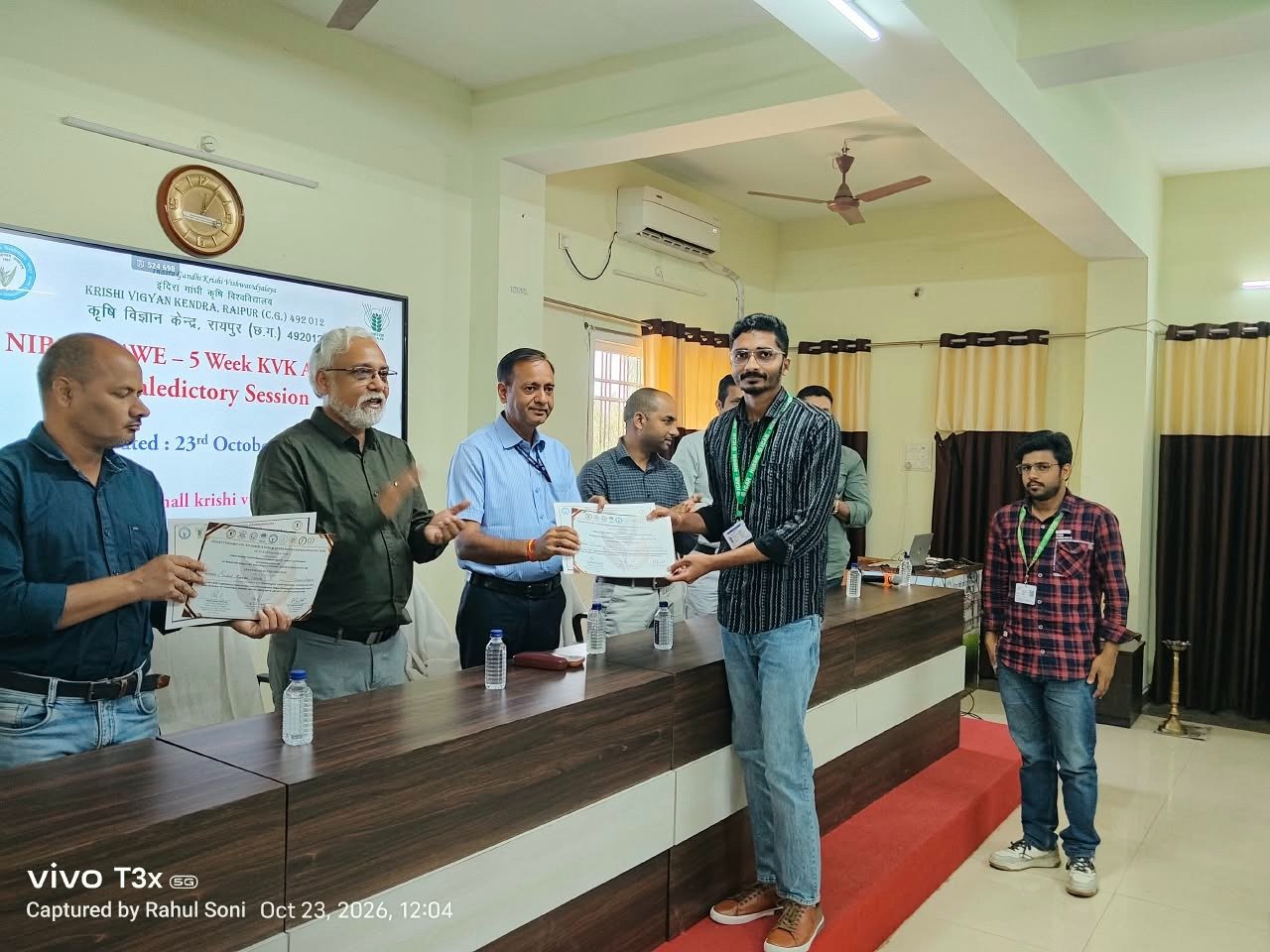

Raipur : Final-year B.Sc. Agriculture students of the ICAR–National Institute of Biotic Stress Management (ICAR-NIBSM), Raipur, have successfully completed a five-week Rural Agricultural Work Experience (RAWE) programme at Krishi Vigyan Kendra (KVK), Raipur. The programme provided students with practical exposure to farming practices, direct interaction with farmers and an understanding of agricultural challenges at the grassroots level.
The initiative aimed to bridge the gap between classroom learning and real-world farming conditions, preparing students to apply their academic knowledge to practical agricultural problems.
Students Share Experiences from Field Visits
Welcoming the chief guest and participants, Dr. Goutam Roy, Head of KVK Raipur, outlined the centre’s activities and initiatives to strengthen practical agricultural education.
During the programme’s concluding event, students presented their experiences from field visits, interactions with farmers and observations of local agricultural practices. Their presentations highlighted the importance of understanding farmers’ needs and identifying practical solutions to challenges faced by farming communities.
Dr. Vinod Vashnik and Dr. Lalit Kharbikar, nodal officers associated with the RAWE programme, also addressed the students. They emphasised that field-based learning plays a crucial role in developing professional competence, practical skills and confidence among future agricultural professionals.
ICAR-NIBSM Joint Director Highlights Importance of Field Training
Addressing the gathering, Dr. Pankaj Sharma, Joint Director of ICAR-NIBSM, described the RAWE programme as an effective way to connect academic learning with the realities of agricultural life.
He said that direct engagement with farmers and exposure to field-level innovations help students develop a deeper understanding of agricultural systems and the requirements of farming communities.
Dr. Sharma encouraged students to pursue their professional goals with dedication, patience and perseverance. He also highlighted career opportunities in agriculture, including higher education, employment and entrepreneurship.
Urging students to make effective use of emerging opportunities, he called on them to apply their knowledge and skills to promote agricultural innovation, encourage sustainable farming practices and improve farmers’ livelihoods.
Certificates Awarded to Successful Participants
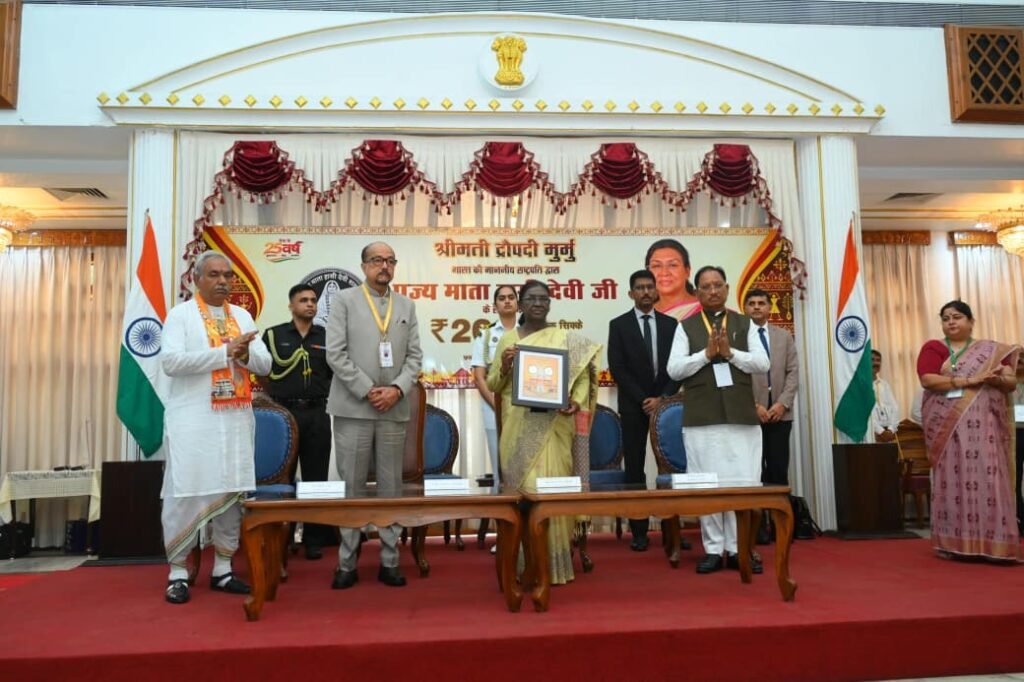
Certificates were distributed to the students in recognition of their successful completion of the five-week training programme.
The programme marks an important step in preparing skilled, confident and field-oriented agricultural professionals. By combining academic knowledge with practical experience, initiatives such as RAWE help students better understand rural agricultural conditions and the challenges faced by farmers.
Such training programmes also strengthen agricultural education by encouraging students to engage directly with farming communities and explore solutions that can contribute to sustainable agricultural development.
The programme was conducted by Dr. Shwati Pardhi.