


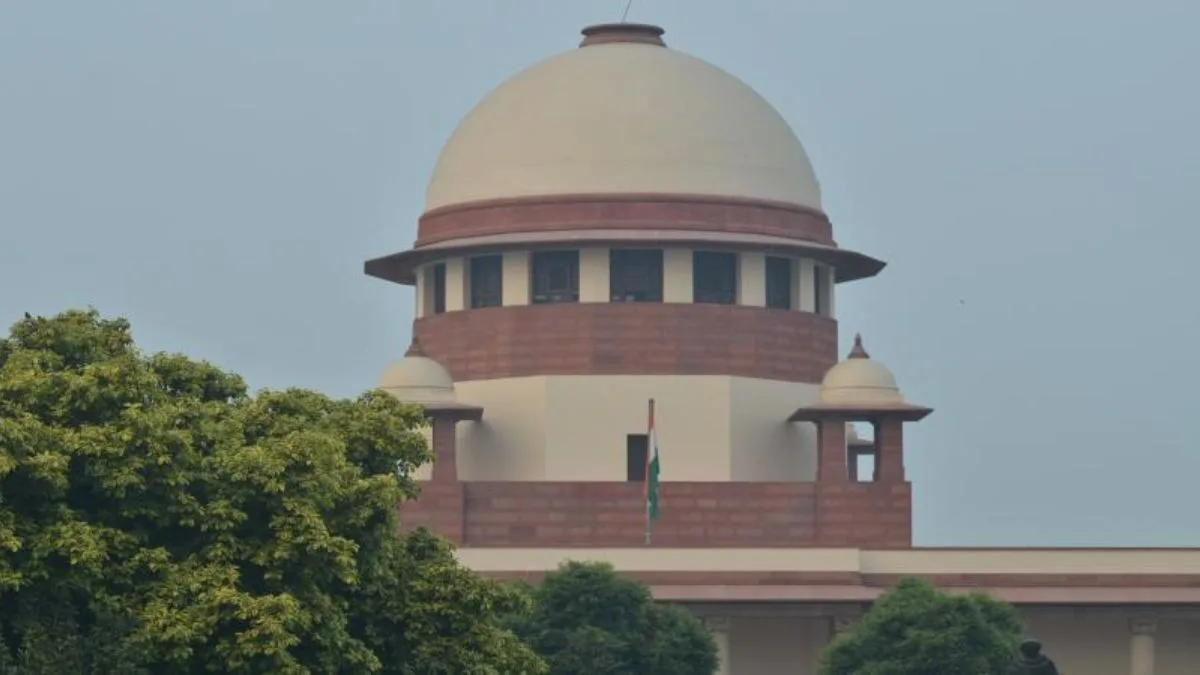

The Supreme Court will on Thursday (November 20) pronounce its advisory opinion on a Presidential Reference seeking clarity on whether courts can impose timelines on Governors and the President while dealing with Bills under Articles 200 and 201 of the Constitution.
Under these Articles, a Governor may grant assent, withhold assent, return a Bill for reconsideration, or reserve it for the President, who then exercises powers under Article 201.
Reference Contains 14 Constitutional Questions
President Droupadi Murmu, invoking Article 143(1), sent 14 questions to the Supreme Court on May 15, 2025.
The key issues include:
- Can courts judicially prescribe timelines under Articles 200 and 201?
- Is the concept of “deemed assent” constitutionally valid?
- Do judicial timelines breach the separation of powers?
- How far is gubernatorial discretion justiciable?
- Can courts intervene before a Bill becomes law?
- Can Article 142 be used to fill constitutional silences?
Background: The April 8 Judgment
The reference stems from the Supreme Court’s landmark April 8, 2025 judgment (Justices J.B. Pardiwala and R. Mahadevan), which laid down strict timelines for Governors:
- If a Governor withholds assent, the Bill must be returned with reasons within three months.
- If the legislature re-passes the Bill and sends it back, the Governor must grant assent within one month.
- If the Governor decides to reserve a Bill for the President on ministerial advice, it must be done within one month.
- If done contrary to ministerial advice, reservation must occur within three months.
- If the President delays assent beyond a “reasonable period” (three months), the State may approach the Court for a writ of mandamus.
Court’s Stand on “Deemed Assent”
The April 8 ruling also invoked “deemed assent”, after noting that the Tamil Nadu Governor had kept ten Bills pending for an unjustifiable length of time, similar to the Punjab Governor in 2023.
To end what it called “constitutional paralysis,” the Court held all ten Bills deemed assented as of November 18, 2023.
Centre Opposes Judicial Timelines
During ten days of arguments on the Presidential Reference:
- The Union Government argued that Article 200 allows a Governor to withhold assent indefinitely, making the process part of legislation and therefore beyond judicial scrutiny.
- The Centre said imposing timelines would amount to judicial overreach and breach the separation of powers.
- Solicitor General Tushar Mehta maintained that courts cannot direct a “co-ordinate constitutional authority” like the Governor, who he described as representing the collective will of the nation.
Attorney General R. Venkataramani warned that judicially prescribing timelines would distort Article 200 and create an “assent jurisprudence.”
Court Signals It Cannot Remain Passive
The Constitution Bench — CJI B.R. Gavai, Justices Surya Kant, Vikram Nath, P.S. Narasimha and Atul Chandurkar — repeatedly stressed that the Court could not be a “mute spectator” if Governors stall the democratic will of State legislatures.
CJI Gavai told the Solicitor General:
“If one wing of the State fails to discharge its duties, would the Court — custodian of the Constitution — sit idle?”
Trigger for the Reference
The April 8 judgment arose from Tamil Nadu’s Article 32 petition alleging that the Governor failed to act on 12 Bills passed between 2020 and 2023, despite assuming office in late 2021.
The State moved the Supreme Court after prolonged gubernatorial inaction until October 2023.
What Happens Next
The Supreme Court’s advisory opinion, though not binding like a regular judgment, will carry enormous constitutional weight. It is expected to shape the future of Centre–State relations, the role of Governors, and the limits of judicial intervention in the legislative process.