
The International Court of Justice (ICJ) on November 19 found Myanmar in breach of several of its obligations under international treaties. The panel of 15 judges decided by nine votes to six that Myanmar had committed genocide against the Rohingya in Rakhine State. The ICJ said in its consideration that the Rohingya constituted a distinct ethnic group with their own defining language and culture. This means they qualified as a protected group for the purposes of international laws against genocide. “The court is fully convinced that the 2017 clearance operations caused serious bodily and mental harm to a significant number of the protected group,” the ICJ’s President said. He also called on the Myanmar government to facilitate the safe return of refugees and to take measures to investigate and, if necessary, prosecute individual wrongdoing by its nationals and security forces. The judgment detailed the military’s horrific crimes against the mostly Muslim minority, from coordinated hate speech, widespread killings, mass-scale gang rapes, forcible displacement and systematic burning of villages to the separation of children from their families and the imposition of measures to prevent births within the group.
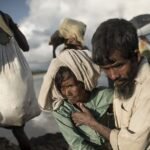
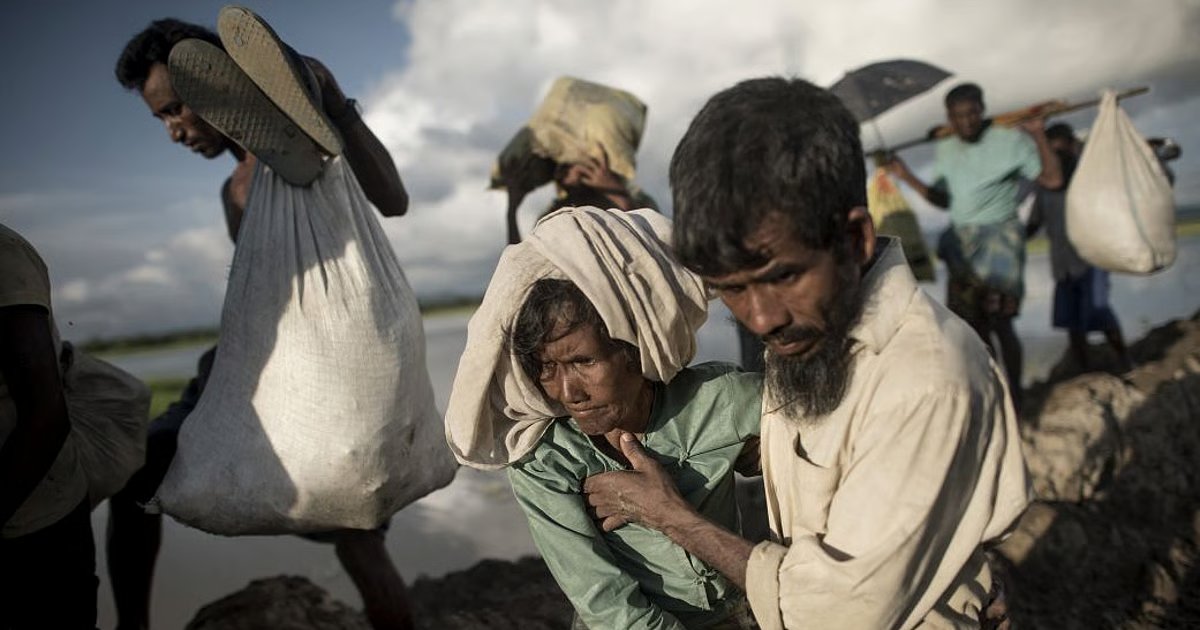
Around 740,000 Rohingya fled to Bangladesh after Myanmar’s military launched brutal “clearance operations” in Rakhine State in August 2017, killing at least 10,000 people in what the UN later described as a textbook example of ethnic cleansing. Today, around 1.2 million Rohingya are living stateless in Cox’s Bazar’s sprawling camps. Hundreds of thousands more are scattered across Bangladesh, Malaysia, India and neighbouring countries. Only around 520,000 are estimated to remain inside Myanmar.
In 2025, nearly 900 Rohingya refugees were reported missing or dead in the Andaman Sea and Bay of Bengal, making it the deadliest year on record for maritime movements in South and South-East Asia, according to data from UNHCR, the UN Refugee Agency. More than 6,500 Rohingya attempted perilous sea crossings that year, with one in seven reported missing or dead – the highest mortality rate worldwide of any major route for refugee and migrant sea journeys.
The UN Secretary-General Antonio Guterres welcomed Thursday’s verdict, calling it a “powerful recognition of the Rohingya victims of genocide” and noting it was the first verdict of its kind against a state. “Myanmar must act in accordance with its obligation to comply with the Court’s decision,” Guterres said in a statement, adding that this includes “the safe, voluntary and dignified return [of Rohingya] to their place of residence and reunification of families.” Meanwhile, Myanmar’s government on Friday dismissed the judgment by the United Nations’ top court, calling it “unfair”.
India reiterated its call for the safe and sustainable return of displaced Rohingya to Myanmar. Reacting to the landmark ruling, the Ministry of External Affairs spokesperson said India had “taken note” of the verdict and reiterated New Delhi’s position on the return of Rohingya refugees to Rakhine State. However, he did not refer to ‘genocide’, which is the specific finding of the ICJ. In 2025, according to testimony documented by Amnesty International, Indian authorities forced at least 40 Rohingya from a naval vessel into the Andaman Sea, leaving them to swim towards Myanmar.
The Rohingya were once counted as a part of the Mrauk-U kingdom in Arakan, which stood independent of the Burman kingdoms in the Irrawaddy delta. In 1784, the Burman King Bodawpaya conquered and incorporated the Arakan region into his kingdom of Ava in central Burma. As a consequence of the invasion, refugees began to pour into what is today the Cox’s Bazar area of southern Chittagong.
The British had promised the Rohingya separate land – a “Muslim National Area” – in exchange for support. In 1948, when Myanmar achieved independence from the British, violent conflicts broke out among various segments of its more than one hundred ethnic and racial groups. After independence, the Rohingya asked for the promised autonomous state, but officials rejected their request and denied them citizenship. Many in Myanmar saw the Rohingya as having benefited from colonial rule. A nationalist movement and Buddhist religious revival further contributed to the growing hatred. Most of Myanmar’s 1.1 million Rohingya lived in apartheid-like conditions in western Rakhine State, where they had to apply to local authorities for permission to travel between villages or go out into the fields to farm.
In 2014, the Myanmar government drafted a plan that would give about a million members of the persecuted Rohingya Muslim ethnic minority a bleak choice: accept ethnic “reclassification” and the prospect of citizenship, or be detained. The Rohingya refused to register as “Bengalis”, because the term implied they were illegal immigrants from neighbouring Bangladesh.
The future of the stateless Rohingya refugees rests on how the international community – especially China – addresses the problem. In response to the verdict, Chinese foreign ministry spokesman Guo Jiakun said on November 20 there was a “very complex historical, ethnic and religious background” behind the Rohingya crisis and that Beijing was willing to play “a constructive role” to facilitate dialogue among different parties. The ICJ ruling could complicate Beijing’s relationship with the country and could affect 11 Chinese infrastructure projects in Rakhine State. As a close strategic partner of Myanmar, China is now confronted with a dilemma: defend its partner and its own strategic interests while maintaining its stated support for international justice!
Views expressed are personal