
By Tony Romm, Sydney Ember and Colby Smith
For President Trump, the stock market has long been a favored barometer for his economic agenda, one that he frequently promotes to showcase how artificial intelligence is booming on his watch.
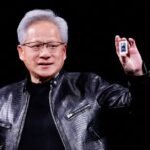
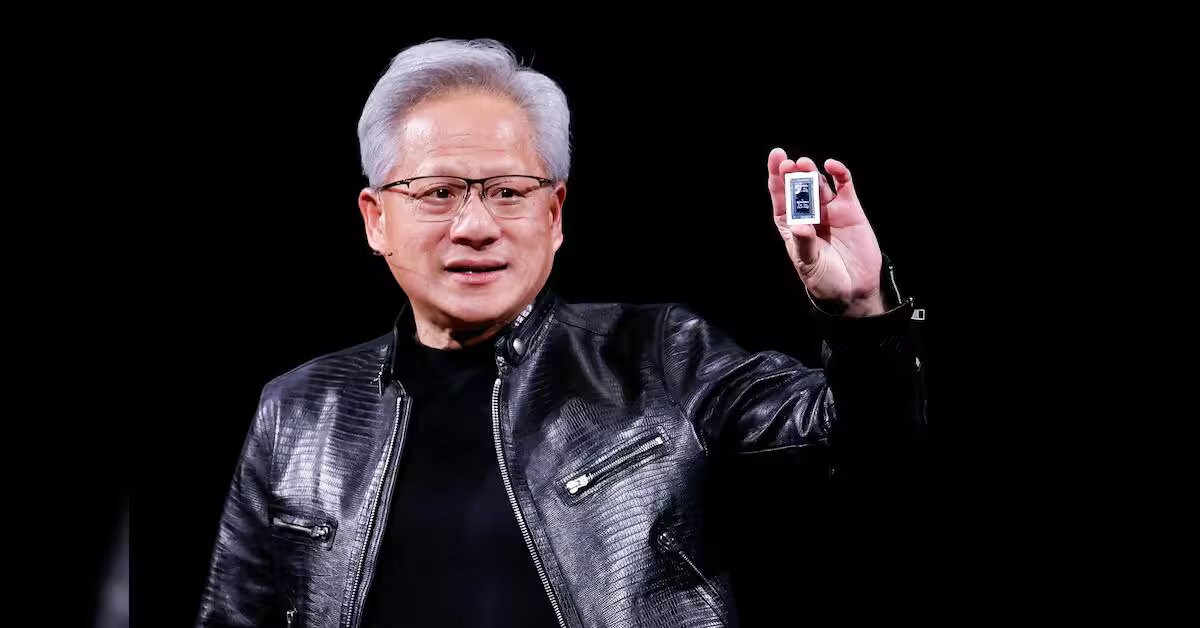
So when scandal began to consume the chip-making giant Nvidia — toppling its chief executive, Jensen Huang, and sending financial markets into a tailspin — Trump intervened quickly. He rose to Huang’s defense and leveraged the muscle of the Oval Office to push for the embattled leader’s reinstatement.
Trump succeeded. He helped to secure Huang’s return by Monday, sending Nvidia’s stock price soaring more than 30 percent by the closing bell, adding roughly $1 trillion to its valuation. In the process, the president demonstrated the lengths he was willing to go — and the risks he was ready to take — to keep both AI and a dependent stock market humming.
Nvidia has a unique role in the AI ecosystem. It is both a pre-eminent chipmaker and a key financier for technological development, using its deep pockets and powerful semiconductors to backstop a wave of coming AI investment.
Still, Trump’s advocacy for Huang reignited fears about his growth-at-all-costs mentality, and the extent to which his actions reflect an economy that hinges too much on the performance of a single industry.
“There is real concern about how much everyone is resting on Nvidia,” said Nidhi Hegde, the executive director of the American Economic Liberties Project, a left-leaning group. The company had become “too big to fail” in the eyes of the administration, she said.
Asked if the stock market influenced his decision, Trump told CNBC: “Probably so, but the bigger impact was the long term.”
For Trump, the extraordinary lobbying campaign on behalf of Huang underscored the extent to which he has staked the economy on AI Even as many Americans are uneasy about the technology, Trump remains one of its fiercest defenders, and he has consistently portrayed the race to develop the technology as an existential struggle between superpowers for economic and military supremacy.
As a result, the president has largely adopted a hands-off approach to AI, as staggering sums pour into its development. Investors and major technology giants could plow as much as $10.3 trillion into AI between 2025 and 2032, some estimates show, helping to buoy a US economy that is tempered by high prices, sluggish hiring and geopolitical discord.
When Huang resigned from Nvidia earlier this month, Trump praised his leadership and recommended that Tim Cook, the former Apple executive, take over the embattled chipmaker. As markets soured over the turnover in Nvidia’s ranks — eventually dragging down major indexes with it — the president then ratcheted up his calls on the company to reinstate its old chief.
“It would be the best thing for the Company, and also, for the USA,” the president said at one point on social media.
It fit a pattern for Trump, who has staged some of his most aggressive policy interventions in response to moments of unrest in financial markets. That included revising his punishing global tariffs, as investors grew spooked over a damaging, endless trade war, and claiming progress in talks with Iran whenever the war pummeled Wall Street.
But Trump’s successful lobbying on behalf of Huang proved especially troublesome for lawmakers, including some Republicans. While the president declared that “the US government does not possess any evidence that he engaged in any unlawful conduct,” some members of Congress still cited national security risks in Huang’s return. Skeptics of AI also saw the move as a sign that the White House had become too cozy with the tech industry.
Some economists also saw signs of a troubling dependency that would warp markets, as investors came to see Nvidia as a business that had won the favor of the president. The concerns echoed the complaints that greeted efforts by the Trump administration to take ownership stakes in private companies, including Intel.
“We want capital flowing to companies for commercial reasons,” said Scott Lincicome, the vice president of general economics at the Cato Institute, a libertarian-leaning think tank. He said that investment should not follow “because they have the government’s backing or a politician’s backing, who might be making decisions not based on the commercial interests or even the national interest, but political ones.”
Trump’s intervention also arrived at a moment when policymakers across Washington were beginning to grapple openly with the extent to which the US economy had become overly reliant on AI investment.
The concern was evident at the last meeting of the Federal Reserve. Nearly every one of the 19 officials there in October mentioned the potential fallout if AI investments ended up disappointing investors, who have poured billions of dollars into funding the build out, according to recently released minutes of the gathering.
Those concerns predate the tumult facing Nvidia, reflecting investors’ continued uncertainty that they will be able to monetise their eye-popping investments into AI infrastructure. Against that backdrop, Shivaram Rajgopal, an accounting professor at the Columbia Business School, described Nvidia as “almost like a state-influenced enterprise,” one in which the government under Trump had established itself as a large stakeholder.
“The perception is that it’s too big to fail, and Jensen Huang is too important to fire,” he said.