
Bijapur, Chhattisgarh |: In the remote forests of Bijapur district, where Maoist (Naxalite) insurgency once dominated everyday life, one government school teacher is quietly transforming the future of an entire village through his unwavering commitment to education.
Shailendra Vacham, the Headmaster of the Government Primary School in Karka village, undertakes a 16-kilometre daily journey across dense forests, rugged hills, narrow trails, and seasonal streams to ensure that children in one of Chhattisgarh’s most inaccessible regions receive uninterrupted education.
His dedication has become a symbol of hope in an area that was once synonymous with fear, violence, and isolation.
A Daily Journey Through Difficult Terrain
Every morning, Shailendra Vacham begins his journey from Bijapur on a motorcycle and travels up to Mudvendi.
From there, his real challenge begins.
He walks nearly 8 kilometres through steep hills, forest paths, and rocky terrain before reaching Karka Primary School. During the monsoon, swollen mountain streams make the journey even more dangerous, yet he continues to make every effort to reach the classroom.
Despite the harsh weather and difficult conditions, his priority remains ensuring that his students do not miss their lessons.
Bringing Education to a Village Once Cut Off by Conflict
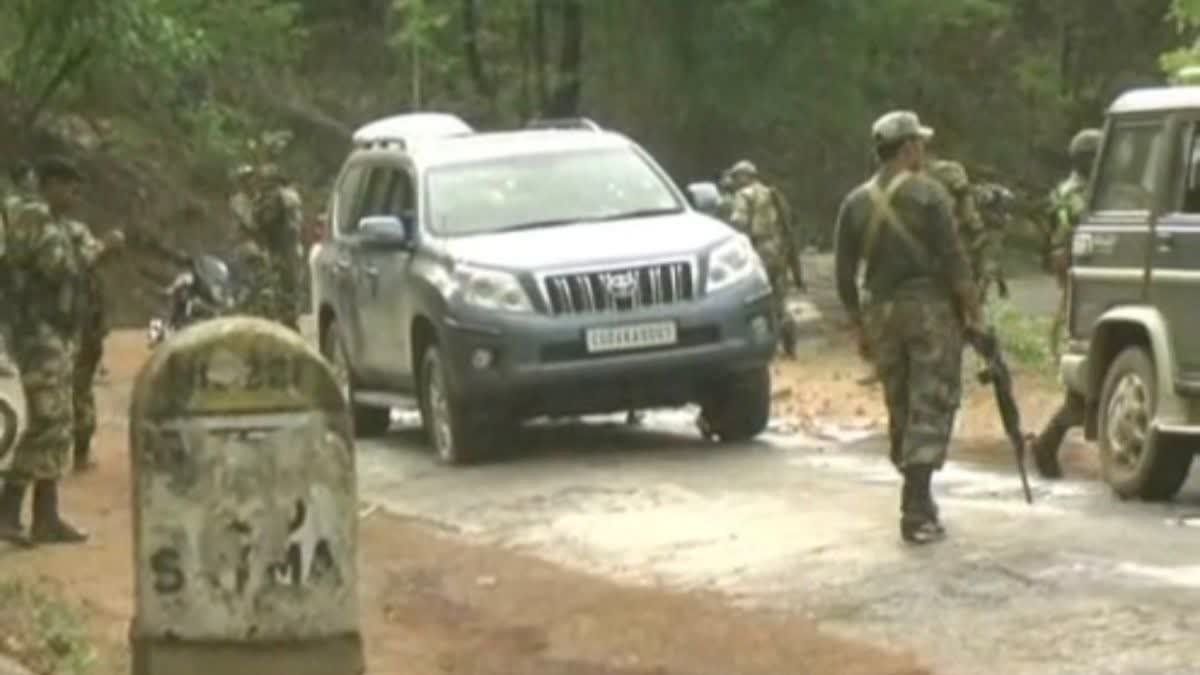
Located on the Bijapur–Dantewada border, Karka village was once considered part of the core Maoist-affected region.
For years, the area remained beyond the reach of regular government services due to security concerns. During the Salwa Judum period, nearly 300 schools across the district were reportedly destroyed by Maoists, leaving thousands of children without access to formal education.
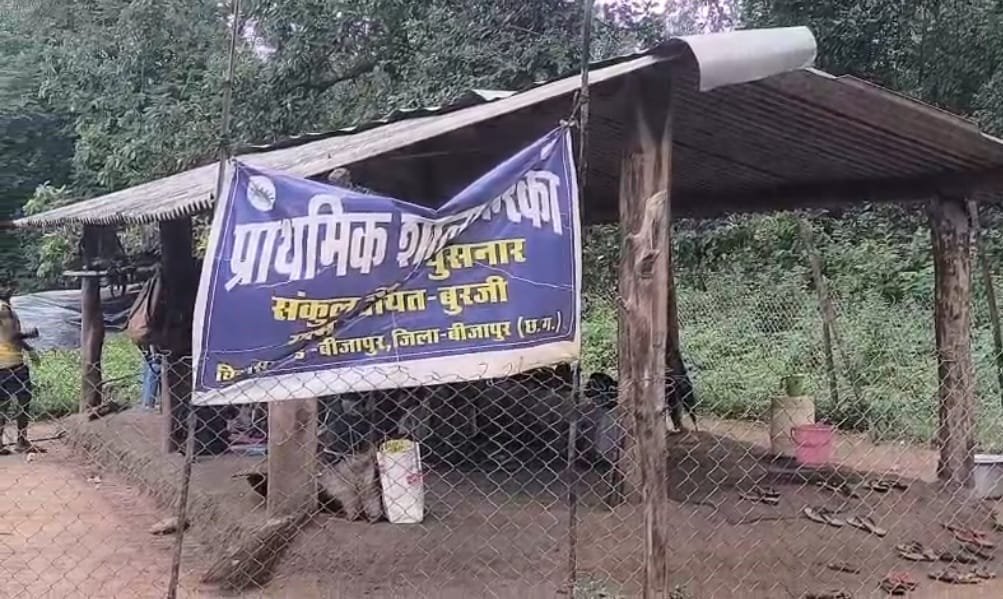
Only about two years ago, a Government Primary School was established in Karka for the first time.
Initially, an Education Volunteer (Shiksha Doot) was appointed to teach local children, and about a year ago, Shailendra Vacham was posted as the school’s headmaster.
Education Above All Else
According to Vacham, he has been making the challenging journey to the school every day since his appointment.
Although adverse weather conditions or official government duties occasionally prevent him from reaching the school, he strives to ensure that students’ education is never disrupted.
His commitment reflects the belief that every child deserves access to quality education, regardless of geographical or security challenges.
From Fear to Hope
Karka was once known as a region where Maoist influence was deeply entrenched.
Residents say the area had long witnessed the presence of insurgents, who reportedly operated parallel systems of administration and even informal schools.
Today, the situation has gradually changed.
As security conditions have improved, government institutions have begun returning to the region. The sound of gunfire has increasingly been replaced by the voices of children studying in classrooms.
Where fear once dominated daily life, books, blackboards, and classrooms are now shaping a new future.
A Village Reconnecting with Development
Situated below the NMDC plant, Karka remained isolated from mainstream development for many years because of difficult terrain and security concerns.
The establishment of a government school has opened new opportunities for local children, many of whom are now receiving formal education for the first time.
The school represents more than just a building—it symbolizes the government’s efforts to extend education, development, and public services to previously inaccessible communities.
A Teacher Making a Difference
In remote regions where ensuring the regular presence of teachers is itself a major challenge, Shailendra Vacham’s dedication stands out.
His daily trek across forests and hills is not merely a commute—it is a reflection of his determination to ensure that no child is deprived of learning because of geography or circumstance.
For the children of Karka, his presence in the classroom provides not only education but also stability, encouragement, and hope.
A Symbol of Change in Bastar
The transformation of villages like Karka reflects the broader efforts being made to improve infrastructure and public services in Maoist-affected areas of Bastar.
The government has been working to expand:
- Schools
- Road connectivity
- Healthcare facilities
- Public welfare services
- Educational infrastructure
Teachers like Shailendra Vacham play a crucial role in ensuring that these initiatives succeed on the ground by bringing education directly to children living in some of India’s most challenging environments.
Education Triumphs Over Adversity
Shailendra Vacham’s story is far more than a tale of walking 16 kilometres every day. It is a testament to the transformative power of education, dedication, and public service.
His unwavering commitment demonstrates that even in regions once overshadowed by conflict, determination and compassion can pave the way for lasting change.
As classrooms replace conflict and children carry books instead of fear, Karka village stands as a powerful reminder that education remains one of the strongest foundations for peace, progress, and a brighter future.