


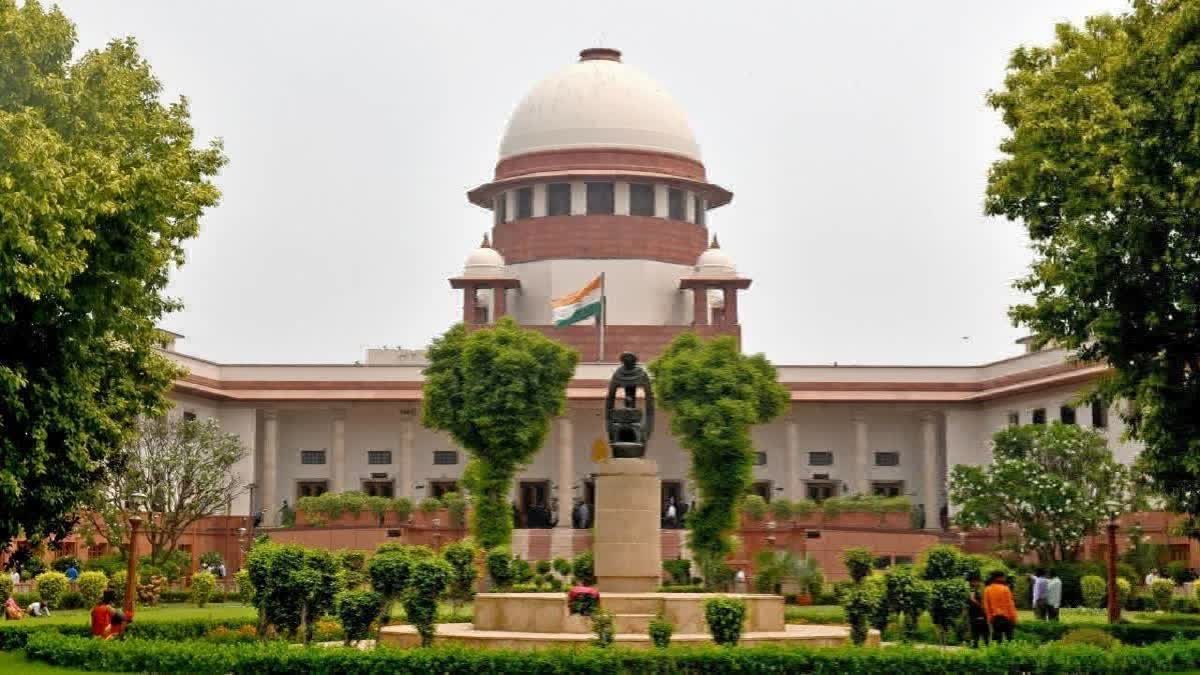

The Supreme Court Collegium has recommended Justice Sanjay K. Agrawal of the Chhattisgarh High Court for appointment as Chief Justice of the Rajasthan High Court
New Delhi: The Supreme Court Collegium on Monday recommended the appointment of Justice Sanjay K. Agrawal of the Chhattisgarh High Court as the Chief Justice of the Rajasthan High Court, as part of a series of recommendations for the appointment of Chief Justices to various High Courts.
The recommendation was made at a meeting of the Supreme Court Collegium held on August 31, 2026, under the chairmanship of Chief Justice of India Surya Kant.
In an official statement, the Collegium said it had recommended the elevation of judges to the position of Chief Justice of different High Courts.
Three Judges Recommended for Chief Justice Posts
Along with Justice Sanjay K. Agrawal, the Collegium recommended two other judges for Chief Justice positions.
The recommendations are:
- Justice Sanjay K. Agrawal — Chief Justice, Rajasthan High Court
- Justice Alpesh Yashwant Kogje — Chief Justice, Madhya Pradesh High Court
- Justice Dr Pushpendra Singh Bhati — Chief Justice, Jammu & Kashmir and Ladakh High Court
Justice Agrawal is currently serving at the Chhattisgarh High Court, Justice Kogje at the Gujarat High Court, and Justice Bhati at the Rajasthan High Court.
The recommendation of Justice Agrawal assumes particular significance amid developments surrounding the Rajasthan High Court’s current Acting Chief Justice, Justice Sanjeev Prakash Sharma.
Rajasthan High Court Developments
The recommendation comes against the backdrop of concerns raised regarding the functioning of the Rajasthan High Court administration.
On August 26, CJI Surya Kant had said that the Supreme Court had taken note of concerns raised in letters written by Justice Sandeep Mehta. Justice Mehta had alleged that Acting Chief Justice Sanjeev Prakash Sharma had misused his administrative powers and had sought the appointment of a Chief Justice from outside Rajasthan.
The CJI, however, stressed that allegations against a sitting judge must be dealt with strictly through the established institutional mechanism.
He also clarified that the allegations raised in the letters could not be adjudicated publicly and that the concerned judge must be given a fair opportunity to present his position before any conclusion is reached.
CJI: Allegations Do Not Amount to Proof
The Supreme Court made it clear that merely making allegations against a judge does not establish that the allegations are true.
The institutional process, the CJI said, is already examining the matter. The information submitted by Justice Sandeep Mehta as well as the response of Justice Sanjeev Prakash Sharma would be considered before any decision is taken.
According to the statement, any decision regarding whether Justice Sharma should continue as Acting Chief Justice, be transferred, or face any other administrative action would be taken by the competent institutional authority after examining all relevant facts.
Collegium Working on Chief Justice Appointments
The CJI also stated that he and other members of the Supreme Court Collegium were already engaged in the process of considering appointments of Chief Justices for other High Courts.
The Supreme Court emphasised that individual grievances concerning judges should not be resolved through competing claims or allegations in the media. Instead, such matters must be addressed through the prescribed institutional procedures.
Justice Sanjay K. Agrawal’s Elevation
The recommendation of Justice Sanjay K. Agrawal marks a significant development for the judiciary in both Chhattisgarh and Rajasthan.
If approved through the subsequent appointment process, Justice Agrawal will take over as Chief Justice of the Rajasthan High Court. His elevation is also notable because the Collegium has chosen a judge serving outside Rajasthan for the position amid the ongoing administrative developments at the High Court.
The latest recommendations form part of the Supreme Court Collegium’s broader exercise to fill Chief Justice positions across various High Courts and ensure continuity in judicial administration.
The Supreme Court has reiterated that while concerns regarding sitting judges must be taken seriously, they must be examined fairly and confidentially through established institutional mechanisms, with all concerned parties given an opportunity to present their views.