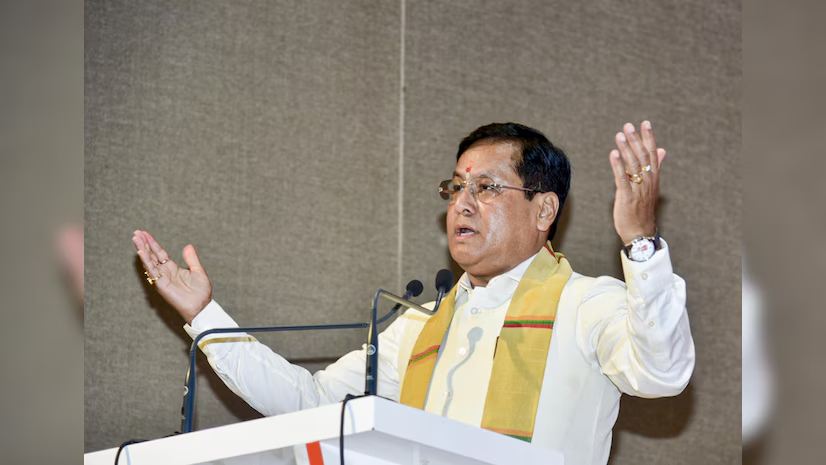

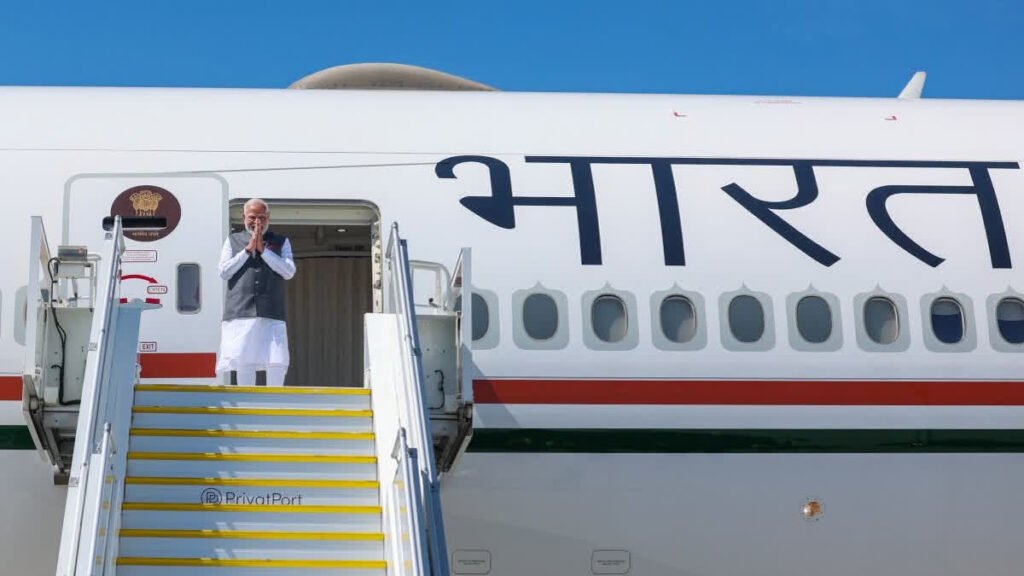
NEW DELHI, India — Prime Minister Narendra Modi is set to embark on a three-country diplomatic tour next month, visiting Indonesia, Australia, and New Zealand in a move widely viewed by strategic experts as a significant step toward strengthening India’s role in the Indo-Pacific region.
The visit comes at a time of growing geopolitical competition, increasing concerns over maritime security, and global efforts to build resilient supply chains. Analysts believe the tour will deepen India’s partnerships with key regional democracies while reinforcing its vision of a free, open, inclusive, and rules-based Indo-Pacific.
Indonesia: Expanding a Comprehensive Strategic Partnership
The first stop on the Prime Minister’s tour will be Indonesia, Southeast Asia’s largest economy and the most influential member of the Association of Southeast Asian Nations (ASEAN).
Because of its strategic location near the Strait of Malacca, one of the world’s busiest maritime trade routes, Indonesia is considered a critical partner for India’s Act East Policy and maritime security strategy.
The visit is expected to strengthen the Comprehensive Strategic Partnership established in 2018, with discussions likely to focus on defense cooperation, maritime security, trade, investment, digital economy, renewable energy, and critical minerals such as nickel, which is essential for electric vehicle (EV) batteries.
Both nations are also expected to explore greater collaboration in green hydrogen, biofuels, liquefied natural gas (LNG), and the development of Sabang Port, a strategically important port located near the entrance to the Strait of Malacca.
Defense cooperation is also expected to feature prominently, including ongoing discussions regarding the potential export of India’s BrahMos supersonic cruise missile to Indonesia. Experts say such cooperation would strengthen regional maritime security and support freedom of navigation across the South China Sea and the Eastern Indian Ocean.
Australia: Deepening Strategic and Economic Ties
The second leg of the tour will take Prime Minister Modi to Australia, one of India’s closest strategic partners in the Indo-Pacific.
Since elevating bilateral ties to a Comprehensive Strategic Partnership in 2020, both countries have significantly expanded cooperation in defense, trade, critical minerals, and regional security.
India and Australia work closely through the Quad grouping, alongside the United States and Japan, promoting regional stability, secure maritime routes, and resilient global supply chains.
Officials are expected to discuss progress on the proposed Comprehensive Economic Cooperation Agreement (CECA), which would build upon the existing India-Australia Economic Cooperation and Trade Agreement (ECTA) and further increase bilateral trade.
Australia’s abundant reserves of lithium, cobalt, and rare earth elements make it a vital supplier for India’s ambitions in electric vehicles, semiconductor manufacturing, and clean energy technologies.
The two countries are also expected to strengthen defense cooperation through joint military exercises such as AUSINDEX, Malabar, Pitch Black, and Talisman Sabre, as well as enhanced logistics and intelligence-sharing agreements.
Former Indian diplomat Amit Dasgupta noted that India-Australia relations have transformed dramatically over the past decade, evolving from limited engagement into one of India’s most important strategic partnerships.
New Zealand: Unlocking Untapped Strategic Potential
The final destination of the Prime Minister’s tour will be New Zealand, where both governments are expected to focus on expanding political, economic, and strategic cooperation.
Experts believe the visit will revitalize bilateral relations while increasing India’s presence in the South Pacific and strengthening engagement with Pacific Island nations.
Following the recently concluded Free Trade Agreement (FTA) between the two countries, bilateral trade is expected to expand significantly. The agreement eliminates tariffs on Indian exports to New Zealand while reducing or removing duties on approximately 95 percent of New Zealand’s exports to India.
The agreement also includes an estimated $20 billion investment commitment, simplified visa procedures, and expanded cooperation in sectors including agricultural technology, food processing, dairy, fintech, digital economy, biotechnology, education, and renewable energy.
The rapidly growing Indian diaspora in New Zealand is expected to play an increasingly important role in strengthening people-to-people connections and economic cooperation.
Although defense ties remain more limited than those with Australia, both nations continue expanding collaboration in maritime security, humanitarian assistance, disaster relief, peacekeeping operations, and cybersecurity.
Experts See Major Strategic Significance
Foreign policy experts believe the three-country tour reflects India’s broader strategy of strengthening partnerships with middle powers across the Indo-Pacific while reducing vulnerabilities in critical supply chains and expanding access to strategic minerals.
According to analysts, closer cooperation with Indonesia, Australia, and New Zealand will enhance India’s maritime capabilities, improve regional connectivity, support clean energy goals, and reinforce a stable, rules-based international order.
With growing geopolitical competition in the Indo-Pacific, Prime Minister Narendra Modi’s upcoming diplomatic tour is expected to reinforce India’s strategic influence, strengthen economic partnerships, and further establish the country as a leading regional power committed to security, sustainability, and long-term regional cooperation.