

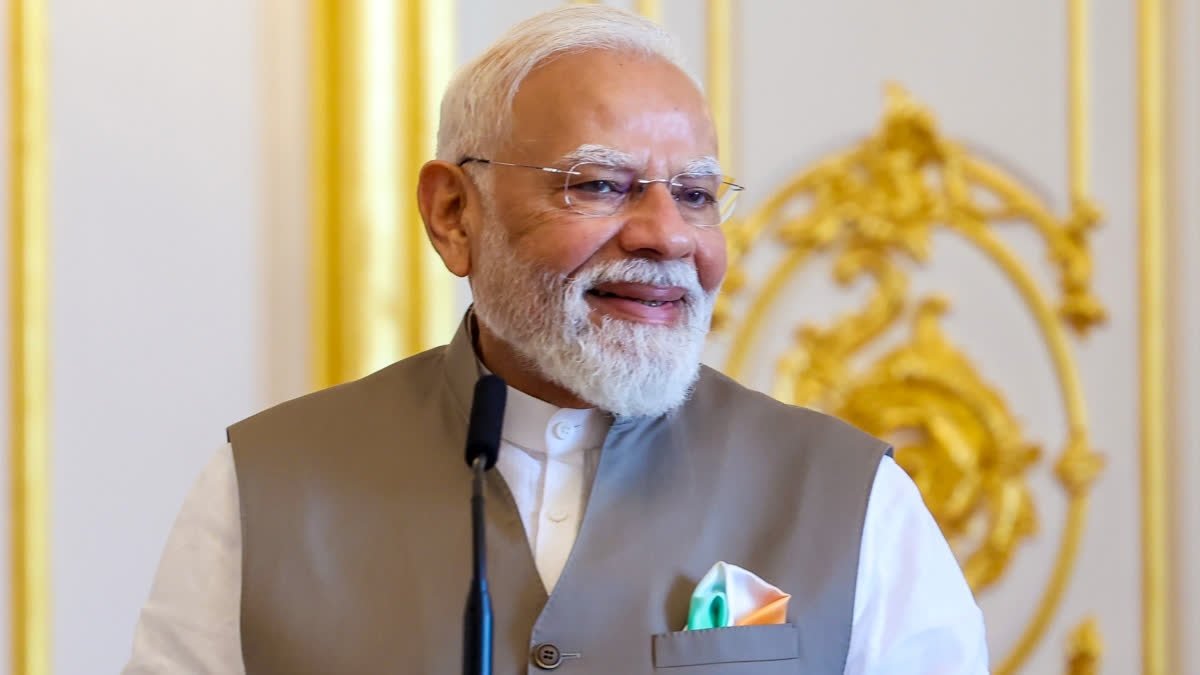

New Delhi |As geopolitical tensions continue to escalate across the Middle East and concerns mount over the security of the Strait of Hormuz, Prime Minister Narendra Modi’s upcoming visit to Seychelles later this month is expected to significantly strengthen India’s strategic footprint in the Western Indian Ocean.
The visit comes at a time when global attention is focused on safeguarding critical maritime trade routes, ensuring energy security, and maintaining regional stability amid rising uncertainty in the Gulf region. Analysts believe the trip will transform the recently announced India–Seychelles Joint Vision into concrete action while deepening bilateral cooperation across maritime security, blue economy, defense, digital connectivity, renewable energy, and climate resilience.
Why Seychelles Matters
Although Seychelles is a small island nation, it occupies a strategically significant position in the Western Indian Ocean, close to major Sea Lines of Communication (SLOCs) that connect the Persian Gulf with Asia, Africa, and Europe.
With nearly 20 percent of the world’s oil supply passing through the Strait of Hormuz, any prolonged disruption could have serious consequences for global trade and energy markets. While Seychelles is geographically distant from the Gulf, its location makes it an ideal partner for monitoring shipping lanes and supporting maritime operations across the wider Indian Ocean.
For India, strengthening ties with Seychelles aligns with its ambition to serve as the region’s Net Security Provider, ensuring the uninterrupted movement of commercial shipping and energy supplies.
Strengthening the MAHASAGAR Vision
Prime Minister Modi is expected to reaffirm India’s MAHASAGAR (Mutual and Holistic Advancement for Security and Growth Across Regions) initiative, a regional vision promoting collective security, sustainable economic development, and maritime cooperation throughout the Indian Ocean.
The initiative emphasizes partnerships based on mutual trust, respect for sovereignty, and shared prosperity, distinguishing India’s regional approach from strategic dependency models.
Boosting Maritime Security
Maritime security is expected to dominate discussions during the visit.
India and Seychelles have already established extensive cooperation through:
- Coastal surveillance systems
- Patrol vessels and surveillance aircraft
- Radar networks
- Hydrographic surveys
- Joint naval exercises
- Training programs for the Seychelles Coast Guard
- Maritime Domain Awareness (MDA)
- Intelligence sharing
- Search and Rescue (SAR) operations
- Counter-piracy initiatives
- Combating illegal fishing, narcotics trafficking, and maritime terrorism
Experts expect both countries to expand cooperation in these areas to strengthen security across the Western Indian Ocean.
Responding to China’s Growing Influence
Another major strategic objective of the visit is expected to be balancing China’s expanding influence in the Indian Ocean Region.
Over the past decade, Beijing has significantly increased its presence through:
- Infrastructure investments
- Port development projects
- Defense cooperation agreements
- Strategic partnerships with African coastal and island nations
- Its overseas military base in Djibouti
India views stronger engagement with Seychelles as essential for maintaining a favorable strategic balance while promoting partnerships based on transparency and mutual benefit.
Blue Economy and Sustainable Development
As a leading Small Island Developing State (SIDS), Seychelles has become a global advocate for the Blue Economy, focusing on the sustainable use of ocean resources.
The visit is expected to expand cooperation in:
- Sustainable fisheries
- Marine biodiversity conservation
- Ocean science and research
- Renewable energy
- Climate adaptation
- Coastal resilience
- Disaster preparedness
- Environmental protection
Such collaboration aligns closely with India’s broader commitment to sustainable maritime development and climate resilience.
Infrastructure, Technology, and Capacity Building
Officials are also expected to accelerate cooperation in:
- Digital connectivity
- Healthcare
- Education
- Infrastructure development
- Renewable energy projects
- Capacity building
- Disaster management
- Satellite-based maritime monitoring
India may also assist Seychelles in modernizing its hydrographic maps, many of which date back to the colonial era, while enhancing satellite-based monitoring capabilities.
Experts Highlight Strategic Importance
According to Ruchita Beri, Senior Fellow at the Vivekananda International Foundation, Seychelles has become one of India’s most important strategic partners in the Indian Ocean due to increasing regional security concerns.
She noted that growing maritime traffic around the Cape of Good Hope, driven by instability near the Strait of Hormuz, has further elevated Seychelles’ strategic importance for India’s maritime security.
Meanwhile, Sameer Bhattacharya, Associate Fellow at the Observer Research Foundation (ORF), emphasized that India’s MAHASAGAR Vision, first announced in Mauritius, naturally extends to neighboring Seychelles.
He added that Seychelles’ upcoming Blue Economy Program, modernization of hydrographic mapping, and disaster preparedness initiatives offer significant opportunities for deeper India–Seychelles collaboration.
Strategic Outlook
Prime Minister Modi’s upcoming Seychelles visit extends well beyond traditional bilateral diplomacy. Against the backdrop of rising geopolitical uncertainty, it represents a strategic effort to secure critical maritime trade routes, strengthen India’s influence in the Western Indian Ocean, deepen regional security cooperation, support sustainable ocean development, and reinforce partnerships built on mutual respect and shared prosperity.
As global competition intensifies across the Indian Ocean, the visit is expected to reaffirm India’s commitment to ensuring a free, open, secure, and stable maritime region, while advancing its long-term vision for collective growth and regional stability.