

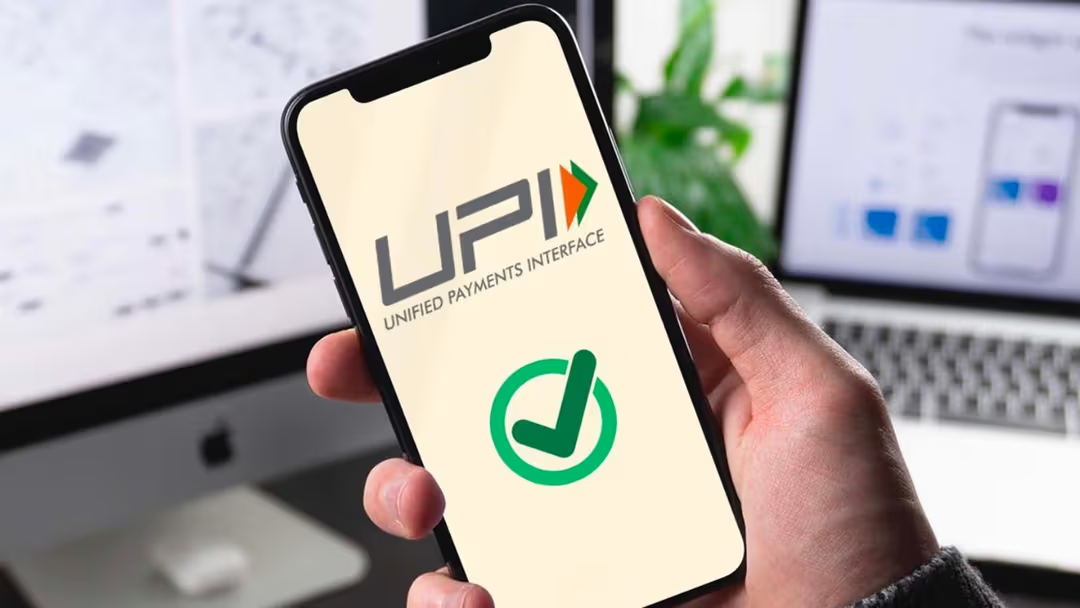

New Delhi |: The Central Government has introduced the Taxation and Other Laws (Amendment) Bill, 2026 in Parliament, paving the way for the possible introduction of Merchant Discount Rate (MDR) on certain Unified Payments Interface (UPI) transactions in the future. However, the government has clarified that no charges have been imposed at present, and UPI transactions will continue as usual until a separate notification is issued.
The Bill was introduced by Union Finance Minister Nirmala Sitharaman on August 4, 2026, proposing amendments to the Payment and Settlement Systems Act.
Bill Only Enables Future Charges — No Fee Announced Yet
The proposed amendment does not introduce any immediate fee on UPI transactions.
Instead, it removes the earlier legal restriction that prevented banks and payment service providers from levying Merchant Discount Rate (MDR) on notified digital payment methods such as UPI and RuPay.
The government has emphasized that:
- No MDR has been fixed yet.
- No implementation date has been announced.
- UPI transactions remain free for now.
- Any future MDR can only be introduced through a separate government notification.
Until such a notification is issued, all existing UPI payment rules remain unchanged.
What Could Change?
According to official discussions and media reports, the government is considering allowing an MDR ranging between 0.25% and 0.40% on merchant UPI transactions exceeding ₹2,000.
The proposal would apply only to payments made to businesses or merchants, not to personal transfers.
Transactions Expected to Remain Free
The proposed framework is expected to continue offering free UPI services for:
- Person-to-Person (P2P) transfers, such as sending money to family or friends.
- Everyday low-value purchases, including payments for groceries, vegetables, milk, taxis, and other routine expenses.
Officials indicate that only around 5% of UPI transactions by volume exceed ₹2,000, although these transactions account for nearly 65% of the total value processed through the UPI network.
What Is Merchant Discount Rate (MDR)?
Merchant Discount Rate (MDR) is a fee paid by merchants to banks and payment service providers for processing digital payments.
Importantly:
- Customers are not directly charged MDR.
- The fee is generally borne by the merchant.
- Businesses may choose to absorb the cost or pass a portion of it on to consumers through pricing decisions.
Speaking after the Monetary Policy Committee (MPC) meeting, RBI Governor Sanjay Malhotra said it is premature to determine who would ultimately bear the cost, but noted that maintaining digital payment infrastructure involves operational expenses that need sustainable funding.
Why Is the Government Considering This Change?
Since January 2020, the Government of India has maintained a zero-MDR policy on UPI merchant transactions to encourage widespread adoption of digital payments.
During this period:
- Banks and payment service providers have borne much of the transaction processing costs.
- The government has provided financial incentives to support the ecosystem.
- However, industry stakeholders have argued that these incentives do not fully compensate for the actual costs of maintaining digital payment infrastructure.
The proposed amendment is intended to give the government greater flexibility to design a financially sustainable framework for digital payments without disrupting the rapid growth of UPI.
Impact on Consumers
For most users, the proposed changes are unlikely to affect daily payment habits.
If implemented:
- Sending money to friends and family will remain free.
- Small-value UPI payments will continue without charges.
- Only certain merchant transactions above ₹2,000 may attract MDR.
For example, if a merchant chooses to pass on a 0.3% MDR to the customer:
- A ₹5,000 purchase could involve an additional cost of approximately ₹15.
However, many businesses may choose to absorb the fee rather than pass it on to customers.
Final Decision Yet to Be Taken
The Bill does not impose any charge immediately. It merely empowers the government to notify MDR on specified digital payment modes in the future.
Key aspects—including:
- Applicable MDR rate
- Transaction threshold
- Categories of merchants
- Implementation timeline
—will be determined only after detailed policy decisions and an official notification.
UPI Continues Without Any Change for Now
For now, UPI remains free for consumers, and users can continue making payments exactly as they do today.
The proposed legislation simply creates a legal framework that could allow future charges on high-value merchant transactions, while preserving free person-to-person transfers and everyday small-value digital payments.
The move reflects the government’s effort to balance the continued growth of India’s digital payment ecosystem with the long-term sustainability of the infrastructure that powers it.