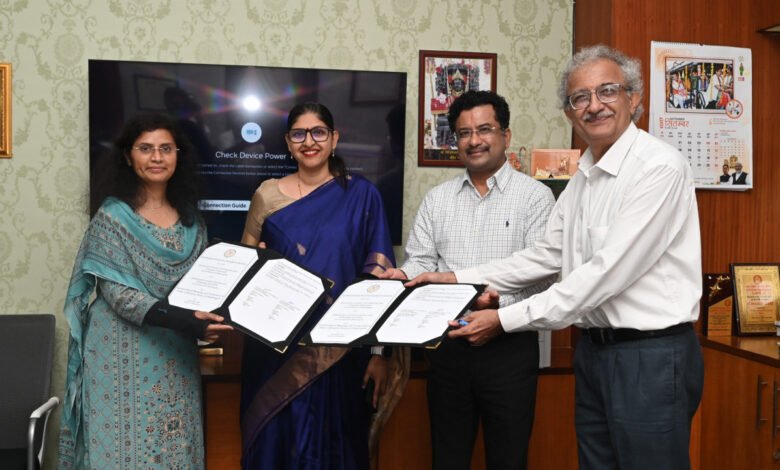




Ahmedabad : In a significant move to strengthen India’s critical mineral security and supply chain resilience, Gujarat Mineral Development Corporation (GMDC) has announced a strategic collaboration with the University of Cambridge to establish the country’s first Artificial Intelligence (AI)-powered Rare Earth Supply Chain Observatory.
The landmark initiative, backed by an investment of £600,000, aims to provide real-time intelligence on global Rare Earth Elements (REEs) supply chains, helping India navigate growing geopolitical, economic, and industrial challenges associated with critical minerals.
The observatory will be housed at GMDC’s International Centre of Excellence in Mining (iCEM) and developed in partnership with the Institute for Manufacturing (IfM) at the University of Cambridge, one of the world’s leading research institutions in industrial innovation and supply chain management.
AI Platform to Deliver Real-Time Rare Earth Intelligence
Under the two-year collaboration, GMDC and Cambridge researchers will create an advanced AI-driven intelligence platform capable of monitoring and analyzing the entire global rare earth value chain.
The platform will provide stakeholders with comprehensive insights into:
- Global rare earth mining and processing capacity
- Price trends and market fluctuations
- Supply chain disruptions and bottlenecks
- Geopolitical risks affecting critical mineral availability
- Strategic sourcing and procurement opportunities
- Stockpiling and reserve management strategies
- Environmental, Social, and Governance (ESG) considerations
By leveraging artificial intelligence, machine learning, and industrial analytics, the observatory is expected to become a critical decision-support tool for governments, industries, investors, and policymakers.
Rare Earth Security Becoming a Strategic Necessity
Rare earth elements have emerged as some of the most strategically important resources in the global economy. These minerals are essential for manufacturing permanent magnets, which are used extensively in:
- Electric Vehicles (EVs)
- Wind Turbines
- Advanced Electronics
- Semiconductor Technologies
- Defense and Aerospace Systems
- Renewable Energy Infrastructure
According to GMDC, India’s demand for Rare Earth Permanent Magnets (REPMs) is projected to double by 2030, driven by rapid growth in clean energy, transportation electrification, and high-tech manufacturing sectors.
As nations worldwide compete to secure critical mineral supply chains, India is increasingly focusing on reducing dependence on imported rare earth materials and building domestic capabilities.
A Strategic Knowledge Hub for Policymakers and Industry
The new observatory is expected to function as a national-level intelligence hub supporting:
- Critical mineral policy development
- Industrial procurement planning
- Strategic reserve management
- Supply diversification initiatives
- Domestic value-chain expansion
- Investment planning and risk assessment
The platform’s insights could help businesses identify emerging supply risks before they escalate, allowing for proactive mitigation strategies and stronger long-term planning.
GMDC Positions Itself at the Center of Critical Mineral Intelligence
Commenting on the initiative, Roopwant Singh, Managing Director of GMDC, emphasized the growing strategic importance of rare earth elements in the modern economy.
“Rare earth elements are not a commodity story—they are a sovereignty story. The Observatory we are building with the University of Cambridge is GMDC’s contribution to solving that challenge at the national level.”
Singh further noted that the project will combine Cambridge’s globally recognized research expertise with GMDC’s operational mining experience to create an advanced intelligence architecture for India’s emerging rare earth ecosystem.
Supporting India’s Atmanirbhar Bharat Vision
The collaboration aligns closely with the Government of India’s broader goals under the Atmanirbhar Bharat and Viksit Bharat initiatives, which seek to strengthen domestic industrial capabilities and reduce reliance on foreign supply chains for strategically important resources.
Industry observers believe the project could position Gujarat as a leading hub for critical mineral intelligence, while enhancing India’s preparedness in an increasingly competitive global market for rare earth resources.
About GMDC
GMDC is one of India’s largest lignite-producing companies and a leading mining public sector enterprise owned by the Government of Gujarat. In recent years, the company has expanded beyond traditional mining operations into critical minerals, renewable energy, and value-added mineral projects as part of its long-term growth and diversification strategy.
The partnership with the University of Cambridge marks another important milestone in GMDC’s efforts to support India’s resource security ambitions and strengthen the nation’s position in the global critical minerals landscape.