


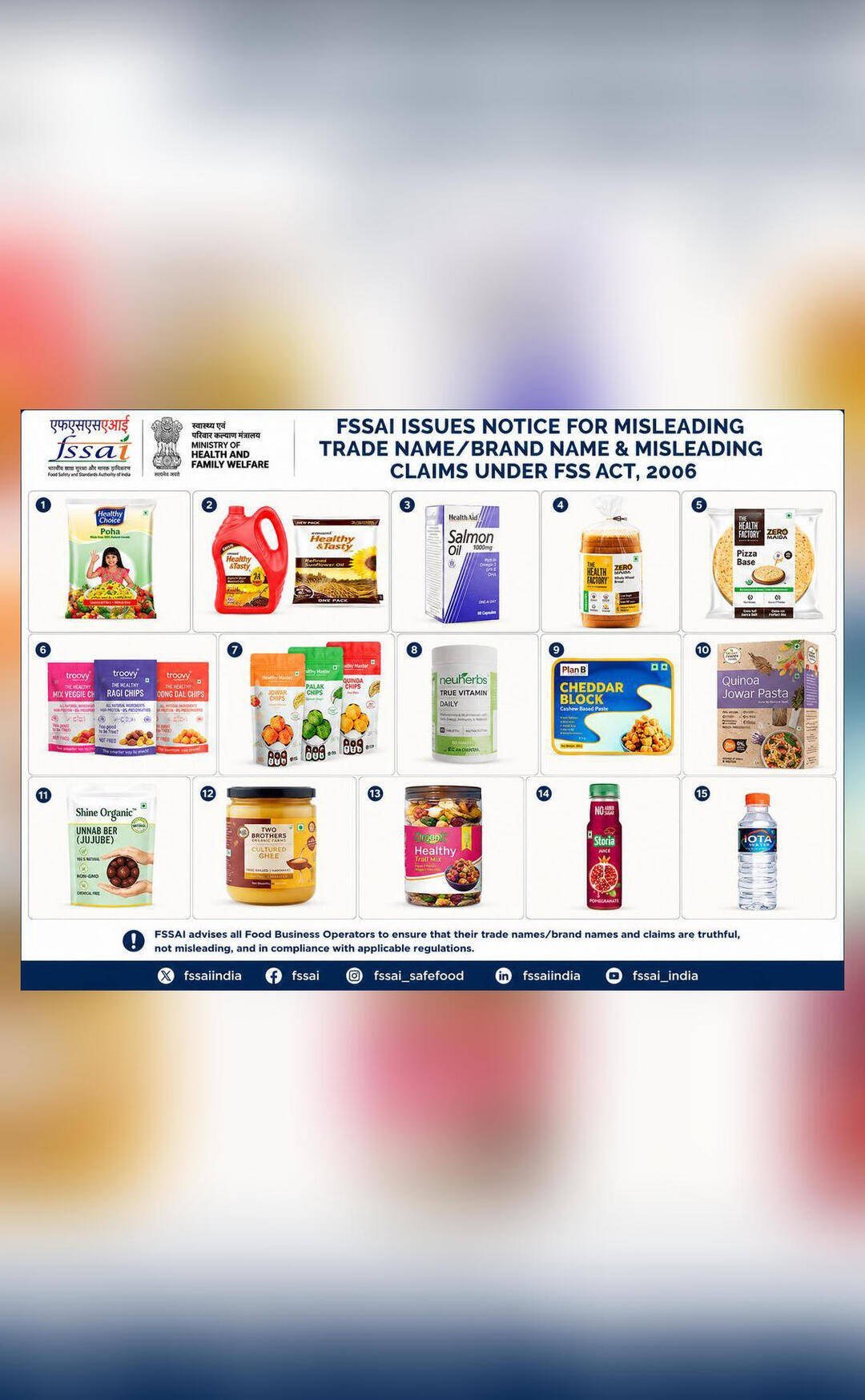

New Delhi, India | India’s food safety regulator, the Food Safety and Standards Authority of India (FSSAI), has issued official notices to 14 food business operators (FBOs) over allegations of using misleading brand names, labels, and marketing claims that could potentially confuse consumers about the nature and health benefits of their products.
The action is part of FSSAI’s ongoing efforts to strengthen consumer protection, ensure truthful advertising, and prevent the misuse of terms such as “healthy,” “organic,” “natural,” and similar expressions that may create a false impression regarding a product’s nutritional value or certification status.
Brands Receiving Notices
According to the regulator, notices have been served to the following brands:
- Healthy Master
- Neuherbs
- Plan B
- The Health Factory
- Troovy
- Emami Healthy & Tasty
- Health Aid
- Healthy Choice
- Organic Wisdom
- Shine Organic
- Two Brothers Organic Farms
- World of Organic
- Storia Juice Pomegranate
- Iota Water
Reason Behind the Regulatory Action
FSSAI has raised concerns that certain brand names and promotional statements may lead consumers to believe that products possess specific health benefits, nutritional advantages, or organic certifications that may not be adequately substantiated under existing food safety and labeling regulations.
The regulator is examining whether the use of words such as “Healthy,” “Organic,” and other wellness-related terms complies with India’s food labeling and advertising standards. Authorities are particularly focused on ensuring that consumers are not misled by branding that could influence purchasing decisions without sufficient scientific or regulatory backing.
Focus on Consumer Transparency
Food safety experts have long emphasized that consumers increasingly rely on packaging claims when choosing food products. Terms suggesting improved health, immunity support, organic production, or superior nutrition can significantly affect buying behavior.
By issuing these notices, FSSAI aims to reinforce the principle that all claims appearing on food packaging, advertisements, and promotional materials must be accurate, verifiable, and compliant with regulations.
What Happens Next?
The companies involved will be required to respond to the regulator’s concerns and provide explanations or supporting evidence regarding their branding and product claims. Depending on the outcome of the review, authorities may direct companies to modify labels, revise advertising content, or take corrective measures to comply with regulatory requirements.
Growing Scrutiny of Food Marketing
The development reflects a broader global trend in which regulators are increasing oversight of food and beverage marketing practices. Governments and food safety agencies worldwide are paying closer attention to claims related to health, nutrition, organic production, and functional benefits to ensure consumers receive clear and reliable information.
FSSAI’s latest move sends a strong message to the food industry that consumer trust, transparent labeling, and evidence-based marketing remain essential pillars of responsible business practices in the rapidly growing health-food sector.