


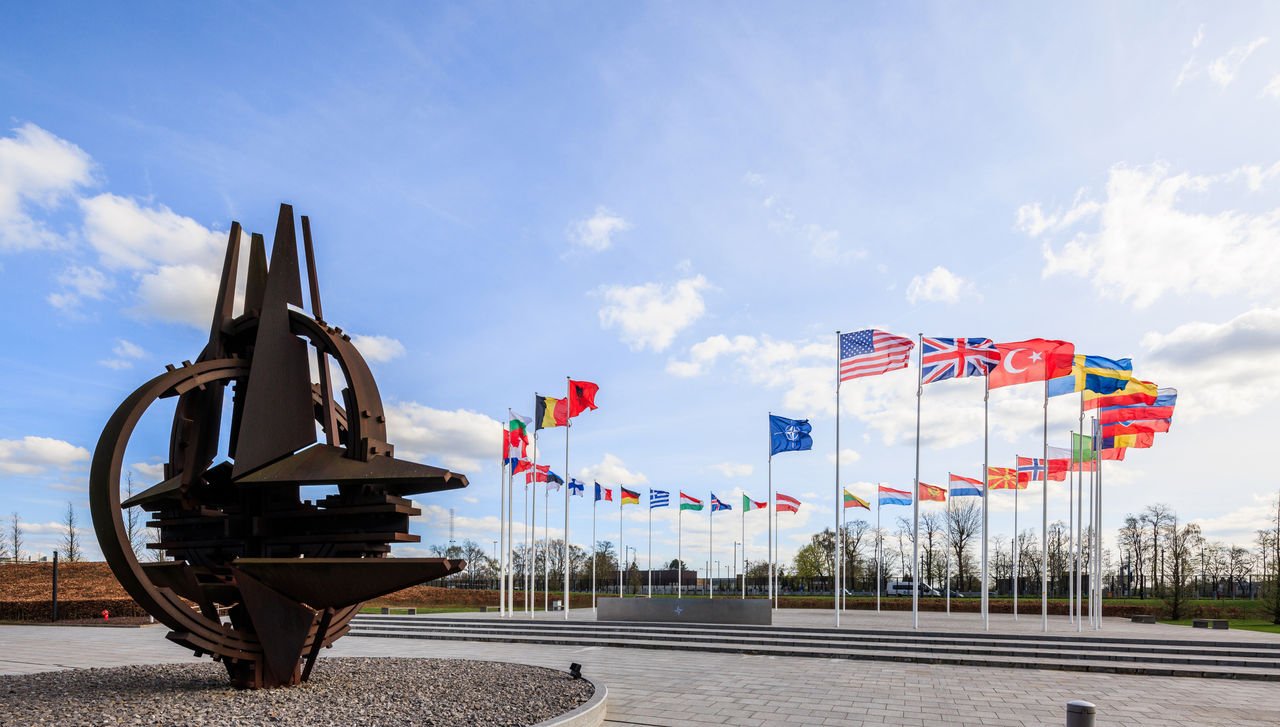
The Makkah Joint Defence Agreement has brought Pakistan, Saudi Arabia and Türkiye closer on security. But does the pact actually amount to an ‘Islamic NATO’?
New Delhi: A new defence agreement between Pakistan, Saudi Arabia and Türkiye has triggered debate over the possibility of a new military-security grouping in the Muslim world.
The Makkah Joint Defence Agreement, signed in Makkah on August 7, brings together three strategically important countries with very different strengths. Pakistan is the only Muslim-majority country with an established nuclear weapons capability, Saudi Arabia is one of the world’s leading oil exporters and home to Islam’s two holiest cities, while Türkiye is a NATO member with a rapidly expanding defence industry.
The three countries together possess substantial military, economic and strategic capabilities. But whether the agreement can evolve into an “Islamic NATO” depends on how deeply they integrate their armed forces, intelligence, defence industries and strategic decision-making.
What is the Makkah Joint Defence Agreement?
The agreement is designed to strengthen collective deterrence and defence cooperation between Pakistan, Saudi Arabia and Türkiye.
According to the countries’ joint position, an armed attack against any one of the three would be treated as an attack against all three.
This provision is particularly significant because it goes beyond routine defence cooperation.
In practical terms, it establishes the principle of collective security — although the exact mechanisms for military assistance, command structures, deployment of forces and operational coordination would determine how effective the arrangement becomes.
Why is the agreement being compared with NATO?
The comparison with NATO mainly comes from the agreement’s collective-defence principle.
NATO’s most famous provision, Article 5, establishes the principle that an armed attack against one member is considered an attack against all members.
The Pakistan-Saudi-Türkiye agreement appears to follow a similar broad concept of collective deterrence.
However, calling it an “Islamic NATO” at this stage would be premature.
NATO has decades of institutional development, permanent command structures, integrated military planning, standardised procedures, joint exercises and extensive intelligence cooperation.
The new three-country arrangement would need to develop similar mechanisms before it could be considered comparable to NATO in operational terms.
Three countries, three different strategic strengths
One of the most interesting aspects of the agreement is the combination of three countries with very different capabilities.
Pakistan: Nuclear capability and military strength
Pakistan brings significant conventional military capabilities as well as a nuclear deterrent.
It is the only country among the three with its own nuclear weapons arsenal.
Pakistan also has extensive military experience and maintains large armed forces.
Its strategic location — bordering India, Afghanistan, Iran and China while having access to the Arabian Sea — gives it considerable geopolitical importance.
The country’s nuclear capability could potentially add another layer of strategic deterrence to the new security arrangement.
Türkiye: NATO membership and defence technology
Türkiye brings a different kind of strategic advantage.
As a NATO member, it already operates within one of the world’s most sophisticated military alliances.
Türkiye has also developed a significant indigenous defence industry, including capabilities in drones, unmanned systems, missiles, naval platforms, armoured vehicles and other military technologies.
Its experience in developing and exporting defence equipment could become an important component of deeper military cooperation.
Türkiye’s NATO membership also makes the arrangement particularly unusual: it would potentially link a NATO member with a nuclear-armed Pakistan and a major Gulf power through a separate collective-defence framework.
Saudi Arabia: Money, energy and strategic geography
Saudi Arabia’s strength lies primarily in its economic power, energy resources, infrastructure and strategic location.
The kingdom is one of the world’s most important oil producers and exporters and possesses substantial financial resources.
It also occupies a strategically important position at the crossroads of the Middle East, Red Sea and Gulf regions.
Saudi Arabia’s financial capacity could support defence procurement, military modernisation, infrastructure and joint defence projects.
What does their combined military strength look like?
According to the figures cited in the 2026 Global Firepower assessment, the three countries together have approximately:
| Capability | Combined strength |
|---|---|
| Active military personnel | Around 1.4 million |
| Military aircraft | Around 3,415 |
| Annual defence spending | Around $124.4 billion |
| Global Firepower ranking – Türkiye | 9th |
| Global Firepower ranking – Pakistan | 14th |
| Global Firepower ranking – Saudi Arabia | 25th |
These figures demonstrate the considerable military weight of the three countries collectively.
However, military power cannot be measured simply by adding the numbers of soldiers, aircraft and defence budgets.
Training, logistics, interoperability, intelligence capabilities, command structures, technology, ammunition reserves and the ability to deploy forces rapidly are equally important.
Is this actually an ‘Islamic NATO’?
Not yet.
The agreement has some similarities with NATO’s collective-defence principle, but there are major differences.
NATO has:
- A large permanent institutional structure
- Integrated military command
- Long-established collective defence mechanisms
- Joint military planning
- Regular multinational exercises
- Common operational standards
- Extensive intelligence cooperation
- A much larger membership
The Pakistan-Saudi-Türkiye arrangement currently involves only three countries.
It is therefore more accurate to describe it as an emerging trilateral defence partnership rather than a fully developed military alliance comparable to NATO.
Why is the agreement strategically important?
The agreement could become important for several reasons.
1. Collective deterrence
The biggest immediate significance is the message that an attack on one partner could trigger a collective response.
This could potentially discourage external actors from taking military action against any of the three.
2. Defence technology cooperation
Türkiye’s growing defence industry, Pakistan’s military experience and Saudi Arabia’s financial resources could create opportunities for joint defence production, procurement and technology partnerships.
3. Intelligence sharing
If the agreement expands, intelligence cooperation could become an important area.
Counterterrorism, missile threats, drones, cyber warfare and regional security could all become subjects of greater information sharing.
4. Military exercises
Joint exercises could improve interoperability between the three armed forces.
Such exercises would also reveal how effectively their different military doctrines, equipment and command systems can work together.
5. Strategic influence in the Muslim world
The three countries have considerable political and military influence in different parts of the Muslim world.
Closer coordination could give them a stronger collective voice on regional security issues.
But there are also major challenges
Creating a powerful military alliance is considerably more difficult than signing a defence agreement.
The three countries have different foreign-policy priorities and relationships with other major powers.
Türkiye is a NATO member and maintains important ties with Europe, the United States and Russia.
Saudi Arabia maintains close strategic and economic relationships with the United States and other Western countries while also expanding ties with China and other powers.
Pakistan has its own strategic relationships, particularly with China, while also maintaining ties with Gulf countries and other international partners.
These different relationships could complicate the development of a unified military strategy.
What about nuclear weapons?
This is perhaps the most sensitive aspect of the arrangement.
Pakistan is a nuclear-armed state, while Saudi Arabia does not currently possess an acknowledged nuclear weapons arsenal and Türkiye is a NATO member operating under NATO’s nuclear-deterrence framework.
The agreement itself should not automatically be interpreted as creating a shared nuclear umbrella.
There is a significant difference between Pakistan being a member of a collective-defence arrangement and formally extending its nuclear deterrence commitments to other members.
The details of the agreement’s implementation will therefore be crucial.
Could more countries join later?
That remains possible, but there is currently no basis to assume that the agreement will automatically expand into a broader military bloc.
If other Muslim-majority countries eventually join or establish defence cooperation with the three, the arrangement could acquire greater regional significance.
But expansion would also bring new diplomatic and strategic complications.
Different countries have different relationships with Iran, Israel, the United States, China, Russia and other regional powers.
A larger alliance would therefore require much greater political coordination.
What does it mean for the Middle East and South Asia?
The agreement potentially connects South Asia, the Gulf and Türkiye through a common security framework.
For Pakistan, closer ties with Saudi Arabia and Türkiye could increase its strategic depth and diplomatic influence.
For Saudi Arabia, cooperation with Pakistan provides access to a major military power, while Türkiye offers advanced defence-industrial capabilities.
For Türkiye, closer relations with Saudi Arabia and Pakistan could expand its strategic influence beyond its traditional sphere.
The arrangement could therefore become an important element in the evolving security architecture of the wider Islamic world.
Bottom Line
The Makkah Joint Defence Agreement is significant because it brings together three countries with substantial but complementary strengths:
Pakistan brings nuclear deterrence and military capability; Türkiye brings NATO experience and defence technology; Saudi Arabia brings financial strength, energy resources and strategic geography.
The collective-defence provision makes comparisons with NATO understandable.
However, it is too early to call the arrangement an “Islamic NATO.” For that label to become justified, the three countries would need to establish deeper military integration, permanent coordination mechanisms, joint planning, intelligence sharing, regular exercises and clearly defined procedures for responding to an attack.
For now, the agreement is best understood as a major trilateral defence and strategic partnership whose future could reshape security cooperation across South Asia, the Gulf and the wider Muslim world.