


Ursula von der Leyen Proposes Age-Based Restrictions on Social Media, Online Games and Chatbots
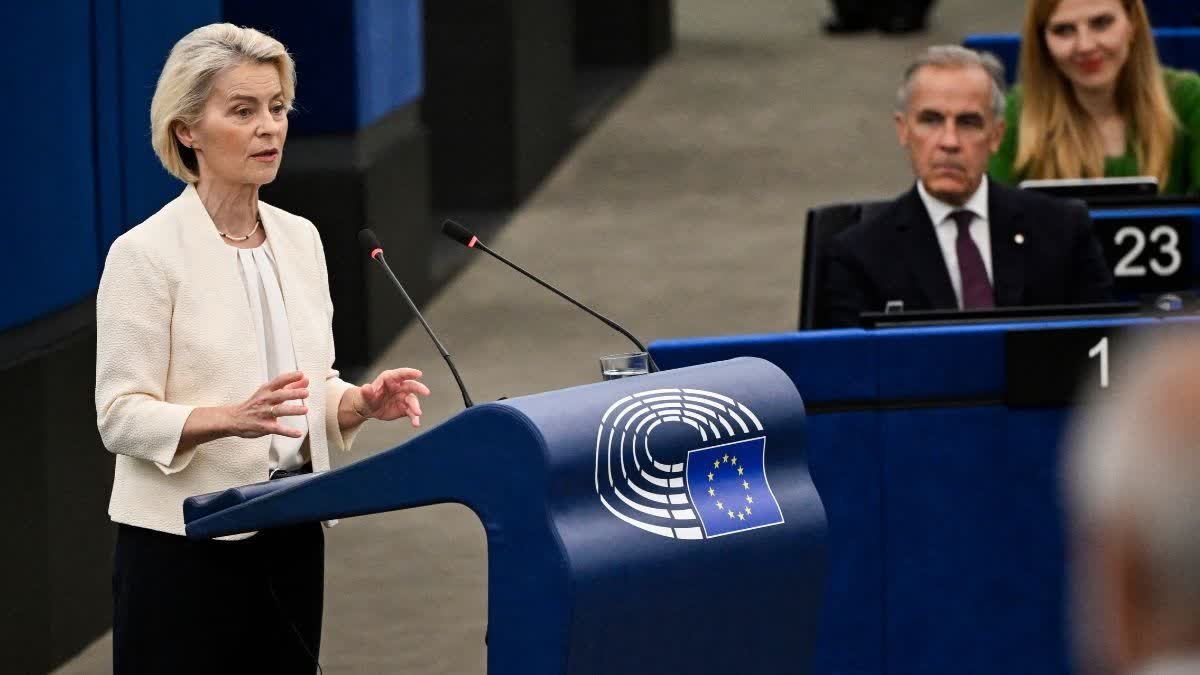
Strasbourg: European Commission President Ursula von der Leyen has proposed a European Union-wide ban on social media use for children under the age of 13, along with tighter restrictions for teenagers, as part of a broader plan to strengthen online safety for minors.
The proposal was announced during von der Leyen’s annual State of the European Union address to the European Parliament in Strasbourg on September 16, 2026. The European Commission is expected to put forward the EU Kids Act as part of the initiative.
Under the proposed framework, children below 13 would not be allowed to use social media. Those aged 13 to under 15 would be permitted to use only limited “mini accounts” created and supervised by parents or guardians. These accounts would have restricted features and a proposed time limit of one hour per day. For users aged 15 to 18, platforms would be required to implement stronger “safe design” measures.
Von der Leyen said Europe should not have to accept addictive platform features or systems that draw children towards increasingly extreme content. She also highlighted concerns over the misuse of girls’ photographs to create AI-generated sexualised images.
The proposal covers more than conventional social-media platforms. Von der Leyen also referred to online games and chatbots in outlining the need for stronger protections for children.
EU Member States to Consider the Proposal
The initiative will now have to go through the European Union’s legislative process and receive consideration from the bloc’s 27 member states. The proposal therefore does not yet constitute a binding EU-wide ban.
The move comes amid a growing international debate over how governments and technology companies should protect children from harmful online content, addictive design and other digital risks.
Von der Leyen argued that the responsibility should increasingly lie with technology platforms to demonstrate that their services are safe for minors, rather than placing the entire burden on children and parents.
Global Push to Restrict Children’s Social Media Access
The European initiative follows similar measures and proposals in several countries, including Australia and New Zealand, as governments examine age-based restrictions on social media.
France has faced a legal setback in its own effort. In August 2026, France’s Constitutional Council struck down the central provision of a law that would have prohibited children under 15 from accessing social-media services. The court said the measure raised concerns relating to freedom of expression and privacy, while also recognising that protecting children can justify restrictions under certain conditions.
French President Emmanuel Macron subsequently indicated that the legislation would be reworked.
Growing Pressure on Big Tech
The EU proposal could also intensify the wider debate over technology regulation and the responsibilities of major digital platforms.
Von der Leyen rejected the idea that the influence of Big Tech is too powerful to regulate and argued that Europe has the authority to establish rules governing digital platforms.
The European Commission’s approach places particular emphasis on age-appropriate access, parental supervision, safer platform design and greater accountability for technology companies.
The debate is now expected to focus on how such age restrictions can be implemented in practice, including age verification, privacy safeguards, parental consent and the enforcement responsibilities of digital platforms.