


Anand, Gujarat | What began as a small farmers’ movement against exploitation has evolved into one of the world’s largest dairy cooperative success stories. From collecting just 247 liters of milk per day in 1946, Amul today procures more than 35 million liters of milk daily, connecting over 3.6 million dairy farmers across Gujarat through its cooperative network.
The remarkable journey of Amul and the evolution of India’s cooperative dairy movement were presented by Dr. Preeti Shukla, Head of Human Resources, Amul Dairy, during an interaction with journalists from Chhattisgarh on an educational visit to Anand, Gujarat.
A Movement Born Against Farmers’ Exploitation
Dr. Shukla explained that during the 1930s and 1940s, dairy farmers in the Kheda region produced significant quantities of milk, but private dairy companies controlled procurement and marketing. As a result, farmers received unfair prices and felt increasingly exploited.
Seeking justice, the farmers approached Sardar Vallabhbhai Patel, who encouraged them to establish their own cooperative organization. Under his guidance, efforts began in 1942 to build a farmer-owned dairy cooperative.
The movement was spearheaded by Tribhuvandas Patel, the founding chairman of Amul, with support from Morarji Desai. Farmers even staged a 15-day milk strike, ultimately leading to the registration of the Kaira District Cooperative Milk Producers’ Union Limited on December 14, 1946.
From 247 Liters to 35 Million Liters Per Day
Amul’s journey started with a modest 247 liters of milk collection per day. Today, the cooperative collects over 35 million liters of milk every day through a network of more than 3.6 million dairy farmers across Gujarat.
Initially, the dairy operated from a rented section of a government creamery. Expansion became possible after Tribhuvandas Patel arranged over 50 acres of land, allowing Amul to establish a permanent production base.
Dr. Verghese Kurien Changed the Course of India’s Dairy Industry
According to Dr. Shukla, the arrival of Dr. Verghese Kurien in 1949 transformed Amul’s future. Although he came to Anand as an engineer, he dedicated his life to strengthening the cooperative movement and later became known as the “Father of India’s White Revolution.”
A major breakthrough came in 1952, when the Bombay State Government replaced Polson Dairy with the Kaira Union as the supplier of milk to Mumbai. This secured a stable market for Amul and accelerated both milk procurement and processing capacity.
Revolutionary Innovation: Buffalo Milk Powder
Another milestone in Amul’s history was achieved by dairy technologist Dr. H. M. Dalaya, who developed the world’s pioneering technology for producing milk powder from buffalo milk.
At the time, existing technology was designed primarily for cow’s milk, while India had a much larger buffalo population. This innovation enabled Amul to preserve surplus milk, reduce wastage, and continue purchasing milk from farmers even during peak production seasons.
Launch of Amul-1 Processing Plant
Amul’s first major dairy processing plant, Amul-1, was inaugurated on October 31, 1955, by India’s first Prime Minister Jawaharlal Nehru.
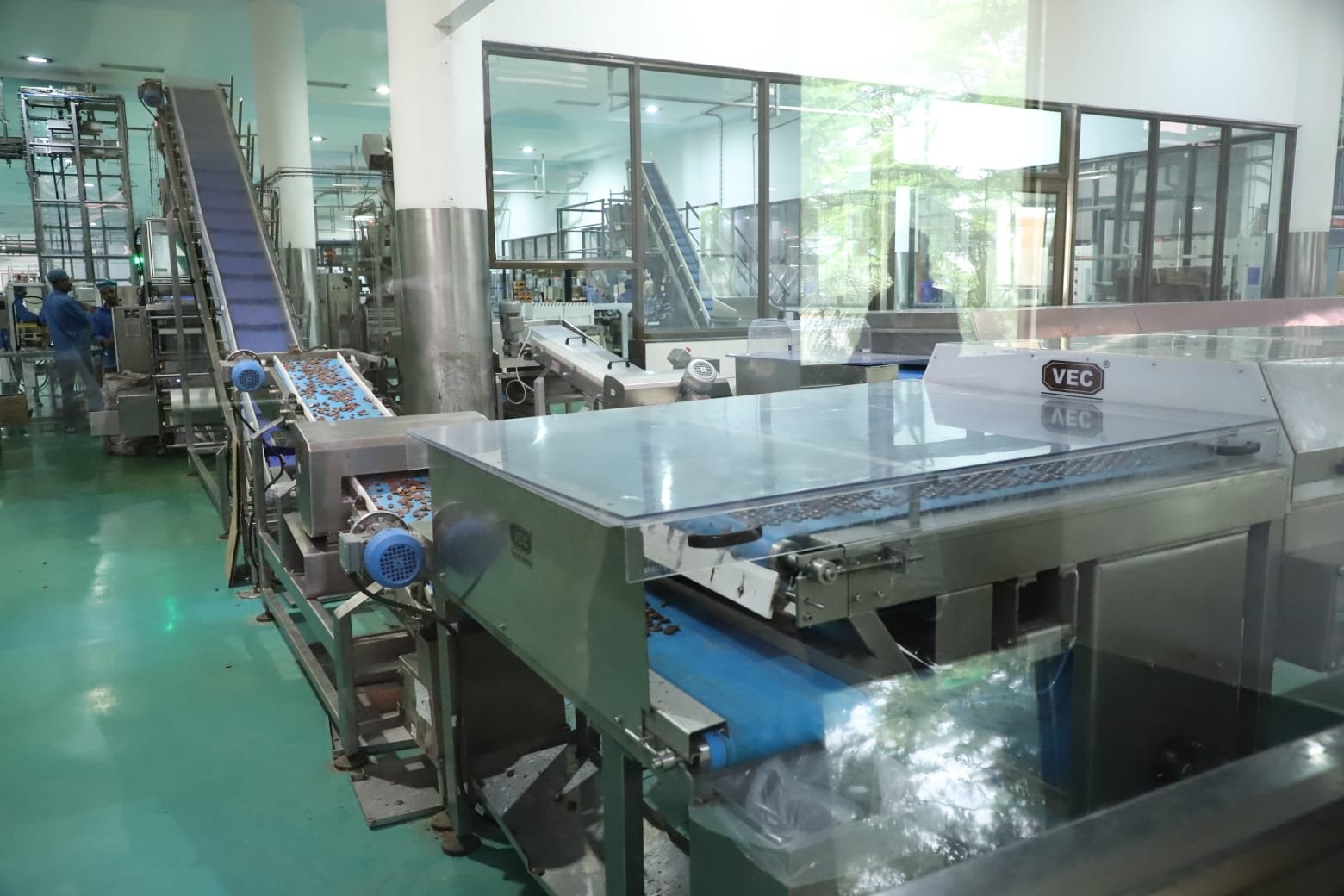
With an initial processing capacity of 100,000 liters per day, the plant remains operational and stands as a symbol of India’s cooperative dairy revolution.
The Origin of the Amul Brand
As butter production expanded, the cooperative recognized the need for a unique brand identity. The name “Amul” was derived from the Sanskrit word “Amulya,” meaning “Priceless.” It later also came to represent Anand Milk Union Limited, making it one of India’s most recognizable brands.
GCMMF Turned Amul into a Global Brand
With dairy unions emerging across different districts of Gujarat, leaders realized that competing under separate brands would weaken the cooperative movement.
To address this, the Gujarat Cooperative Milk Marketing Federation (GCMMF) was established, taking responsibility for marketing all dairy products under the Amul brand.
Today, Amul products are available in more than 50 countries, making it one of India’s most successful global food brands.
The Anand Pattern Inspired India’s Dairy Revolution
Dr. Shukla noted that the visit of Prime Minister Lal Bahadur Shastri to Anand in 1964 proved historic.
Impressed by the cooperative model, he supported the establishment of the National Dairy Development Board (NDDB), appointing Dr. Verghese Kurien as its first chairman.
This initiative laid the foundation for Operation Flood, transforming India into the world’s largest milk producer and earning Anand the title of “India’s Milk Capital.”
Farmers Own It, Professionals Run It
Amul operates on a unique governance model where farmers are the owners, while experienced professionals manage day-to-day operations.
Its success is built upon the leadership of Tribhuvandas Patel, Dr. Verghese Kurien, and Dr. H. M. Dalaya, whose combined vision created a sustainable cooperative institution.
Three-Tier Cooperative Structure
The strength of Amul lies in its three-tier cooperative model, consisting of:
- Village Dairy Cooperative Societies
- District Milk Unions
- State-Level Marketing Federation (GCMMF)
Farmers deliver milk twice daily, where automated quality testing determines fat and quality parameters. Payments are transferred directly to farmers’ bank accounts, generally within a 10-day payment cycle.
Milk is cooled to 4°C in Bulk Milk Coolers before being transported to district processing plants. Gujarat currently has 18 district milk unions, which process milk before products are marketed nationally and internationally through GCMMF.
Over 80% of Revenue Returns to Farmers
One of Amul’s defining features is its farmer-centric financial model.
Dr. Shukla stated that 82 to 85 paise of every rupee earned is returned directly to farmers.
In addition to milk payments, members receive:
- Annual profit sharing
- Subsidized cattle feed
- Veterinary healthcare
- Livestock training
- Animal nutrition services
Focus on Higher Animal Productivity
Rather than simply increasing livestock numbers, Amul emphasizes improving milk productivity per animal.
The cooperative manufactures over 20 varieties of cattle feed and provides Total Mixed Ration (TMR), ensuring scientifically balanced nutrition.
Advanced livestock management includes:
- Digital ear tagging
- Centralized veterinary call centers
- Mobile veterinary services
- Artificial insemination
- Pregnancy diagnosis
- Sex-sorted semen technology
- Embryo transfer programs
Emergency veterinary assistance can reach farmers within 2 to 4 hours after receiving requests through mobile applications.
Completely Paperless Operations
Amul has embraced digital transformation across its operations.
According to Dr. Shukla, the dairy has functioned as a completely paperless organization for the past two years, with farmer records, employee tracking, and operational management fully digitized.
The Iconic Amul Girl
The famous Amul Girl, conceptualized in 1966 by Sylvester daCunha, has become one of India’s most recognizable advertising mascots.
The campaign is regarded as one of the longest-running advertising campaigns in the world and has earned recognition in the Guinness World Records.
Global Expansion Across 50+ Countries
Amul now exports dairy products to over 50 countries. The cooperative has also partnered with local cooperatives in countries including the United States and Spain for milk procurement, processing, and marketing.
Empowering Rural Women Through Dairy Cooperatives
Dr. Shukla emphasized that dairy cooperatives have become a powerful instrument of women’s empowerment.
Since women perform much of the daily work associated with livestock management, dairy farming, and milk production in rural households, cooperative participation significantly enhances their financial independence and strengthens rural livelihoods.
A Model Beyond Dairy
Amul’s extraordinary journey represents far more than the growth of a successful dairy brand. It stands as a global example of how farmer ownership, professional management, technological innovation, and cooperative governance can transform rural economies, improve livelihoods, strengthen food security, and build an internationally respected brand.
Today, Amul remains a symbol of inclusive economic development, proving that when farmers own the value chain, they become partners in prosperity rather than victims of exploitation.