
Korba, Chhattisgarh |: Once known primarily for its vast coal mining and thermal power generation, Korba is now gaining national recognition for a remarkable transformation in urban water conservation, groundwater recharge, and sustainable water management under the Ministry of Housing and Urban Affairs (MoHUA) flagship AMRUT 2.0 “Catch the Rain – Where it Falls, When it Falls” campaign.
The district has become a model for innovative water conservation by combining advanced satellite mapping, scientific groundwater recharge technologies, rainwater harvesting, and a landmark ₹111 crore wastewater recycling partnership with NTPC.
ISRO Mapping Identifies Critical Groundwater Recharge Zones
Although situated on the banks of the Hasdeo River, Korba has long experienced severe seasonal water shortages, especially during the dry months. To address this challenge, the National Remote Sensing Centre (NRSC) under the Indian Space Research Organisation (ISRO) carried out extensive satellite-based mapping and field surveys to identify the city’s most vulnerable groundwater recharge locations.
The scientific study identified 10 critical sites where groundwater levels had significantly declined while rainwater overflowed into drains and eventually flowed into the river without replenishing underground aquifers.
Shallow Aquifer Management (SAM) Revolutionizes Groundwater Recharge
Following ISRO’s findings, the Municipal Corporation installed 10 custom-designed Shallow Aquifer Management (SAM) systems at these strategic locations.
Each SAM structure incorporates:
- Multi-Stage Desiltation Units equipped with gravel and sand filtration beds that remove silt, debris, and pollutants from stormwater before it enters the ground.
- Direct Injection Recharge Wells, which channel clean rainwater directly into underground aquifers, significantly improving groundwater recharge while reducing urban flooding during heavy rainfall.
These systems have become the cornerstone of Korba’s urban water resilience strategy.
Groundwater Levels Improve Dramatically
According to Ashutosh Pandey, Commissioner, Municipal Corporation Korba, the impact of the SAM systems has been both immediate and substantial.
He stated that groundwater, which was previously available only at depths of nearly 600 meters, can now be accessed at approximately 150 meters in several key areas following implementation of the Catch the Rain initiative.
The improvement represents a major breakthrough in ensuring long-term urban water security for residents and industries alike.
Collector Announces Massive Water Conservation Drive
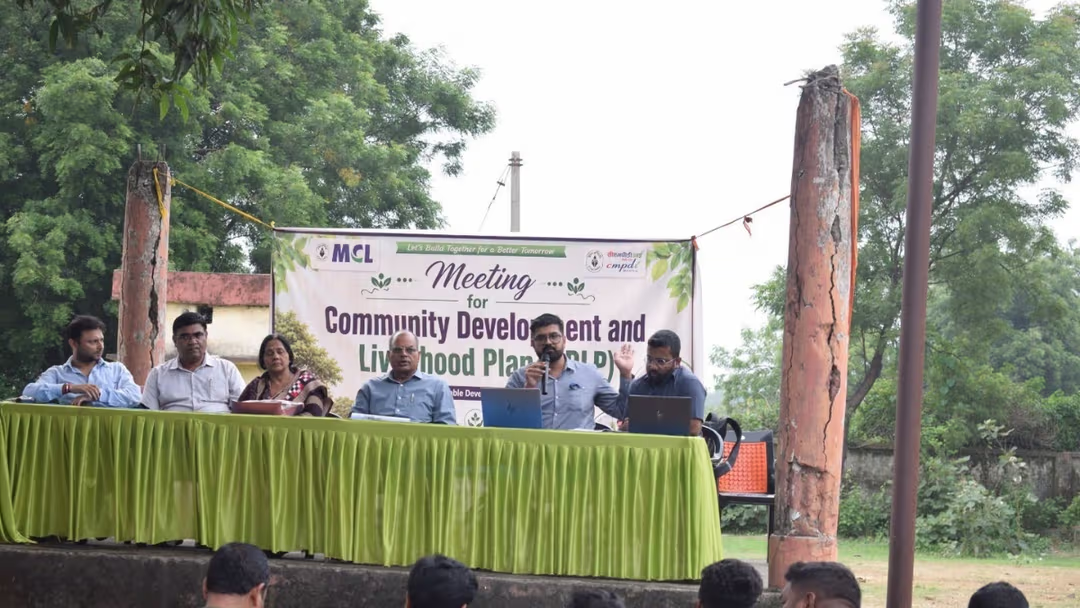
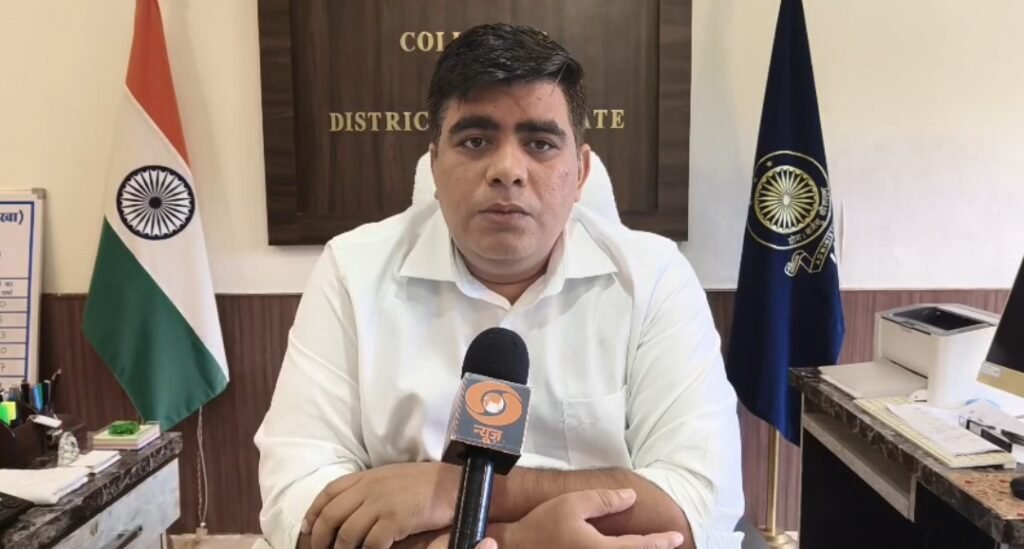
Speaking about the campaign, District Collector Kunal Dudawat emphasized that water conservation has become one of the district’s highest priorities under the “Catch the Rain” campaign and the “Jal Sanchay – Jan Bhagidari” mission.
The administration has set an ambitious goal of constructing 20,000 water conservation structures during the current year.
The Collector highlighted several major initiatives, including:
- Making rainwater harvesting mandatory for both government and private buildings.
- Converging flagship programs such as Swachh Bharat Mission and other government schemes to maximize water conservation efforts.
- Promoting community participation to ensure every drop of rainwater contributes to strengthening groundwater reserves and supporting future agricultural sustainability.
Expansion of Rainwater Harvesting Across Korba
Encouraged by the success of the initial phase, the Korba Municipal Corporation has launched an aggressive expansion plan.
Current initiatives include:
- Construction of 109 rooftop rainwater harvesting systems across government offices, educational institutions, and community buildings.
- Restoration of 95 abandoned and defunct borewells using the Shallow Aquifer Management mechanism, transforming inactive infrastructure into effective groundwater recharge structures.
₹111 Crore NTPC Partnership to Protect the Hasdeo River
Beyond groundwater recharge, Korba is also setting new benchmarks in urban wastewater management.
The Municipal Corporation is implementing an ambitious project to rehabilitate 11 heavily polluted drainage channels (Nallahs) flowing through the city.
Supported by ₹111 crore in funding from NTPC, the project will establish secondary and tertiary wastewater treatment plants, with completion targeted for 2027.
Once operational, the treated wastewater will be supplied back to NTPC for industrial cooling and processing, significantly reducing dependence on freshwater drawn from the Hasdeo River.
The recycled water will be sold to NTPC at ₹7.5 per liter, creating a sustainable revenue stream for the Municipal Corporation while promoting a circular water economy.
A National Example of Sustainable Urban Water Management
Korba’s integrated approach—combining ISRO-backed scientific mapping, Shallow Aquifer Management, large-scale rainwater harvesting, borewell rejuvenation, and industrial wastewater recycling—is emerging as one of India’s most innovative urban water conservation models.
The district’s achievements under AMRUT 2.0 demonstrate how science, technology, government policy, and public participation can work together to address groundwater depletion, enhance climate resilience, reduce flood risks, and secure sustainable water resources for future generations.