


New Delhi | India has strongly rejected allegations made by Pakistan’s Defence Minister Khawaja Asif, who accused New Delhi of being responsible for the recent violence in Pakistan-occupied Kashmir (PoK). The Indian government described the accusations as “baseless, misleading, and an attempt to divert attention from Pakistan’s internal failures.”
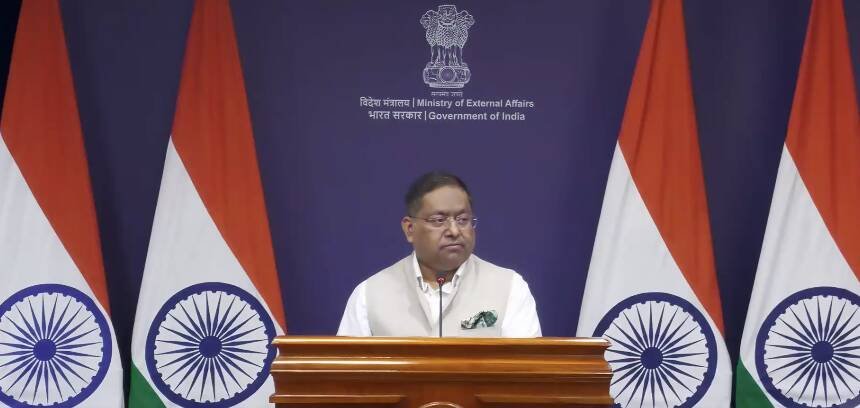
In an official response, India’s Ministry of External Affairs (MEA) stated that Pakistan’s remarks were desperate attempts to hide its governance failures and ongoing human rights concerns in PoK.
“Such remarks are desperate attempts by Pakistan to cover up its own failures and deflect attention from its human rights abuses.“
According to India, the ongoing protests and unrest in Pakistan-occupied Kashmir are the result of decades of political neglect, economic hardship, and the denial of fundamental rights to the people living in the region. The government argued that public anger has grown because of poor governance, lack of democratic freedoms, limited economic opportunities, and restrictions on civil liberties.
India further stated that Pakistan should focus on addressing the legitimate concerns of the people in PoK instead of making what it called “unfounded allegations” against India.
The statement comes amid rising tensions in Pakistan-occupied Kashmir, where demonstrations have reportedly taken place over inflation, unemployment, shortages of essential services, and demands for greater political rights. Protesters have accused local authorities of failing to improve living conditions, leading to repeated clashes with security forces.
Meanwhile, Pakistan continues to maintain that India is attempting to destabilize the region, a claim that New Delhi has firmly denied. India reiterated that Jammu and Kashmir is an integral part of India, while calling on Pakistan to end what it described as support for cross-border terrorism and to improve conditions in territories under its administration.
The exchange of statements highlights the continuing diplomatic tensions between the two nuclear-armed neighbors, with both countries maintaining sharply different positions on Kashmir, a region that has remained a source of conflict since 1947.
Despite the war of words, international observers continue to urge both India and Pakistan to pursue peaceful dialogue, avoid further escalation, and prioritize regional stability and the welfare of civilians living in and around the disputed region.