


Bürgenstock, Switzerland |Tensions between the United States and Iran have escalated once again after U.S. President Donald Trump warned Tehran to immediately stop providing financial support to its regional proxy groups, particularly Hezbollah in Lebanon, or face another round of military strikes.
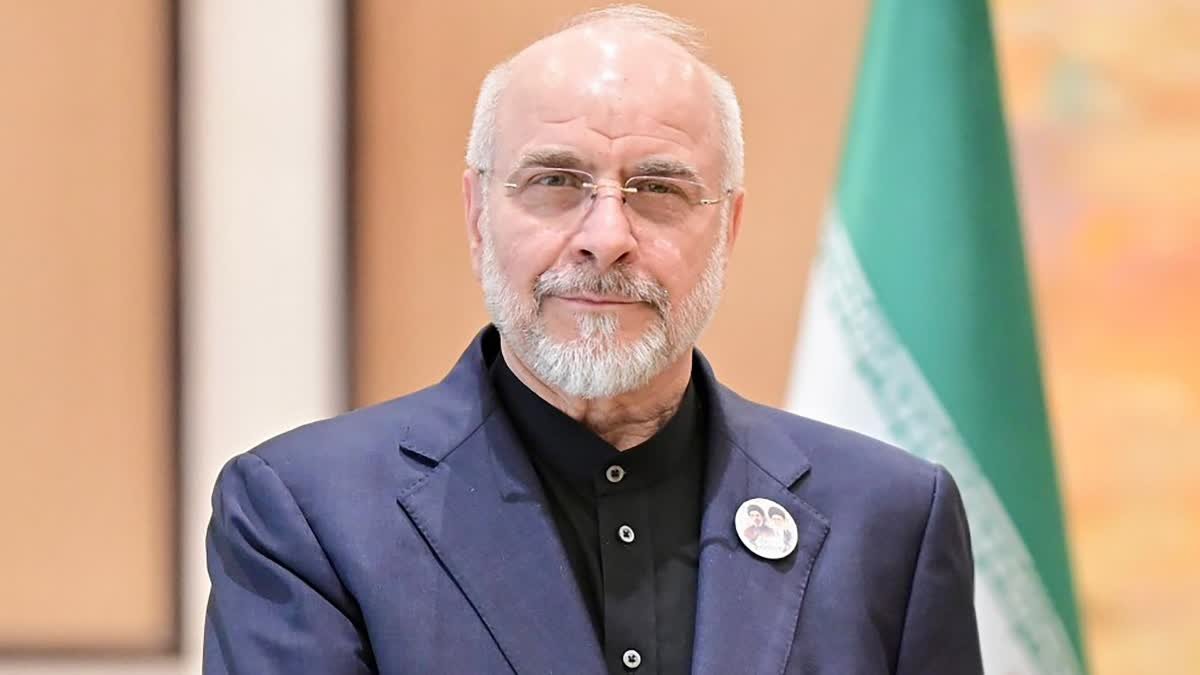
Responding sharply to Trump’s remarks, Iranian Parliament Speaker Mohammad Bagher Ghalibaf dismissed the warning as a sign of American desperation, insisting that Iran will not be intimidated by U.S. threats.
Ghalibaf Rejects Trump’s Warning
In a post on X (formerly Twitter), Ghalibaf criticized Washington’s repeated threats and said Iran remains prepared to defend itself if necessary.
“If American threats had been effective, they would not be in today’s position of frustration. We do not believe in America’s threats. They should be careful with their words because our armed forces are ready to respond in other ways. Whatever they say, we are the ones who will act,” Ghalibaf wrote.
He also emphasized that Iran’s military is fully prepared to respond to any aggression and said that pressure tactics would not influence Tehran’s policies.
Trump Threatens Stronger Military Action
Trump’s comments came through a post on Truth Social, where he urged Iran to stop funding what he described as its “well-funded proxy” in Lebanon—a reference widely understood to mean Hezbollah.
Trump warned:
“Iran must immediately stop its wealthy proxy in Lebanon from causing trouble. If it does not, we will strike Iran again with even greater force than we did last week.“
The statement marks one of the strongest warnings issued by the U.S. administration since recent military tensions in the region.
Diplomatic Talks Continue in Switzerland
Despite the heated rhetoric, high-level diplomatic negotiations between the United States and Iran are continuing in Bürgenstock, Switzerland.
According to Iranian media, the first round of technical discussions concluded after approximately 80 minutes, with both delegations pausing for internal consultations before resuming negotiations.
The talks are reportedly part of a broader 14-point Memorandum of Understanding (MoU) aimed at reducing tensions in the Middle East.
JD Vance Leads U.S. Delegation
U.S. Vice President JD Vance is leading the American delegation in the negotiations with senior Iranian officials.
The discussions, reportedly facilitated by Pakistan and Qatar, focus on finding a comprehensive diplomatic solution to the ongoing regional crisis.
During the meeting, Vance reportedly conveyed President Trump’s willingness to reset diplomatic relations with Tehran if meaningful progress is achieved.
Key Issues Under Discussion
Negotiators are primarily focused on several critical issues, including:
- Iran’s nuclear program
- Regional security and military de-escalation
- Future of U.S.-Iran diplomatic relations
- Restrictions on support for proxy groups
- Security and operational status of the Strait of Hormuz
- Framework for an interim nuclear agreement
The Strait of Hormuz remains one of the world’s most strategically important shipping routes, making its stability a central issue in the negotiations.
Regional Implications
The latest exchange of threats highlights the fragile security situation in the Middle East. While diplomatic talks continue, both Washington and Tehran have maintained firm public positions, raising concerns that further escalation could undermine ongoing negotiations.
International observers believe the success of the Switzerland talks could play a significant role in determining the future of U.S.-Iran relations, regional stability, and global energy security.
Key Highlights
- Donald Trump warned Iran to stop supporting Hezbollah or face stronger U.S. military action.
- Mohammad Bagher Ghalibaf dismissed the warning as “desperation” and said Iran will not be intimidated.
- High-level U.S.-Iran negotiations are underway in Switzerland.
- JD Vance is leading the American delegation.
- Discussions are centered on Iran’s nuclear program, regional security, and the Strait of Hormuz.
- Both sides continue diplomatic engagement despite increasingly sharp public rhetoric.