


NEW YORK — Feeling hungry shortly after finishing a meal can be frustrating and may leave many people wondering whether they are eating enough. According to diabetologist Dr. Varun Suryadevara, the problem may not be the amount of food consumed but rather how the body responds to certain types of meals.
Dr. Suryadevara explained that rapid hunger after eating is often linked to blood sugar fluctuations, particularly when meals contain large amounts of refined carbohydrates such as white bread, sugary snacks, pastries, or processed foods.
Why Hunger Returns So Quickly
When a person consumes foods high in refined carbohydrates, the body quickly breaks them down into glucose, causing a rapid blood sugar spike. In response, the pancreas releases insulin to help move glucose from the bloodstream into cells.
However, this process can sometimes lead to a sharp drop in blood sugar levels shortly afterward. This decline may signal the brain that the body needs more energy, triggering feelings of hunger even when a meal was recently eaten.
Health experts say this cycle of blood sugar spikes and crashes can contribute to overeating, cravings, and difficulty maintaining healthy eating habits.
Tip #1: Pair Carbohydrates With Protein, Healthy Fats, and Fiber
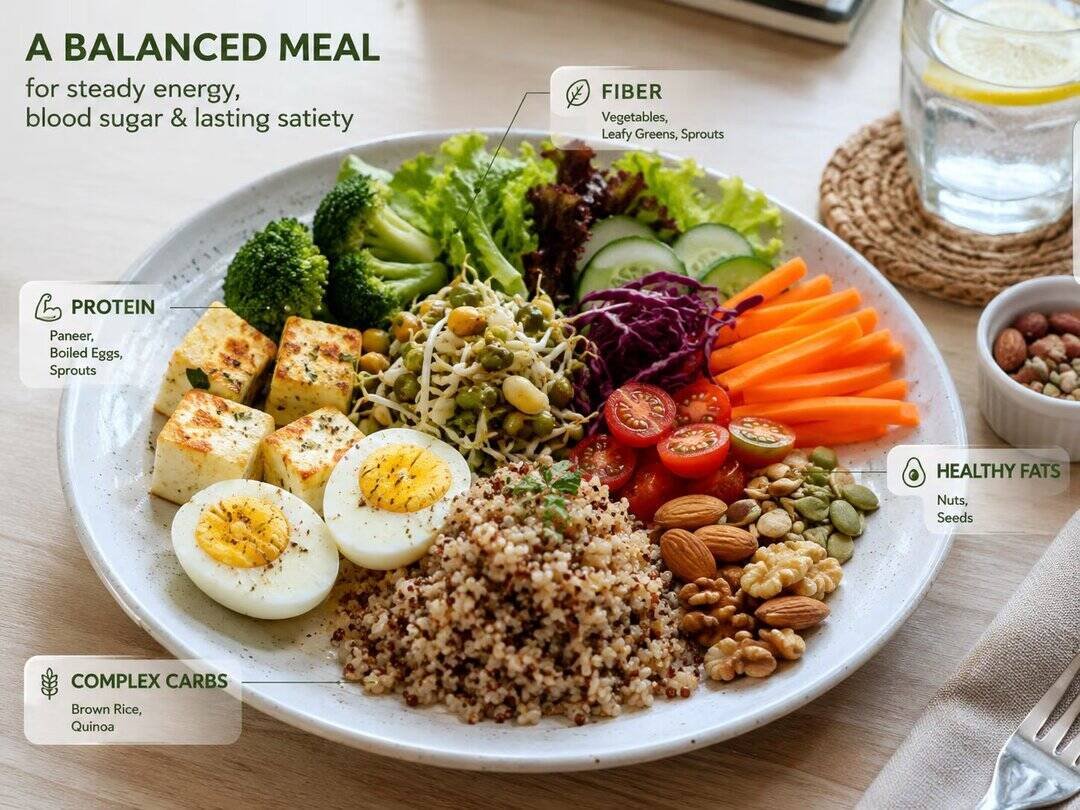
Dr. Suryadevara recommends combining carbohydrates with protein, healthy fats, and fiber to slow digestion and promote steadier blood sugar levels.
Examples include:
- Whole-grain toast with eggs
- Greek yogurt with nuts and berries
- Brown rice with chicken and vegetables
- Apple slices with peanut butter
These combinations help the body absorb glucose more gradually, reducing sudden spikes and crashes that can trigger hunger.
Tip #2: Eat Vegetables and Protein Before Carbohydrates
The order in which food is consumed may also make a difference.
According to the diabetologist, starting a meal with vegetables and protein-rich foods before eating carbohydrates can help moderate blood sugar responses.
For example:
- Eat a salad or vegetables first.
- Follow with protein such as fish, chicken, beans, or tofu.
- Consume rice, bread, pasta, or other carbohydrates last.
Research has suggested that this approach can help improve glucose control and increase feelings of fullness after meals.
Tip #3: Stay Properly Hydrated
Dehydration can sometimes be mistaken for hunger.
Dr. Suryadevara advises drinking adequate amounts of water throughout the day, as mild dehydration may lead people to think they need food when their body is actually signaling thirst.
Staying hydrated can support overall health while helping individuals better recognize true hunger cues.
The Bigger Picture
Nutrition experts emphasize that persistent hunger may be influenced by several factors, including:
- Poor sleep quality
- High stress levels
- Insufficient protein intake
- Lack of dietary fiber
- Certain medical conditions
- Intense physical activity
For people who frequently experience extreme hunger despite eating balanced meals, consulting a healthcare professional may be beneficial.
Bottom Line
Dr. Varun Suryadevara says preventing post-meal hunger often comes down to maintaining stable blood sugar levels. By combining carbohydrates with protein, healthy fats, and fiber, eating vegetables and protein before carbs, and staying well hydrated, individuals may feel fuller for longer and reduce the urge to snack soon after eating.
These simple dietary adjustments can help support healthier eating habits, improve energy levels, and promote better overall metabolic health.