

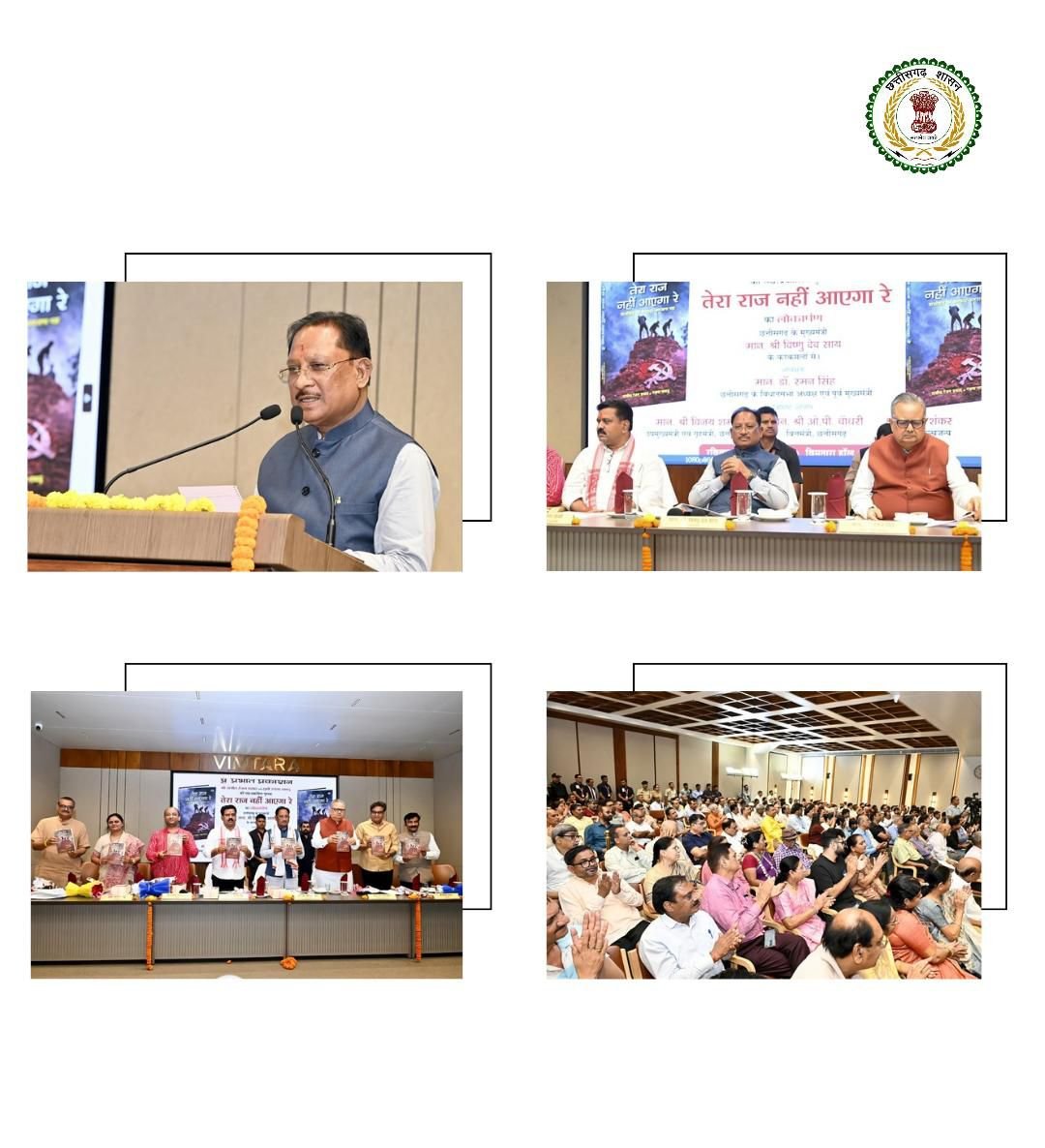

RAIPUR, Chhattisgarh — Chhattisgarh Chief Minister Vishnu Deo Sai on Sunday attended the launch ceremony of the book “Tera Raj Nahin Aayega Re” in the state capital, highlighting the long struggle against Naxalism and outlining an ambitious vision for the future development of the Bastar region.
Addressing a gathering of political leaders, intellectuals, and members of civil society, Chief Minister Sai said that Bastar, a tribal-dominated region in southern Chhattisgarh, remained isolated from the mainstream of development for nearly four decades due to the persistent threat of Maoist insurgency. He emphasized that the region is now entering a new phase of growth as security conditions improve and government efforts intensify.
“After suffering from the scourge of Naxal violence for decades, Bastar is now moving toward peace and progress,” Sai said. He added that the Central Government and the Government of Chhattisgarh are working together to transform Bastar into one of India’s most beautiful and developed tribal divisions.
The Chief Minister noted that the newly released book serves as an important historical record of the struggle against Maoist extremism. According to him, future generations will gain a deeper understanding of the sacrifices made by both security forces and ordinary citizens in the fight to restore peace and stability in the region.
Sai said the book documents the difficult journey toward freedom from extremist violence and highlights the courage of those who stood against insurgent activities despite immense challenges.
The event was also attended by Chhattisgarh Legislative Assembly Speaker Raman Singh, Deputy Chief Minister Vijay Sharma, and Shashank Sharma, President of the Sahitya Akademi, along with several distinguished guests, scholars, and public representatives.
The book launch comes at a time when authorities in Chhattisgarh are intensifying efforts to eliminate the remaining pockets of Maoist influence while simultaneously expanding infrastructure, education, healthcare, and employment opportunities across Bastar.
Officials believe that preserving the history of the anti-Naxal movement through literature will help ensure that future generations understand the human cost of conflict and the importance of maintaining peace, democratic values, and inclusive development.
The ceremony concluded with a renewed commitment from state leaders to accelerate development in Bastar and ensure that the region emerges as a model of tribal empowerment, economic growth, and social progress in the years ahead.