

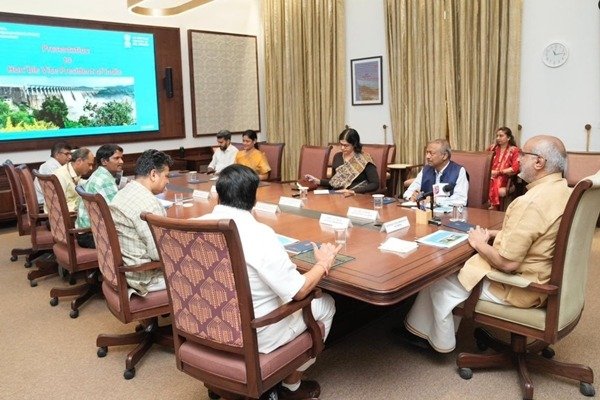

New Delhi : India’s Vice President, C. P. Radhakrishnan, conducted a comprehensive review of the Ministry of Jal Shakti’s ongoing programs aimed at strengthening water conservation, sustainable water resource management, and long-term water security across the country.
During the high-level review meeting, the Vice President assessed the progress of several flagship initiatives designed to address growing concerns over water scarcity, groundwater depletion, and the increasing impact of climate change on water availability. Officials presented updates on projects focused on rainwater harvesting, watershed development, river rejuvenation, and the expansion of access to safe drinking water in both rural and urban communities.
The Vice President highlighted the critical role of community participation, technological innovation, and inter-agency coordination in ensuring the success of water conservation efforts. He stressed that efficient water management is essential not only for environmental sustainability but also for supporting agriculture, public health, industrial growth, and overall economic development.
Particular attention was given to initiatives promoting groundwater recharge, the restoration of traditional water bodies, and the adoption of modern irrigation techniques aimed at reducing water wastage. The review also examined efforts to improve water-use efficiency in agriculture, which remains one of the largest consumers of freshwater resources in India.
Officials from the ministry briefed the Vice President on progress under various national programs, including measures to increase awareness about responsible water usage and encourage citizens to actively participate in conservation activities. The meeting underscored the importance of building climate-resilient water infrastructure capable of meeting future challenges posed by population growth and changing weather patterns.
Addressing the gathering, Vice President C.P. Radhakrishnan emphasized that water conservation must become a national movement, involving governments, local bodies, private organizations, and citizens alike. He called for greater investment in sustainable water management practices and urged stakeholders to accelerate implementation of projects that can deliver measurable benefits to communities.
The review concluded with a renewed commitment to strengthening India’s water security framework through integrated water resource management, environmental stewardship, and the adoption of innovative solutions that support sustainable development goals.
Government officials stated that the Ministry of Jal Shakti will continue to prioritize initiatives that promote water conservation, improve access to clean water, and ensure the long-term sustainability of the nation’s vital water resources.