
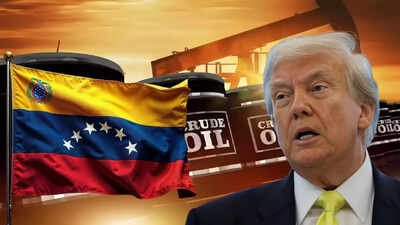
New Delhi: Venezuela holds the world’s largest proven oil reserves—more than even Saudi Arabia and nearly five times that of the United States. Yet despite sitting on an estimated 303 billion barrels of oil, the South American nation continues to face deep economic hardship, high inflation, and declining living standards. Experts say the paradox lies not in the quantity of oil, but in its quality, management, and geopolitics.
According to global energy estimates, Venezuela ranks first in proven oil reserves, followed by Saudi Arabia (267 billion barrels), Iran (208.6 billion barrels), and Canada (163.6 billion barrels). Together, these four countries control more than half of the world’s known oil reserves. By comparison, the United States has around 55 billion barrels, ranking ninth globally.
Heavy Oil, Heavy Challenges
Most of Venezuela’s oil is located in the Orinoco Belt, a vast region spanning about 55,000 square kilometers in the eastern part of the country. The oil found here is extra-heavy crude—thick, dense, and high in sulfur content. This makes extraction, refining, and transportation far more expensive than lighter crude oil.
Because of its high density and impurity levels, Venezuelan crude often sells at a discount in global markets. Advanced technology is required to process it into usable fuels—technology that Venezuela currently struggles to access.
PDVSA’s Grip on the Oil Sector
Control over Venezuela’s oil industry rests with the state-owned company Petróleos de Venezuela S.A. (PDVSA). The company manages most production in the Orinoco Belt and across the country. However, PDVSA has been plagued by years of underinvestment, outdated infrastructure, mismanagement, and skilled labor shortages.
International sanctions have further restricted PDVSA’s ability to attract foreign investment, import modern equipment, or access global financial systems. As a result, oil production has fallen sharply from its peak levels, limiting government revenue in a country heavily dependent on oil exports.
US–Venezuela Tensions
Relations between the United States and Venezuela have long been strained over issues of oil, politics, and security. Recent claims and counterclaims have once again highlighted the fragile state of bilateral ties. Venezuelan officials have accused the US of aggressive actions, while Washington continues to maintain pressure through sanctions and diplomatic measures. Independent verification of some recent developments remains unclear.
A Resource-Rich but Cash-Poor Nation
Despite possessing oil reserves larger than Saudi Arabia’s, Venezuela earns only a fraction of what major oil producers make. Hyperinflation, shortages of essential goods, and economic isolation continue to affect daily life for millions of Venezuelans.
Analysts argue that without major reforms—modernization of PDVSA, easing of sanctions through diplomatic engagement, and diversification of the economy—Venezuela’s vast oil “treasure” may remain largely untapped, offering little relief to its struggling population.
Venezuela’s story underscores a hard truth of global economics: natural resources alone do not guarantee prosperity.