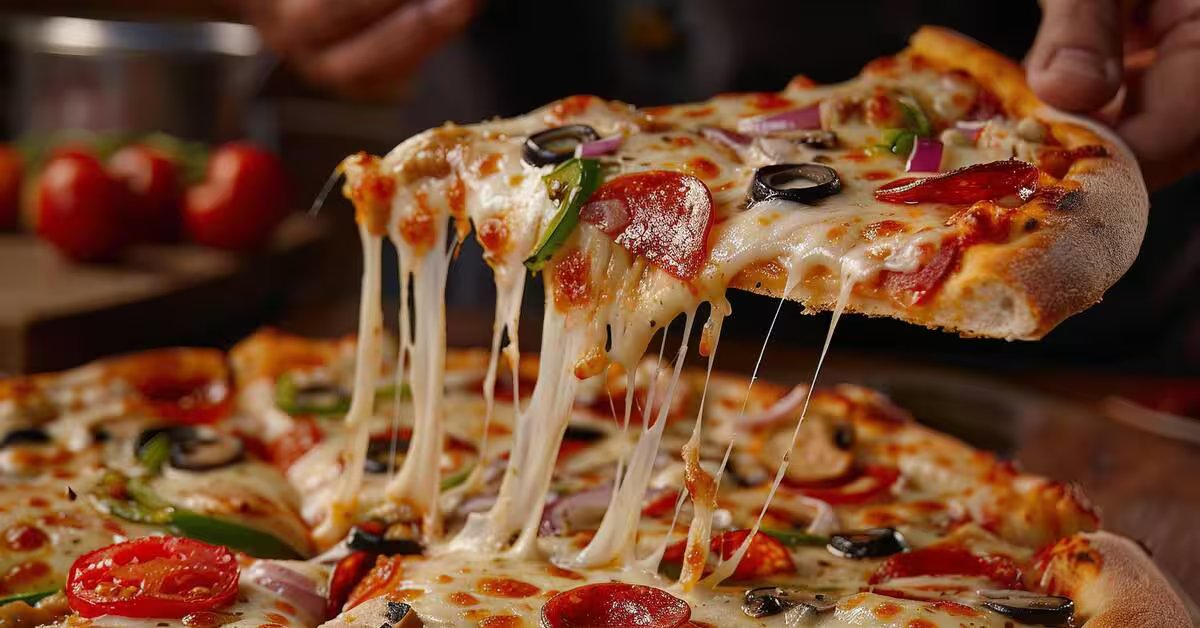

Pizza is losing some of its appeal in the US. According to a recent CNBC report, US pizza restaurant sales fell 0.3 per cent in 2025, mainly due to changing consumption patterns and the growing use of GLP-1 weight-loss drugs. But while the Americans ditch their once go to fast food option, India developing a bigger appetite for pizza.
From quick office lunches and family dinners to late-night orders, the once occasional indulgence is finding more space in the country’s increasingly delivery-driven food culture. Restaurant chains are responding with value meals, new products and an expanding presence beyond the metros.
So what is driving this appetite, and can India’s pizza chains turn it into sustainable business growth?
India’s pizza market gaining momentum
According to the market analysis research and consulting firm IMARC’s report on pizza industry released earlier this month, India’s pizza market was worth $5.81 billion in 2025, up from $3.8 billion in 2020. It expects the market to reach $12.49 billion by 2034, growing at a compound annual growth rate of 8.87 per cent between 2026 and 2034.
A 2025 Technomic survey of consumers across 25 markets found that 41 per cent of Indian respondents expected to order pizza more frequently over the following six months, the highest proportion among the markets surveyed and nearly twice the global average of 22 per cent. Euromonitor has also identified pizza as India’s fastest-growing limited-service restaurant category in 2025.
Pizza Hut’s India performance was uneven across franchise partners Sapphire Foods and Devyani International. Sapphire reported 5 per cent same-store sales growth in Q2 FY27, its strongest in seven quarters, and 7 per cent growth in restaurant sales, helped by value offers. Its restaurant Ebitda margin, however, remained negative at 2.8 per cent, partly due to higher energy costs. Devyani reported a 1.4 per cent decline in same-store sales, narrower than the declines of 2.2 per cent in the previous quarter and 4.1 per cent a year earlier; average daily sales were around ₹32,000.
Homegrown chains such as La Pino’z Pizza, Chicago Pizza, Oven Story and MOJO Pizza have also built their presence in the market. There are also newer international entrants such as Little Caesars. La Pino’z, which started with a single outlet in Chandigarh in 2011, says it now has more than 700 outlets across India. Chicago Pizza has also expanded its footprint through franchise-led outlets. The US-based Little Caesars, which opened its first outlet in Delhi in June 2025, also plans to expand further.
How delivery is driving pizza consumption
Swiggy’s How India Eats 2025 report found that late-night meals were growing nearly three times as fast as dinner. Pizzas, cakes and soft drinks were among the categories recording the highest growth in consumption after 11 pm. The platform’s ordering data also recorded 34 million pizza orders between February 9, 2024, and February 9, 2025. Its 2025 year-end report counted 40.1 million pizza orders between January 1 and November 30, making pizza the third most-ordered food category on the platform, after biryani and burgers.
Zomato, however, recorded that pizza orders on the platform declined from 74.5 million in 2023 to 58.4 million in 2024, a fall of about 21.6 per cent. Pizza nevertheless remained the second most-ordered food category on Zomato in 2024. In 2025, Delhi emerged as the busiest market for Zomato, logging over 42.2 million more orders than Mumbai and 42.3 million more orders than Bengaluru.
Affordability and smaller cities offer room to grow
“India’s quick service restaurant (QSR) industry was entering a more disciplined phase of growth, with operators shifting their focus from adding outlets to building formats that could deliver value while maintaining sustainable unit economics,” Naveen Malpani, partner and consumer & retail industry leader, told Business Standard.
“Consumers remain price-conscious, particularly outside the metros, but they are also increasingly aspirational and willing to experiment with organised, branded food experiences,” he added.
This is pushing chains towards sharper entry-level price points, value combinations, menu innovation and more compact formats. But according to Malpani, discounting can help attract first-time customers, and cannot replace a viable long-term pricing strategy.
Expansion into Tier-II and Tier-III cities is likely to be another important growth driver. According to Malpani, 94 per cent of restaurant operators surveyed in his firm’s research intend to expand within their existing Tier-II markets, into other Tier-II and Tier-III cities, or both.
QSR chains have an advantage in these markets because smaller outlets, relatively lower capital requirements, and simpler menus can make expansion more viable. However, they cannot treat smaller cities as scaled-down versions of metros. Purchasing power, footfall patterns, real estate availability and local supply chains differ considerably.
Jubilant FoodWorks said Domino’s India expanded into 47 new cities during Q2 FY27, taking its presence to 587 cities.
Competition also spreading across different price points
While large chains are using entry-level meals and discounts to attract price-conscious consumers, IMARC’s report found that premium and artisanal pizza brands are targeting customers willing to pay more for differentiated offerings. IMARC identifies premiumisation, including demand for speciality cheeses, gourmet toppings and artisanal crusts, as an emerging trend. The entry and expansion of brands such as Si Nonna’s reflect this opportunity.
Profitable expansion will define the next phase
According to Malpani, supply-chain efficiency would increasingly determine restaurant-level profitability. He said lower rentals in smaller cities can be offset by logistics costs, inconsistent volumes and staffing challenges. Over the next three to five years, Malpani expects successful QSR operators to become more localised in their consumer offerings while maintaining greater standardisation in operations. Growth, he said, will depend on getting the right format, price point and location in place, supported by disciplined costs, resilient supply chains and repeat consumption.