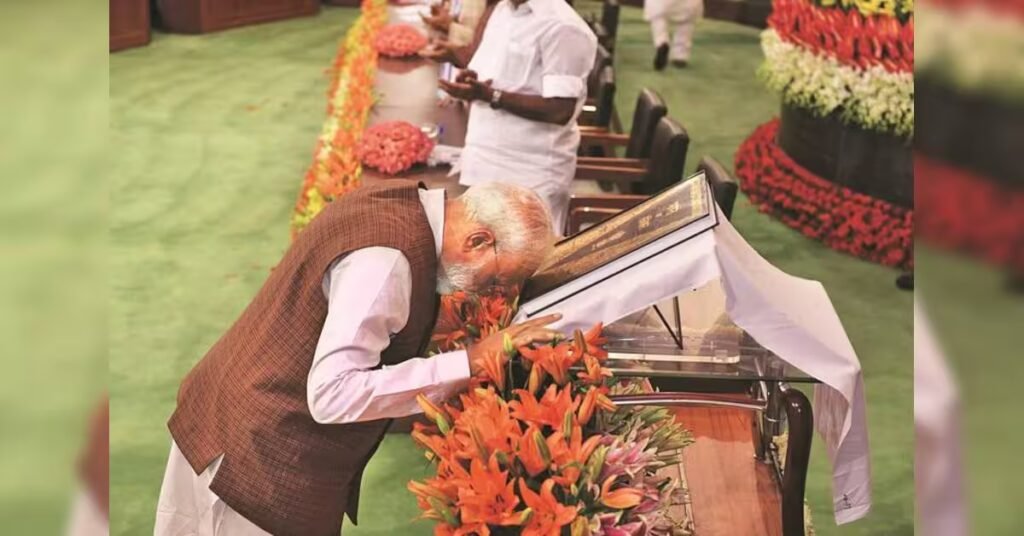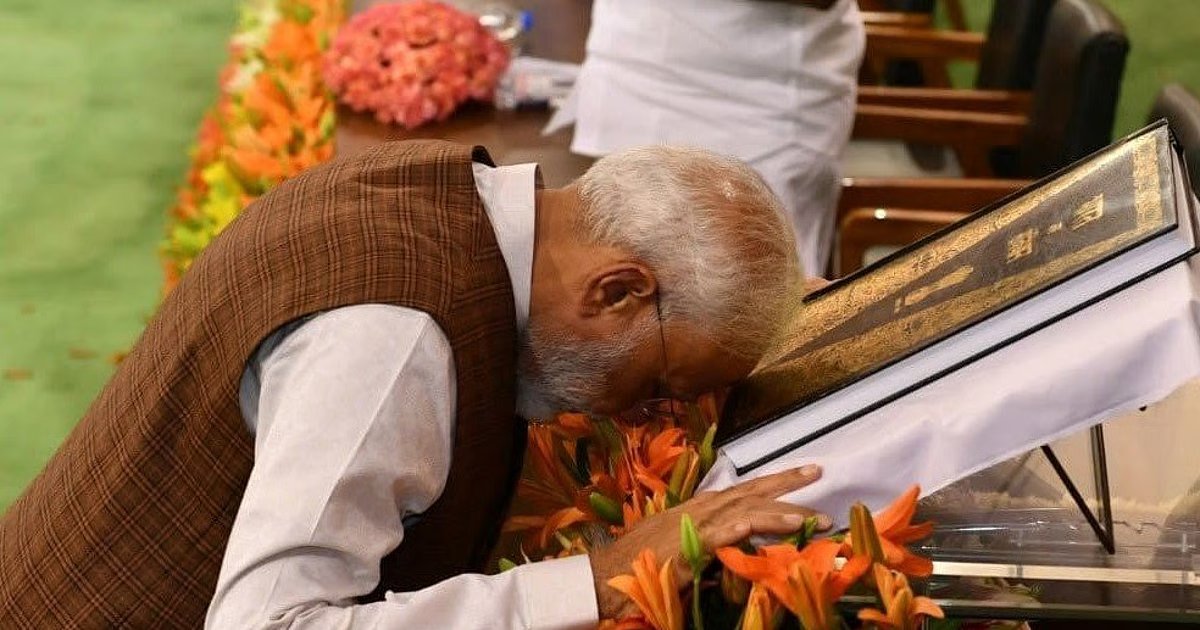

In our own humble way, we have sought to repay this debt of gratitude by strengthening our Constitution.
The distinguished constitutional scholar Granville Austin described our Constitution as “first and foremost a social document.” The quest for social and economic justice runs through the very fabric of our Constitution. Thus, what can be more satisfying than working towards the realisation of this cherished vision of the makers of our Constitution?
A recent World Bank report highlights that nearly 50 crore Indians have moved out of poverty. Breaking free from generations of deprivation, crores of parents can now dream of a better future for their children.
When PM Awas Yojana ensures a family moves from a thatched roof to a pucca home, the constitutional promise of dignity acquires meaning.
When Ujjwala Yojana frees a mother from the hardships of a smoke-filled kitchen, we advance the ideals of equality and well-being.
When Ayushman Bharat enables a poor family to access quality healthcare without the fear of debt, social justice becomes a lived reality.
When MUDRA and PM-SVANidhi provide collateral-free credit to small entrepreneurs and street vendors, economic justice finds expression.
When digital technology and platforms like UPI transcend all divides and place opportunities once available to a privileged few within the reach of every citizen, we advance the constitutional ideal of inclusivity.
There are many more manifestations of this constitutional vision.
The list of amendments we brought can be viewed through the same prism. The 101st Amendment ushered in GST, a long-awaited reform. The 102nd Amendment granted constitutional status to the National Commission for Backward Classes, fulfilling a long-standing dream of the marginalised sections of society.
The 103rd Amendment received broad social acceptance. By providing reservation to Economically Weaker Sections, it addressed the long-overlooked aspirations of economically disadvantaged families from communities outside the existing reservation framework.
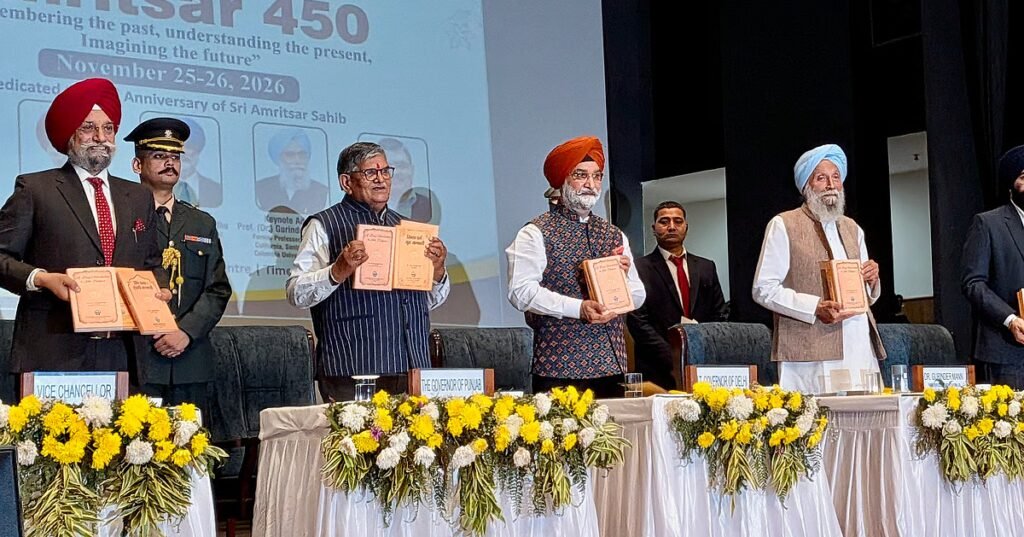
For the first time since 1950, an updated version of our Constitution is now available in all 22 languages of the Eighth Schedule. This has brought our Constitution closer to the people.
Even after our Constitution came into force in 1950, we continued to be governed by the colonial penal code dating back to the 1860s. With the Bharatiya Nyaya Sanhita, we have sought to bring about a fundamental shift in our criminal justice system, moving from the colonial emphasis on punishment (Dand) to a citizen-centric pursuit of justice (Nyay).
Over the past decade, we have laid special emphasis on Kartavya, or the duties of a citizen. Our civilisation has always emphasised the responsibilities that accompany every role in society. The spirit of Kartavya has found expression in several mass movements, from Swachh Bharat to water conservation and environmental protection.
However, there is another reality that I feel compelled to share. There have been occasions in our history when those entrusted with upholding the Constitution chose to weaken it. Ironically, they are the same people who had the opportunity to govern India for five decades.