


Nvidia co-founder Jensen Huang’s sudden resignation last week as chief executive is a reminder that founding a successful technology company does not necessarily guarantee its creator lasting control over its leadership. Over the years, some of the industry’s most prominent entrepreneurs, including Steve Jobs, Travis Kalanick and Sam Altman, have left companies they helped build following disagreements with boards, investors or fellow executives. What led to these exits?
1. Jensen Huang: Nvidia
Year of exit: 2026
Reason: Resignation following controversy and a board investigation.
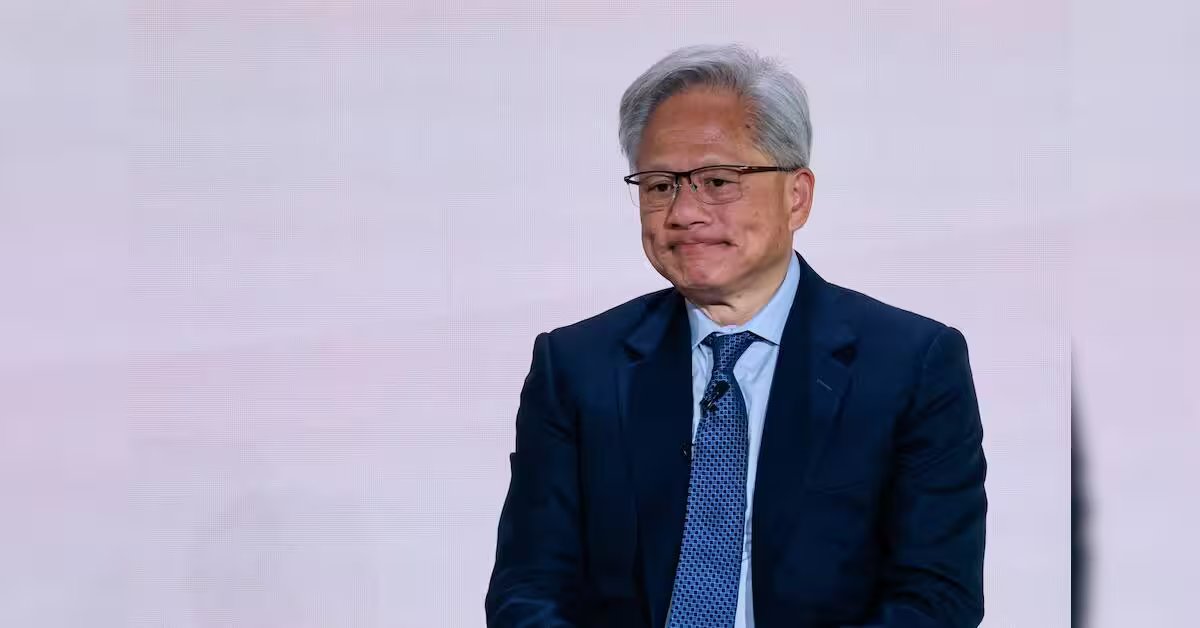
Jensen Huang co-founded Nvidia in 1993 with Chris Malachowsky and Curtis Priem. The semiconductor company has since become a major supplier of chips and computing infrastructure for artificial intelligence.
Huang resigned as president and CEO on November 12, 2026, following reports of alleged extramarital relationships, including one involving a businesswoman suspected by US intelligence of having links to China. Nvidia’s board had initiated an independent investigation into whether Huang had been targeted by a foreign intelligence effort.
The company did not specify the reason for his resignation. CFO Colette Kress was appointed interim CEO, while the board
2. Sam Altman: OpenAI
Year of exit: 2023, returned within days
Reason: Breakdown in trust between the chief executive and the board.
Sam Altman co-founded OpenAI in 2015 and became its CEO in 2019. He led the organisation through the launch of ChatGPT in November 2022.
On November 17, 2023, OpenAI’s board removed Altman, saying he had not been consistently candid in his communications with directors. Co-founder Greg Brockman also stepped down as chairman.
The decision triggered an employee backlash. Microsoft, OpenAI’s major investor and partner, offered Altman a role leading a new AI research team if he did not return. On November 22, OpenAI announced his reinstatement under a reconstituted board. A subsequent independent review found that the removal followed a breakdown in trust between Altman and the previous board.
3. Adam Neumann: WeWork
Year of exit: 2019
Reason: Governance concerns and mounting losses.
Adam Neumann co-founded flexible workspace company WeWork in 2010 with Miguel McKelvey. The company’s proposed IPO in 2019 exposed mounting losses and governance concerns, including questions about Neumann’s management practices and transactions involving entities connected to him.
WeWork reported a net loss of approximately $1.6 billion in 2018, against revenue of around $1.8 billion. The IPO was subsequently withdrawn amid investor concerns.
On September 24, 2019, Neumann stepped down as CEO, with Artie Minson and Sebastian Gunningham taking over as co-CEOs. He initially remained non-executive chairman but left the board the following month.
4. Travis Kalanick: Uber
Year of exit: 2017
Reason: Workplace culture controversies, management concerns and investor pressure.
Travis Kalanick co-founded Uber in 2009 and helped turn it into a global ride-hailing platform. However, the company faced mounting criticism in 2017 over its workplace culture and management practices.
A public account by former engineer Susan Fowler alleging sexual harassment and discrimination triggered an investigation into the company’s workplace practices.
The crisis escalated when five major investors, including venture capital firm Benchmark, demanded Kalanick’s resignation in June 2017. He stepped down as CEO on June 20. Dara Khosrowshahi, then CEO of Expedia, succeeded him in August.
5. Andrew Mason: Groupon
Year of exit: 2013
Reason: Weakening business performance, falling share price and missed financial expectations.
Andrew Mason co-founded Groupon in 2008, popularising the daily-deals model through discounts on products and services. The company went public in November 2011 but subsequently struggled with competition, slowing demand and concerns over its business model.
The pressure intensified in February 2013, when Groupon reported disappointing quarterly results and issued revenue guidance below market expectations.
On February 28, 2013, the board terminated Mason as CEO with immediate effect. He also resigned from the board. Executive chairman Eric Lefkofsky and vice-chairman Ted Leonsis took over as interim leaders.
6. Jack Dorsey: Twitter
Year of exit: 2008
Reason: Concerns over management style and the company’s leadership.
Jack Dorsey co-founded Twitter in 2006 with Biz Stone, Evan Williams and Noah Glass. He was its first CEO but was replaced by co-founder Evan Williams in October 2008 as the company expanded.
Dorsey moved into the role of chairman and remained on the board. He returned as CEO in 2015, replacing Dick Costolo, but stepped down again in November 2021. Parag Agrawal succeeded him.
His first departure was a board-led leadership change, while his second was officially announced as his own decision.
7. Jerry Yang: Yahoo
Year of exit: 2008
Reason: Shareholder pressure
Jerry Yang co-founded Yahoo in 1994 with David Filo and became its CEO in June 2007.
His tenure came under pressure in 2008 after Yahoo rejected Microsoft’s $44.6 billion acquisition offer. The two companies failed to agree on a valuation, prompting criticism from shareholders who believed Yahoo had turned down a lucrative deal.
Billionaire investor Carl Icahn launched a proxy battle to replace Yahoo’s board and revive the negotiations. Amid mounting pressure and weakening business performance, Yahoo announced in November 2008 that it would look for a new CEO. Carol Bartz succeeded Yang in January 2009.
8. Martin Eberhard: Tesla
Year of exit: 2007
Reason: Disagreements over management, rising costs and production delays.
Martin Eberhard co-founded Tesla Motors in 2003 with Marc Tarpenning. He served as its first CEO and led the development of the Roadster, the company’s first electric car.
However, the project faced engineering challenges, cost overruns and production delays. Tensions also emerged between Eberhard and Elon Musk, who had invested in Tesla in 2004 and become its chairman.
In August 2007, Eberhard stepped down as CEO following a board decision. Michael Marks became interim CEO, followed by Ze’ev Drori. Eberhard subsequently left the company and became involved in a legal dispute with Musk over Tesla’s founding and his departure. The dispute was settled in 2009, with five individuals recognised as Tesla co-founders.
9. Elon Musk: X.com and PayPal
Year of exit: 2000
Reason: Disagreements over technology, management and strategy.
Elon Musk founded online financial services company X.com in 1999. It merged with Confinity in 2000, creating the business that eventually became PayPal. Musk initially served as CEO of X.com and subsequently led the merged company.
However, disagreements emerged between Musk and other executives over its technology platform, branding and management. During a leadership challenge in September 2000, the board replaced Musk with co-founder Peter Thiel as CEO.
Musk remained a shareholder. When eBay acquired PayPal in 2002 for approximately $1.5 billion, his stake generated substantial proceeds.
10. Steve Jobs: Apple
Year of exit: 1985
Reason: Boardroom power struggle and disagreements over management and strategy.
Steve Jobs co-founded Apple in 1976 with Steve Wozniak and Ronald Wayne. By the mid-1980s, disagreements had emerged between Jobs and then CEO John Sculley over the company’s management and direction.
In May 1985, an organisational restructuring stripped Jobs of his operational responsibilities. The board backed Sculley, prompting Jobs to resign from Apple later that year.
He went on to establish computer company NeXT. Apple acquired NeXT in 1996, bringing Jobs back to the company in 1997. He subsequently became CEO and led Apple’s transformation through products such as the iMac, iPod and iPhone.