
With India targeting over 600 million tonnes of crude steel production capacity by 2047 and Odisha expected to account for nearly a third of the national capacity, the Odisha Steel Producers Association (OSPA) has urged the Centre to address critical policy and regulatory bottlenecks that could impede the sector’s expansion.
The association submitted a series of recommendations to Union Steel Secretary Sandeep Poundrik, seeking their incorporation into the proposed National Steel Policy, focusing on land acquisition and infrastructure development, besides securing long-term iron ore supplies and rationalising statutory levies.
OSPA stated that achieving the country’s longer-term ambition of 604 million tonnes of crude steel capacity by 2047 would require a more enabling policy framework, particularly in mineral-rich states such as Odisha, where large-scale investments in steelmaking and mining drive demand for land, raw materials, water, energy and logistics infrastructure.
The association called for amendments to existing laws governing land acquisition and mineral concessions, fiscal incentives for iron ore beneficiation, concessions on captive power consumption and measures to accelerate the development of slurry pipelines and integrated logistics infrastructure.
Expressing concern that the existing regulatory and cost structures could constrain the ability of steel producers to undertake large-scale greenfield and brownfield investments, OSPA has flagged the sharp escalation in compensation costs under the Right to Fair Compensation and Transparency in Land Acquisition, Rehabilitation and Resettlement Act, 2013.
It pointed out that speculative transactions involving small land parcels at inflated prices ahead of preliminary acquisition notifications can distort the average sale price used to determine compensation. A minimum land-parcel threshold must be considered for sale transactions, along with a minimum statistical sample size, to ensure that isolated high-value transactions do not artificially inflate land valuations, it said.
The steel producers’ body demanded a cap on administrative and contingency charges, which are levied at 7 per cent of compensation costs in Odisha. It proposed limiting these charges to 5 per cent or ₹2 crore, whichever is lower, arguing that administrative expenses should be linked to the area and complexity of land acquisition rather than the overall value of compensation.
Beyond land acquisition, OSPA sought changes in forest clearance procedures, arguing that Odisha’s substantial forest cover should be taken into account when framing compensatory afforestation norms. The state has 37 per cent forest and tree cover, exceeding the national benchmark of 33 per cent, while recorded forest land accounts for 39 per cent of its geographical area. A portion of this recorded forest land comprises degraded forests with canopy density below 40 per cent, which meets the Centre’s prescribed criteria for compensatory afforestation.
However, the availability of non-forest revenue land for compensatory afforestation has become a constraint because of the state’s extensive forest areas and the sizeable proportion of land already under agriculture. OSPA proposed allowing private project proponents in forest-rich states such as Odisha to undertake compensatory afforestation over double the area of degraded forest land, on the lines of provisions available to certain central government and state public sector undertaking projects.
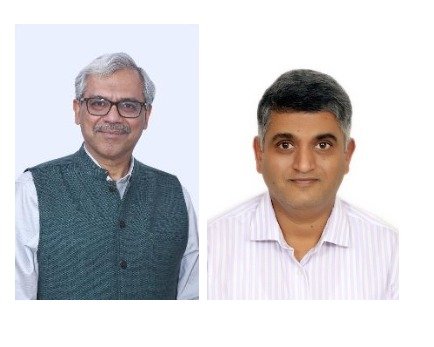
“Vast extents of land will be required for greenfield and brownfield steel plants as well as mining projects to achieve the projected expansion to 604 MTPA crude steel capacity,” OSPA secretary general S K Popli wrote in a letter to Poundrik, seeking facilitation of contiguous land allocation based on critical logistics requirements, concessional land rates, waivers of stamp duty and registration fees, and strict statutory timelines for completing acquisition. Business Standard has reviewed the letter.
On raw material security, the association sought changes in the Mineral Concession Rules, 2016, to reduce the statutory royalty burden on iron ore. It proposed that royalty, District Mineral Foundation (DMF) contributions and National Mineral Exploration Trust (NMET) payments be deducted from the sale value before calculating the average sale price (ASP). These statutory levies are currently imposed on the ASP itself, resulting in a cascading burden on mineral consumers.
In another major recommendation regarding assured long-term iron ore supplies to steel industries operating in mineral-rich states, the association proposed making it mandatory for large central and state public sector mining companies, including NMDC Ltd (formerly National Mineral Development Corporation) and Odisha Mining Corporation (OMC), to channel at least 80 per cent of their annual iron ore production through long-term linkages reserved for industries based in the respective states.
OSPA stressed the need to promote iron ore beneficiation to meet the country’s projected raw material requirements. On power costs, it sought restoration of the earlier exemption from electricity duty (ED) on captive power consumption, citing geographical constraints in some states for large-scale solar and wind power generation.
Underlining the importance of logistics infrastructure as the country envisages increasing slurry pipeline capacity to 299 million tonnes per annum (mtpa), OSPA requested an amendment to the Petroleum and Minerals Pipelines (Acquisition of Right of User in Land) Act, 1962, to delegate right of user (RoU) approval powers directly to state governments, which could facilitate faster execution of pipeline projects.
It called for a standard operating procedure covering safety standards, clearance protocols and administrative approvals for pipeline infrastructure, particularly where pipelines need to cross over or pass beneath railway and road alignments. It also suggested utilising the right of way (RoW) along existing railway and road networks for laying dedicated pipelines and developing freight corridors.