

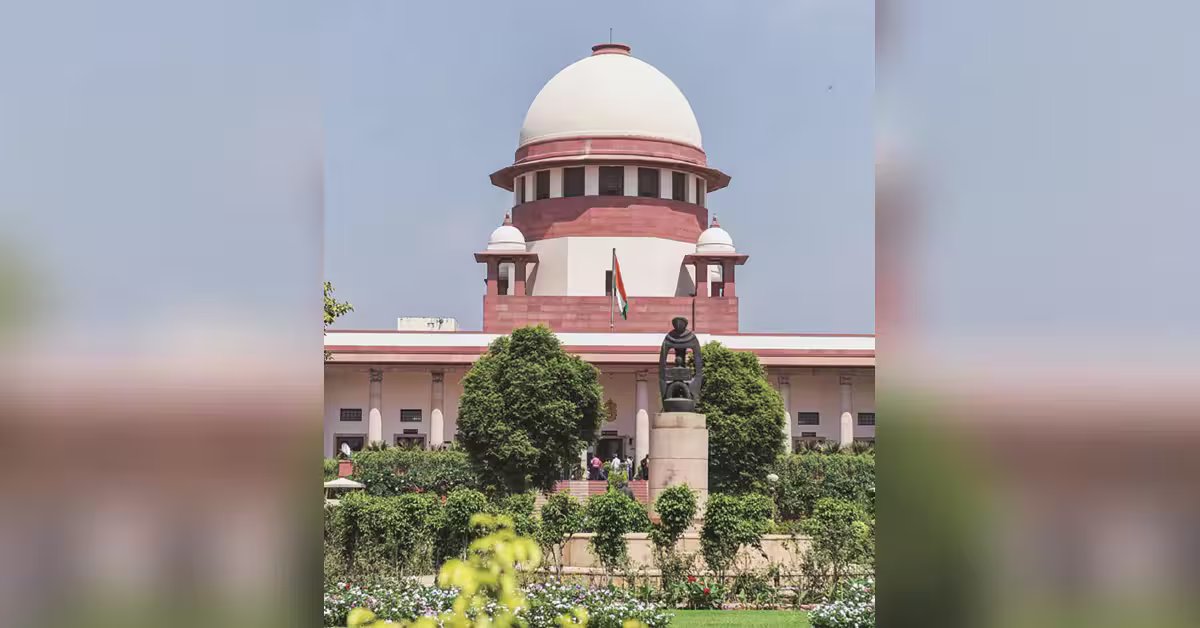

The Supreme Court on Thursday questioned whether homebuyers should approach it directly under Article 32 of the Constitution to resolve disputes arising from stalled housing projects, instead of raising their grievances before the appropriate lower courts.
A Bench headed by Chief Justice of India (CJI) Surya Kant, along with Justice Joymalya Bagchi and Justice V Mohana, observed that the Supreme Court could not be expected to adjudicate every dispute between homebuyers and builders.
“Under Article 32, how many such matters are we going to resolve? Every dispute against a builder, every failed project, will end up here. How are we going to resolve it?” CJI Kant remarked during the hearing.
The observations came during proceedings on a petition filed by homebuyers in a stalled housing project in Sonipat, Haryana. They had approached the apex court seeking protection from recovery proceedings initiated by the State Bank of India (SBI) over loans taken to purchase flats in the Krishna Housing Scheme in Sector 14.
The homebuyers had entered into a tripartite arrangement with the developer and SBI to finance the under-construction flats. Under the agreement, the bank was required to release loan instalments in phases, depending on the progress of construction.
However, the developer allegedly failed to complete the project and was subsequently admitted into insolvency proceedings before the National Company Law Tribunal (NCLT).
The petitioners told the court that they had neither received possession of their flats nor the refunds assured under the insolvency proceedings. Despite this, SBI had initiated recovery proceedings against them before a commercial court in Saket, Delhi.
They sought an interim stay on the recovery action and requested that their petition be tagged with another pending matter concerning loans extended to builders.
CJI Kant questioned why the homebuyers had not pursued their objections before the commercial court, where the recovery proceedings were already pending.
“You have filed a commercial suit? It is pending before the civil court. Raise all your objections there,” he told the petitioners’ counsel.
The lawyer submitted that the buyers had already raised their objections before the commercial court, but recovery proceedings were continuing. He also alleged that the developer had failed to pay the six-monthly instalments of refunds promised under the NCLT proceedings.
The Supreme Court subsequently directed the commercial court to examine the homebuyers’ objections before allowing the bank to proceed with recovery.
In its order, the Bench noted that SBI appeared to have disbursed loans to the developer without corresponding progress in construction.
It said the commercial court must first examine the contractual arrangement between the bank and the builder, including whether the loan amounts had been released in accordance with the tripartite agreement.
“In our considered opinion, it is the duty of the court first to determine the nexus between the builder and the bank authorities and to see whether the bank disbursed the loan amount to the builder strictly in terms of the tripartite agreement,” the court said.
The Bench directed that no coercive recovery measures be taken against the homebuyers until the commercial court determines whether they were actually in default.