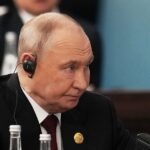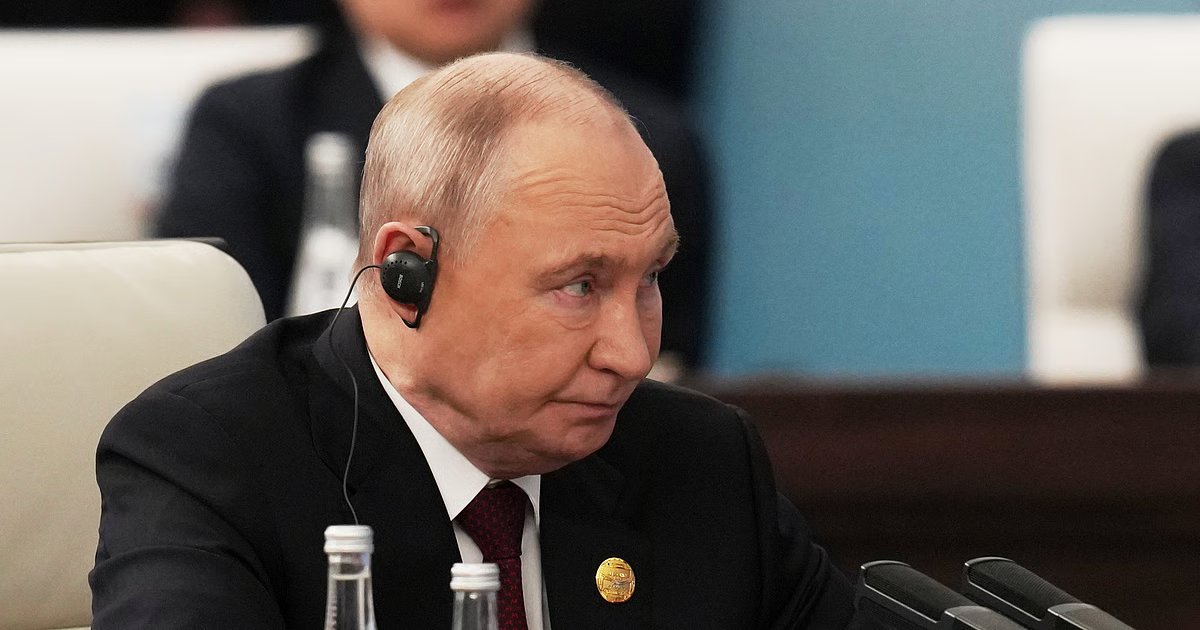

US President Donald Trump, Chinese President Xi Jinping and Russian President Vladimir Putin held their first trilateral meeting on Thursday on the sidelines of the Asia-Pacific Economic Cooperation (APEC) summit in Shenzhen, agreeing to pursue reforms of the United Nations and further discussions on nuclear security, but announcing no major breakthrough on ongoing conflicts.
The unprecedented meeting brought together the leaders of three of the world’s most powerful countries amid growing geopolitical tensions, trade disputes and concerns over the wars in Ukraine and West Asia.
The leaders issued a broad statement addressing nuclear risks, global energy supplies and international institutions. However, the statement did not outline a concrete plan to end the Ukraine war or resolve the conflict involving Iran, despite expectations that both issues would feature in the discussions.
Trump described the gathering as a significant diplomatic moment, while Xi emphasised the responsibility of major powers to maintain international stability.
The trilateral meeting followed separate discussions between Trump and Putin and between Trump and Xi earlier in the day.
𝗡𝘂𝗰𝗹𝗲𝗮𝗿 𝗿𝗶𝘀𝗸𝘀 𝗶𝗻 𝗳𝗼𝗰𝘂𝘀
A central outcome of the approximately 90-minute meeting was an agreement to continue discussions on reducing nuclear risks and preventing the proliferation of nuclear weapons.
The three leaders reaffirmed the principle that a nuclear war cannot be won and must never be fought.
Trump said the United States, Russia and China had a particular responsibility to address nuclear threats, although he acknowledged the difficulties involved in reducing existing arsenals.
Xi called for efforts to prevent nuclear conflict, while Putin emphasised the responsibility of major powers to maintain international peace and security.
The discussions came amid uncertainty over global arms-control arrangements following the expiry of the US-Russia New START treaty in February.
𝗨𝗡 𝗿𝗲𝗳𝗼𝗿𝗺𝘀, 𝗲𝗻𝗲𝗿𝗴𝘆 𝘀𝘂𝗽𝗽𝗹𝗶𝗲𝘀
The three countries also committed to pursuing reforms of the United Nations to improve its effectiveness in addressing international challenges.
As permanent members of the UN Security Council, the US, China and Russia said they would work towards strengthening the organisation’s ability to maintain peace and security.
The leaders also called for increased production and supply of refined petroleum products amid disruptions to global energy markets.
Their statement addressed the jurisdiction of the International Criminal Court (ICC), arguing against what they described as its misuse.
Trump had earlier criticised the court during the trilateral discussions, while Putin remains subject to an ICC arrest warrant connected to alleged war crimes in Ukraine.
𝗡𝗼 𝗯𝗿𝗲𝗮𝗸𝘁𝗵𝗿𝗼𝘂𝗴𝗵 𝗼𝗻 𝗨𝗸𝗿𝗮𝗶𝗻𝗲
Despite expectations that the Ukraine conflict would dominate the meeting, the leaders did not announce a ceasefire agreement or a specific diplomatic framework to end the fighting.
Speaking after the talks, Putin maintained that Russia had not initiated the conflict and accused Ukraine and European countries of failing to compromise. His account contrasts with the internationally recognised fact that Russia launched its full-scale invasion of Ukraine in February 2022.
Putin also said he believed Trump was genuinely committed to finding a resolution to the conflict and improving relations with Moscow.
Earlier, Australian Prime Minister Anthony Albanese had directly urged Putin to end the war during the APEC summit.
The absence of a concrete agreement left unresolved questions about whether the three-way discussions would translate into further negotiations involving Ukraine.
𝗧𝗿𝘂𝗺𝗽, 𝗫𝗶 𝗱𝗶𝘀𝗰𝘂𝘀𝘀 𝘁𝗿𝗮𝗱𝗲
Ahead of the trilateral meeting, Trump held separate talks with Xi, during which the two leaders discussed trade relations, tariffs and economic cooperation.
Trump said a bilateral Board of Trade established earlier this year had helped bring greater balance to commercial relations between Washington and Beijing.
Xi described China-US relations as generally stable and improving, while cautioning Washington over Taiwan.
The Chinese president urged the US to handle the Taiwan issue carefully to avoid setbacks in bilateral relations.
Trade tensions involving advanced technology, semiconductor restrictions and rare-earth supplies remained among the broader concerns surrounding the summit.
𝗦𝘂𝗺𝗺𝗶𝘁 𝗿𝗮𝗶𝘀𝗲𝘀 𝗾𝘂𝗲𝘀𝘁𝗶𝗼𝗻𝘀
The gathering drew comparisons with the 1945 Yalta Conference, when the leaders of the United States, Britain and the Soviet Union discussed the post-war international order.
The comparison reflected concerns that decisions involving major powers could affect smaller countries without their direct participation.
Although the Shenzhen meeting produced commitments on nuclear security, energy supplies and institutional reforms, it offered limited clarity on how those commitments would be implemented.
The outcome marked an unusual diplomatic engagement among Washington, Beijing and Moscow, but left the most contentious questions surrounding Ukraine, Iran and international security unresolved.