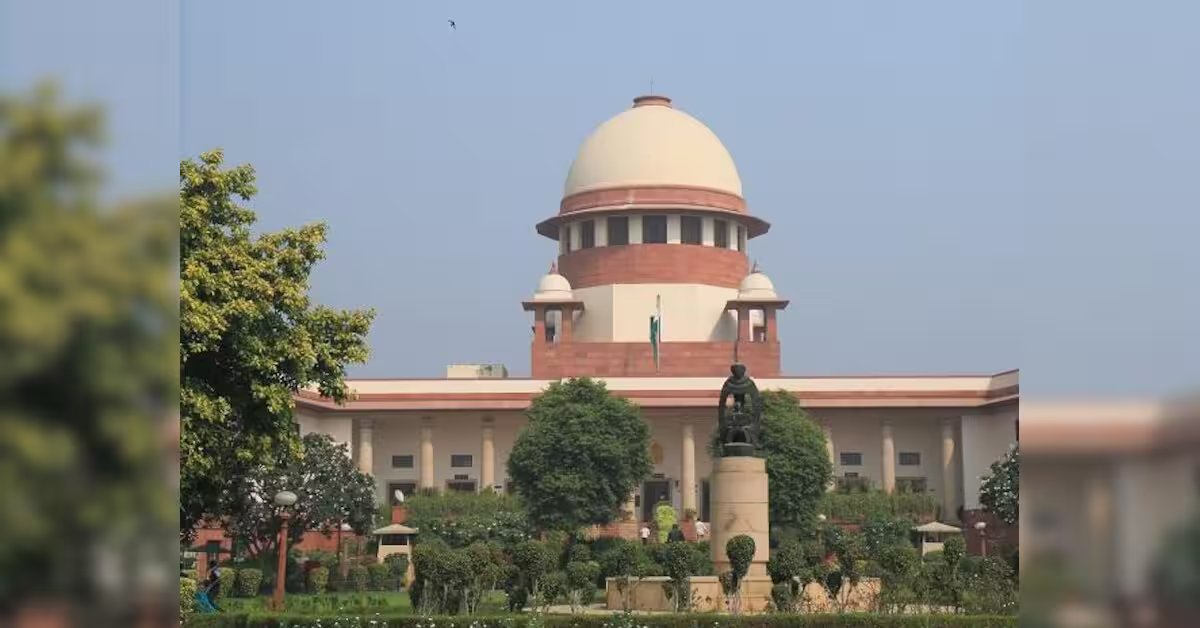

The Supreme Court on Thursday directed HDFC Bank, ICICI Bank, Sammaan Capital and PNB Housing Finance to grant unconditional sanction for prosecution of their officials within a week in connection with an alleged builder-financier nexus that has left several homebuyers facing financial distress.
A Bench headed by Chief Justice of India Surya Kant and comprising Justices Joymalya Bagchi and V Mohana warned that the chairpersons and managing directors of the financial institutions would have to appear personally before it if they failed to comply with the direction.
The court was hearing a batch of petitions concerning home loan subvention schemes, under which developers had undertaken to pay the equated monthly instalments (EMIs) on behalf of homebuyers until possession of their flats or an agreed cut-off date.
“We direct all the banks or financial institutions referred to above to issue unconditional sanction for prosecution within one week, failing which the CMD and Chairman shall remain present in Court to show cause as to why appropriate action be not taken against them,” the court said.
The direction followed submissions by the Central Bureau of Investigation (CBI) that it was facing difficulties in obtaining prosecution sanctions under Section 19 of the Prevention of Corruption Act, 1988, against officials of financial institutions allegedly found to be involved during investigations. The agency had also flagged conditional sanctions granted by HDFC Bank.
In its sixth supplementary status report, the CBI informed the court that investigations had been completed in 25 of the 55 registered cases. It had filed 22 chargesheets, while closure reports had been submitted in three cases. The agency was at an advanced stage of investigation in another 20 cases, according to submissions made during the hearing.
Expressing displeasure over the delay in granting sanctions, CJI Kant said the court had already expressed strong suspicion about the relationship between banks and developers.
“Once we have passed the order … suspecting, strongly doubting you people hobnobbing with the builders… It is the bounden duty of the banking authorities to grant sanction. And if they will not grant, we are warning them, the next order will be against them,” he said.
The court directed the CBI to complete the remaining investigations expeditiously and asked the courts concerned to take cognisance of the chargesheets and frame charges without delay. The CJI also indicated that the Supreme Court would prescribe timelines for completing the trials and would not allow parties to adopt delaying tactics.
The matter will be taken up after seven to 10 days to review compliance with the directions.
How the dispute began
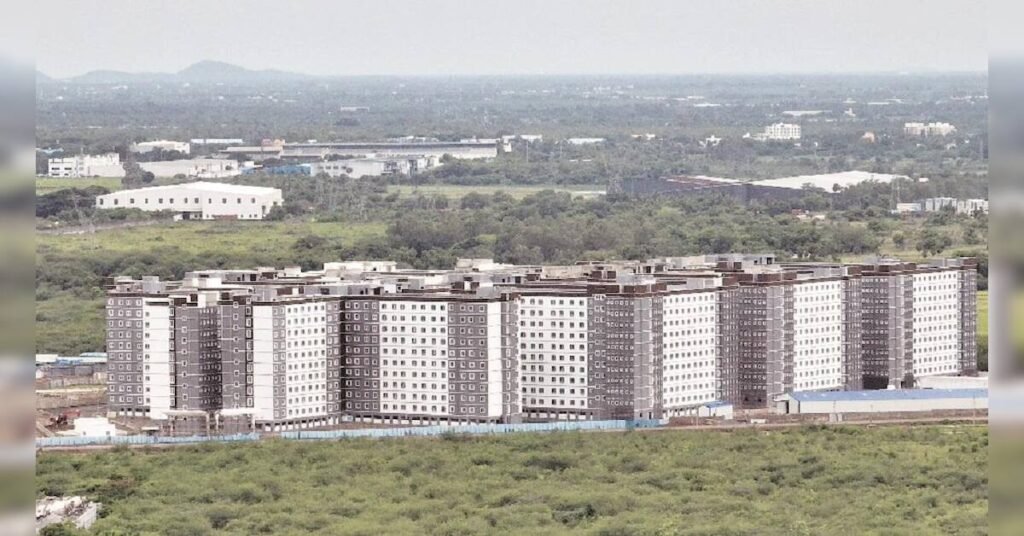
The proceedings originated from grievances raised by homebuyers who had invested in residential projects, primarily in Noida, Greater Noida and Gurugram, under subvention schemes launched between 2013 and 2015. Under these arrangements, banks and housing finance companies entered into tripartite agreements with buyers and developers. The lenders disbursed a substantial portion of the sanctioned home loans directly to developers, often upfront, while builders promised to service the EMIs until possession or an agreed date.
When several developers defaulted on these payments in 2018 and 2019, lenders began demanding instalments from homebuyers even though many projects remained incomplete and possession had not been handed over. Some buyers also alleged that banks had released 70-80 per cent of the loan amounts to developers without adequately linking disbursements to construction progress, in violation of regulatory requirements.
Aggrieved buyers initially approached the Delhi High Court, seeking, among other reliefs, directions to banks to recover the instalments from developers instead of from them. The High Court dismissed the petitions, citing the availability of alternative remedies before the Real Estate Regulatory Authority. The buyers subsequently approached the Supreme Court.
The Supreme Court, on March 4, 2025, observed that the circumstances indicated a possible nexus between banks and developers. It noted that despite repeated directions to furnish information about loan disbursements, project completion and recovery proceedings, only nine financial institutions and five developers had filed their compliance affidavits at that stage.
The court also restrained the execution of recovery certificates against homebuyers while allowing proceedings before debt recovery tribunals to continue.
On April 29, 2025, after considering a report submitted by amicus curiae Rajiv Jain, a former Intelligence Bureau director, the court found a prima facie nexus between banks and housing finance companies on the one hand and developers on the other. It directed the CBI to initiate preliminary enquiries and investigate the alleged collusion, including possible violations of Reserve Bank of India and National Housing Bank guidelines governing loan disbursements.
The amicus report identified Supertech as a priority for investigation. It found that the developer had entered into subvention arrangements across 21 projects in six cities with 19 banks and housing finance companies, involving approximately 800 homebuyers.
Eight institutions figuring prominently in these projects were Indiabulls Housing Finance, PNB Housing Finance, Dewan Housing Finance, HDFC Housing Finance, ICICI Bank, India Infoline Housing Finance, L&T Housing Finance and Aditya Birla Housing Finance.
The report also highlighted separate lending exposures involving Corporation Bank, IDBI Bank, Punjab and Sind Bank, Indian Bank and Punjab National Bank. The court subsequently expanded the investigation into allegations concerning other developers and financial institutions.
The Supreme Court’s April 2025 intervention led to the registration of CBI cases to investigate the alleged criminality and identify the role of officials of financial institutions and developers. The proceedings have since expanded to cover hundreds of petitions involving thousands of homebuyers across several states.