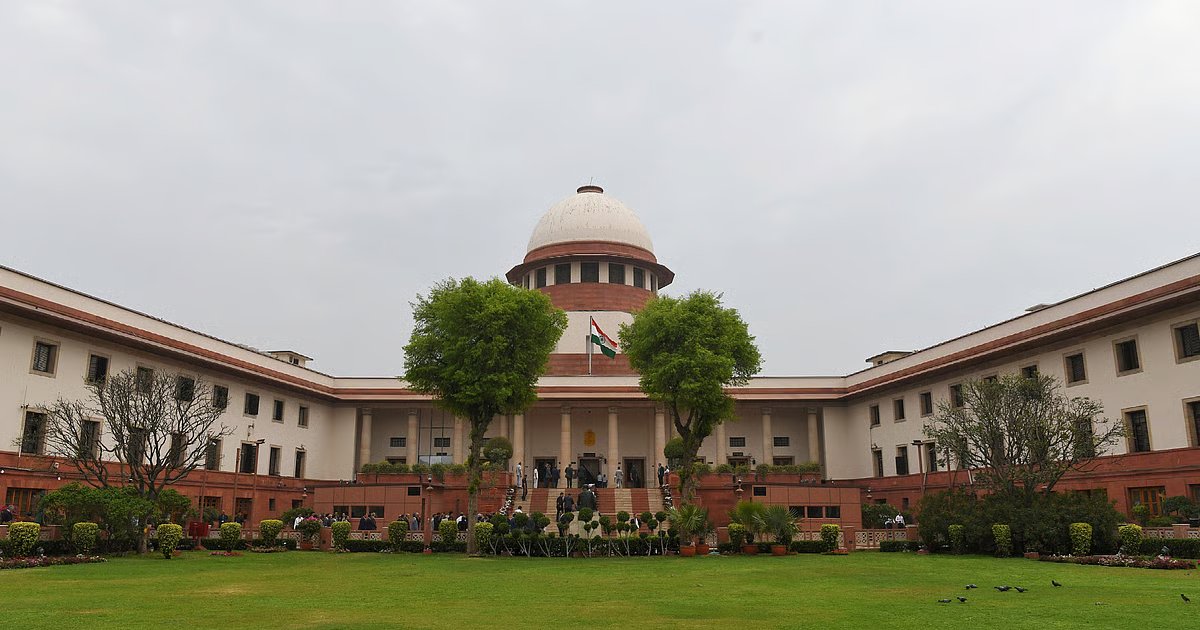

The Supreme Court on Monday sharply criticised a Bihar sessions judge for using his judicial powers to convict a police officer over delayed compliance with an order to register an FIR, warning him against behaving like “Robin Hood” or a “Bahubali”.
A bench comprising Chief Justice of India Surya Kant and Justices Joymalya Bagchi and V Mohana told sessions judge Anil Kumar that judicial authority must be exercised within the limits prescribed by law. It also advised him to undergo training at the National Judicial Academy.
“Enough of adventure. Go to the National Judicial Academy and have training. You don’t have to become Robin Hood… Do you want to become a Bahubali (strongman)?… You must understand your limits and jurisdiction as a judge,” the bench said.
The remarks came while the court was hearing Kumar’s challenge to a Patna High Court order that had questioned his handling of proceedings against the Rohtas superintendent of police (SP).
Supreme Court questions use of contempt powers
The bench expressed serious reservations about Kumar invoking the procedure for offences committed in the presence of a court to deal with an official’s failure to comply with a direction to register an FIR.
It asked the judicial officer to understand the scope of Section 384 of the Bharatiya Nagarik Suraksha Sanhita (BNSS) and Section 345 of the Code of Criminal Procedure (CrPC), which deal with specified offences committed in the view or presence of a court.
The judges explained that such offences could include slapping someone in the courtroom, abusing the court or refusing to leave when directed to do so.
However, the bench made clear that failure to carry out an order to register an FIR did not, by itself, constitute an offence committed on the face of the court.
“But if we say that X must register an FIR and X does not register an FIR, it does not amount to a crime committed on the face of the court,” it observed.
Describing Kumar’s understanding of the law as “appalling”, the court also questioned his decision to summon the police officer and convict him on the same day.
Case arose from delayed FIR registration
The proceedings concerned Rohtas SP Raushan Kumar, who was accused of repeatedly failing to comply with directions issued by the sessions judge.
The dispute originated from a court order directing the police to register an FIR against the victim and the informant in a criminal matter. The direction was issued in September 2025, but the police registered the case only in July 2026, nearly 10 months later.
Kumar had also cited other instances of delayed compliance, including a late response to a demand for an explanation and the failure to submit a status report on a recommendation for disciplinary action against the SP.
The sessions judge subsequently initiated proceedings against the police officer, treated the non-compliance as an offence committed in the face of the court and convicted him. Reports on the original order said the judge imposed a symbolic fine of Re 1.
Kumar also directed that the observations against the officer be entered in his service record and called on the Union Ministry of Personnel and Training to review the training of IAS and IPS officers to make them more responsive to the democratic system.
Patna High Court had questioned judicial procedure
The matter reached the Supreme Court after Kumar challenged an October 8 order of the Patna High Court, which described the situation as “peculiar” and “unprecedented”.
The high court observed that the sessions judge was required to maintain procedural integrity, particularly because the underlying judgment, including the direction to register an FIR, was already under challenge before it.
It sought the complete records of the criminal proceedings initiated against the SP and directed that the matter should not be precipitated while the appeal was pending. The appeal was scheduled to be heard on November 25.
Kumar had also objected to an inspecting judge summoning him in an administrative capacity. The Supreme Court questioned this objection, asking whether he had himself remained within his jurisdiction when he directed the district magistrate and the SP to appear personally and then treated their absence as an offence warranting conviction and sentence.
“Were you within your domain and jurisdiction to exercise this?” the bench asked.
It added that if the judge believed the SP’s conduct amounted to criminal contempt, the matter could have been referred to the high court rather than dealt with through the procedure he had adopted.
Court acknowledges judge’s intent but stresses discipline
The Supreme Court acknowledged that Kumar may have been motivated by a desire to ensure that judicial directions were followed. However, it said good intentions could not override procedural safeguards or the limits of a judge’s authority.
“We understand your sentiments. We appreciate your effort to reach out and do justice. But as we are governed by certain procedural constraints and discipline, we cannot forget that,” the bench told Kumar’s counsel.
The judges reiterated that judicial officers must remain conscious of their jurisdiction and undergo refresher training where necessary.
The Supreme Court disposed of the matter while requesting the Patna High Court to consider Kumar’s response and any apology he might submit “considerately”.