
The West Asia conflict has exposed vulnerabilities in global energy supply chains, with disruptions to key shipping routes raising concerns about the availability and cost of oil and gas. The International Energy Agency’s (IEA) World Energy Outlook 2026 examines how the duration of the crisis could shape global energy markets and influence countries’ energy strategies.
The report also highlights India’s growing energy needs, projecting that the country will account for more growth in energy demand over the next decade than any other country or region. Meeting this demand while ensuring reliable and affordable supplies will be a key challenge as India seeks to diversify its energy mix and reduce its exposure to external disruptions.
West Asia crisis shakes global energy markets
The scale of the disruption is reflected in the cumulative loss of 2.8 billion barrels of oil and 60 billion cubic metres (bcm) of natural gas from the Gulf since the crisis began, according to the IEA. By November 2026, the disruption to energy flows through the Strait of Hormuz was still continuing, with the impact increasingly being passed on to consumers through higher prices as supply buffers ran down.
The pressure has been particularly severe in Asia, which accounted for around 80 per cent of the oil and nearly 90 per cent of the liquefied natural gas (LNG) that passed through the Strait before the crisis. Diesel supplies have also come under significant pressure, with prices crossing $200 per barrel.
The crisis is also prompting Gulf producers to reconsider their dependence on the Strait. According to the IEA, countries in the region are constructing or considering alternative pipeline projects with a combined capacity of around 7 million barrels per day. These projects could require investments of about $40 billion and add around $2 per barrel to export costs.
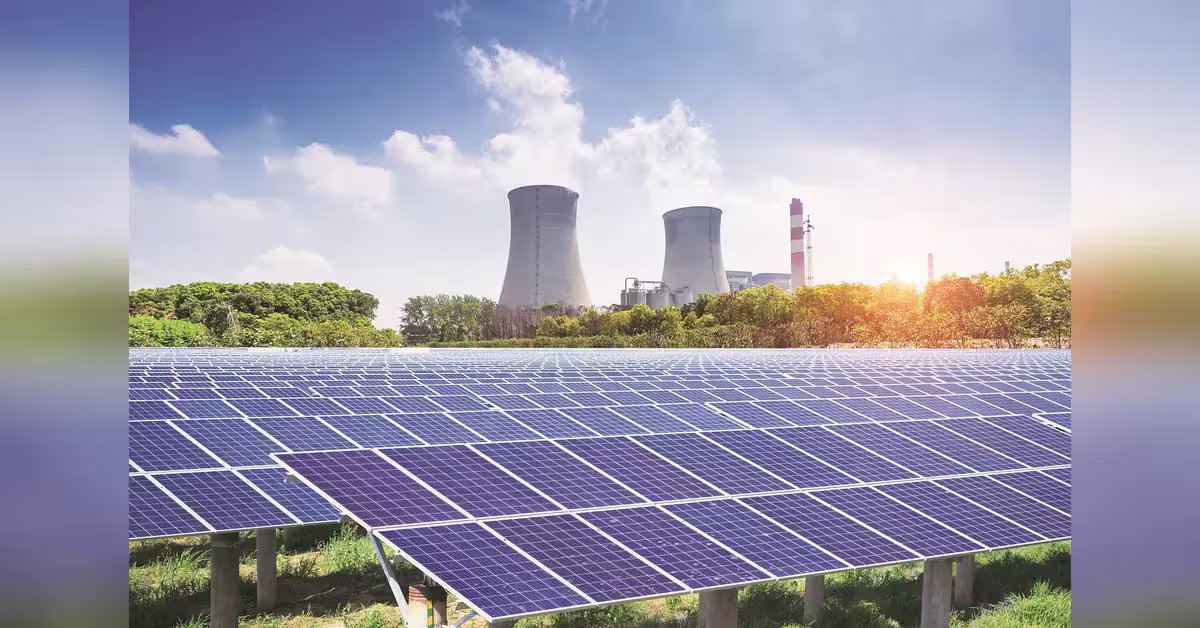
The IEA expects the disruption to have lasting implications for global energy trade, with countries increasingly looking to diversify suppliers, transport routes and energy sources. Solar power and nuclear energy could benefit from this shift, while faster electrification is emerging as another way to reduce exposure to volatile fossil fuel markets.
For India, these changes carry particular significance. As one of the world’s largest energy consumers and importers, the country faces the dual challenge of securing supplies amid geopolitical uncertainty and meeting rapidly rising domestic demand.
India’s energy demand to surge
India is expected to record more growth in energy demand over the next decade than any other country or region, according to the IEA. The country’s energy consumption is projected to grow by 2.5 per cent annually until 2035 under the Stated Policies Scenario (STEPS), around three times the global rate.
The increase will be driven by rising incomes, urbanisation, industrial expansion and growing demand for cooling and mobility. The IEA estimates that India will:
- Add more than 12,000 cars to its roads every day over the next decade
- See a 33 per cent increase in built-up spaces
- Install an additional 200 million air conditioners in homes
- Expand production of energy-intensive materials such as iron, steel and cement
This growth will put additional pressure on India’s energy infrastructure and increase the need for reliable and affordable supplies.
However, India’s dependence on imported fuels makes it particularly vulnerable to global disruptions. The country imports around 40 per cent of its overall energy requirements, including 90 per cent of its crude oil and 50 per cent of its natural gas.
The recent disruption in the Strait of Hormuz has highlighted this exposure, particularly for cooking gas. Around half of the LPG cylinders used by Indian households depend on supplies passing through the strategic waterway. LPG imports fell by more than 50 per cent during the first two months of the conflict, prompting the government to maximise domestic production and prioritise household supplies.
India’s energy mix gets greener
Despite its growing energy requirements, India is making progress in diversifying its energy mix. Solar power accounted for half of the country’s power capacity additions over the past decade, while India achieved its target of having 50 per cent of installed electricity capacity from non-fossil sources in 2025, five years ahead of schedule.
The IEA expects electricity demand to grow by 6 per cent annually over the next decade as transport, buildings and industries increasingly shift towards electricity.
Under the STEPS, India’s electricity generation is projected to increase from 2,114 terawatt-hours (TWh) in 2025 to 3,585 TWh by 2035. The share of non-fossil sources, including renewables and nuclear power, is expected to rise from around 28 per cent to 51 per cent over the same period.
However, coal will continue to play an important role in India’s energy system because of its substantial domestic reserves. The IEA expects coal to increasingly provide flexibility to the power system as renewable energy capacity expands.
Dependence on imported fuels
India had nearly 6 million barrels per day (mb/d) of refining capacity in 2025, making it the world’s fourth-largest country by refining capacity and third-largest by refinery runs. It is also the second-largest net crude oil importer after China.
With another 840,000 barrels per day of refining capacity under construction, India is expected to strengthen its role as an exporter of petroleum products, particularly diesel and other middle distillates.
However, the IEA projects that domestic crude oil production will decline by nearly 20 per cent by 2035 under the STEPS, while refining capacity expands by one million barrels per day. This will increase the country’s overall crude import requirements, even as imports from West Asia remain broadly stable.
Cooking gas presents another challenge. India is the world’s second-largest LPG importer, with domestic production meeting around 40 per cent of demand in 2025.
Under the STEPS, LPG demand is expected to grow by almost 400,000 barrels per day by 2035, while domestic supply increases by less than 100,000 barrels per day. Consequently, LPG imports could rise to nearly 1 million barrels per day.
The IEA also highlights a potential trade-off for refiners, as increasing LPG production could come at the expense of higher-value products such as diesel and petrol.
A faster shift to clean energy
The IEA’s Additional Response Case (ARC) examines how faster adoption of clean energy, efficiency measures and domestic resources could reduce India’s exposure to imported fuels.
Under this scenario, electric cars are adopted 30 per cent faster by 2035 than under the STEPS, while electrification and energy efficiency in industry accelerate. India could reduce its oil requirements by 580,000 barrels per day and natural gas consumption by 8 per cent compared with the STEPS by 2035.
This would also help bring LPG imports below 750,000 barrels per day, compared with nearly 1 million barrels per day under the STEPS.
The report suggests that faster electrification, greater use of renewables and improved energy efficiency could bring India closer to its ambition of achieving energy independence by 2047. However, the transition will require substantial investment in electricity infrastructure, domestic energy production and supply-chain diversification.